

- Fintech inbound marketing reduces dependency on paid acquisition channels and supports sustainable growth.
- Educational content helps build customer trust while strengthening brand authority in competitive financial markets.
- Search engine optimization improves long-term organic visibility and attracts qualified traffic over time.
- High-intent keywords often generate better leads and conversions than broader traffic-focused search terms.
- Optimized landing pages and lead magnets play a key role in fintech lead generation strategies.
- Lead nurturing workflows help guide prospects through the buyer journey and increase conversion opportunities.
Fintech inbound marketing is the process of attracting potential customers through educational content and search visibility instead of relying solely on paid advertising. For financial brands operating in competitive markets, this approach creates a sustainable pipeline of qualified prospects while strengthening credibility over time. This article explains how fintech companies can use inbound channels to build customer trust, improve lead quality, and turn organic traffic into sales opportunities.
Fintech inbound marketing is the process of attracting potential customers through educational content and search visibility instead of relying solely on paid advertising. For financial brands operating in competitive markets, this approach creates a sustainable pipeline of qualified prospects while strengthening credibility over time. This article explains how fintech companies can use inbound channels to build customer trust, improve lead quality, and turn organic traffic into sales opportunities.
Why Inbound Marketing Matters in Fintech
Financial decisions involve higher levels of scrutiny than many other purchases. Prospects often compare providers, evaluate risks, and seek reassurance before committing to a platform or service.
This is why inbound marketing for fintech companies has become a critical growth strategy. Educational content helps buyers understand complex financial concepts while demonstrating expertise throughout the evaluation process.
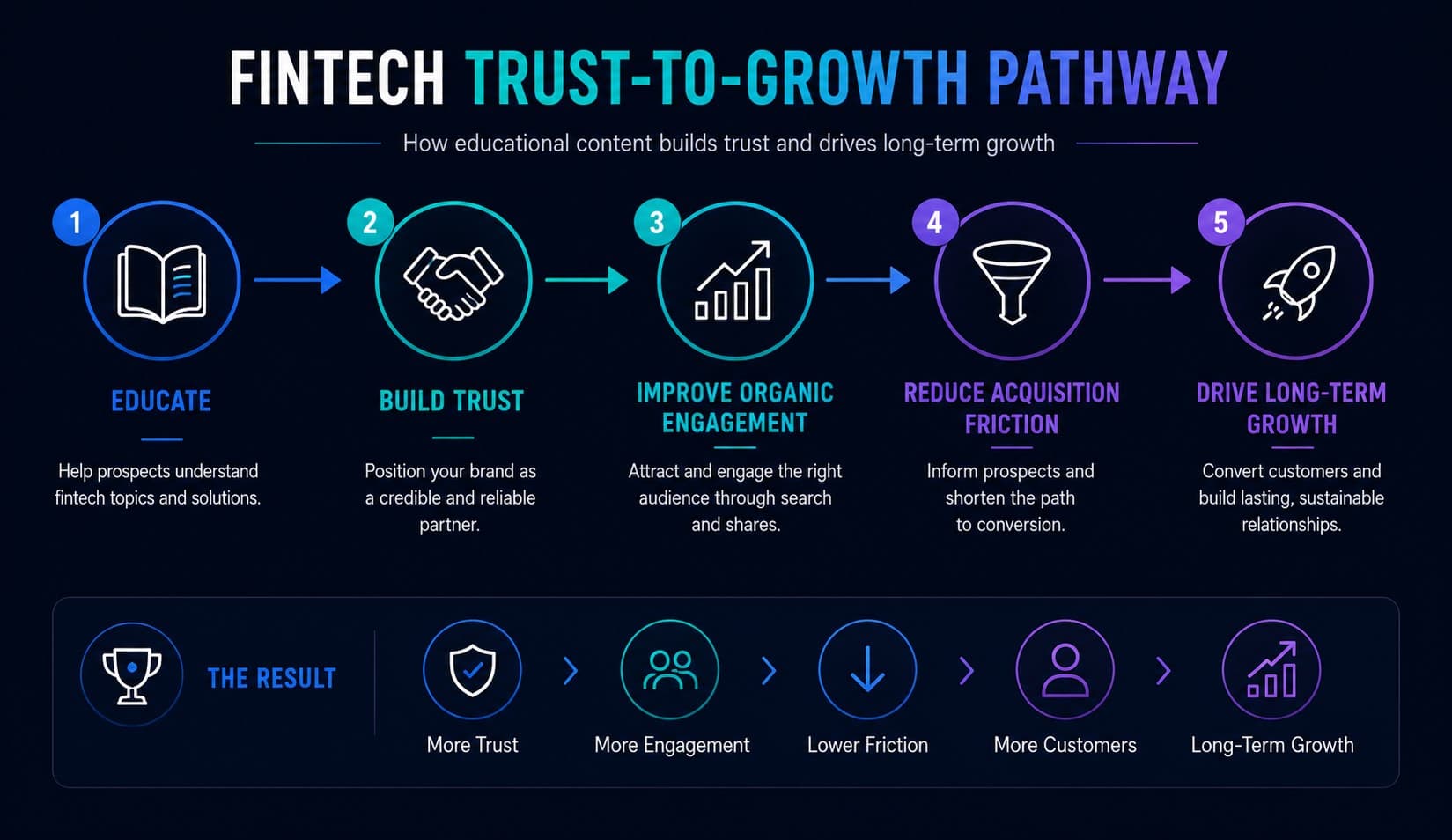
Research from the Edelman Trust Barometer consistently shows that trust remains a primary factor influencing business decisions. Financial organizations that establish authority through useful information often gain a significant advantage over competitors that rely primarily on promotional messaging.
One major benefit of inbound marketing is reduced customer acquisition costs over time. Organic assets continue generating traffic after publication, creating cumulative value that improves marketing efficiency.
Another advantage is stronger brand authority. Prospects who repeatedly encounter helpful resources begin associating the brand with expertise and reliability, which positively influences purchasing decisions.
Key Benefits of Fintech Inbound Marketing
- Lower long-term customer acquisition costs
- Stronger customer trust
- Increased organic search visibility
- Better lead quality
- Greater brand authority
- Sustainable organic growth
| Factor | Paid Acquisition | Inbound Marketing |
| Traffic Source | Purchased visibility | Earned visibility |
| Longevity | Stops when budget ends | Continues generating results |
| Trust Building | Limited | High |
| Lead Qualification | Variable | Often stronger |
| Scalability | Budget dependent | Asset dependent |
| Cost Efficiency Over Time | Declines | Improves |
What Makes Fintech Inbound Marketing Different
Fintech marketers face challenges that are uncommon in many other industries. Regulatory requirements, compliance reviews, and heightened scrutiny create additional complexity throughout content creation and distribution.
Successful fintech inbound marketing must balance education with regulatory compliance. Every claim requires accuracy, and every communication must align with applicable financial regulations.
Long decision cycles further differentiate fintech from other sectors. Consumers evaluating lending solutions, payment systems, investment platforms, or banking products rarely make immediate decisions.
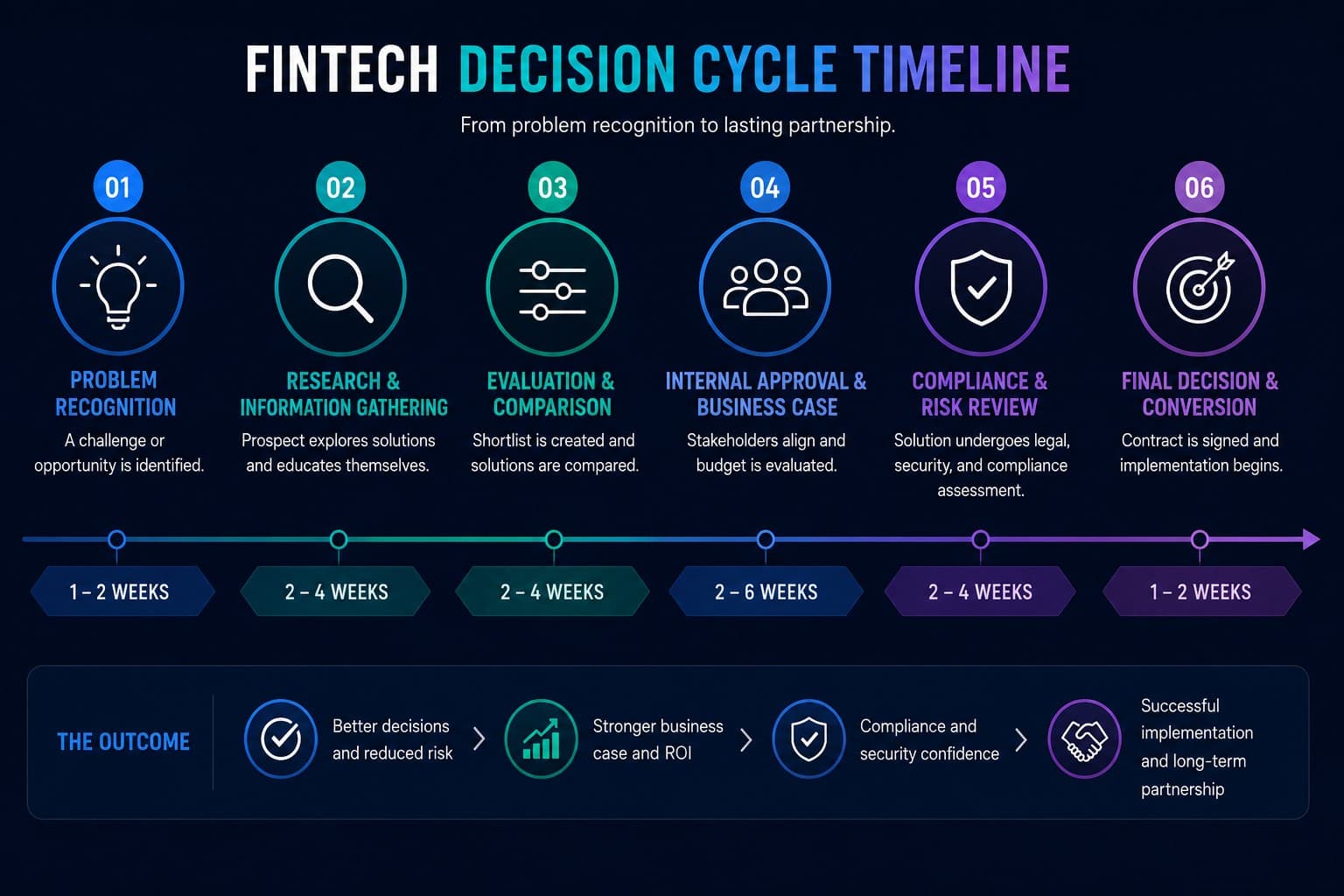
Trust signals therefore become essential components of content strategy. Security certifications, compliance disclosures, expert contributors, and transparent policies help reduce perceived risk.
Another challenge involves explaining sophisticated products in accessible language. Effective financial education requires simplifying complex topics without sacrificing accuracy.
The result is a content strategy focused on clarity, expertise, and transparency. These factors influence channel selection, messaging priorities, and conversion paths throughout the buyer journey.
| Challenge | Impact on Marketing Strategy |
| Regulatory compliance | Requires content review processes |
| Long buying cycles | Increases need for lead nurturing |
| Complex products | Demands educational content |
| Trust concerns | Requires strong credibility signals |
| High competition | Necessitates differentiated positioning |
| Security expectations | Makes transparency essential |
Core Inbound Marketing Channels for Fintech Growth
The most successful inbound programs rely on multiple channels working together. Each channel serves a different purpose within the customer journey while reinforcing overall brand visibility.
The following channels form the foundation of effective organic growth strategies.
SEO for Sustainable Organic Traffic
Search engine optimization helps fintech brands attract users actively researching financial solutions. Unlike interruption-based marketing, SEO captures demand that already exists.
Strong SEO strategies begin with identifying high-intent keywords that align with specific customer needs. These searches often reveal immediate business opportunities because users are actively seeking answers.
Effective keyword research goes beyond volume metrics. Understanding user intent allows marketers to create content that directly addresses real questions and challenges.
Content optimization remains equally important. Search engines increasingly reward content that demonstrates expertise while providing comprehensive answers.
The long-term benefit is sustainable organic traffic. High-ranking pages can continue generating qualified visitors for months or even years after publication.
Best Practices for Fintech SEO
- Focus on user intent
- Target problem-oriented searches
- Update content regularly
- Build topic authority
- Strengthen technical performance
Content Marketing That Builds Trust and Authority
Content marketing helps financial brands demonstrate expertise before prospects engage with sales teams. Educational resources reduce uncertainty while helping users make informed decisions.
Thought leadership content is particularly valuable in financial services marketing. Expert analysis and market commentary position organizations as trusted sources of industry knowledge.
Several content formats perform well within fintech environments:
- Educational guides
- Research reports
- Industry analysis
- Expert commentary
- Product explainers
The most effective content addresses real customer concerns rather than promoting products directly. This approach creates stronger engagement and supports long-term trust development.
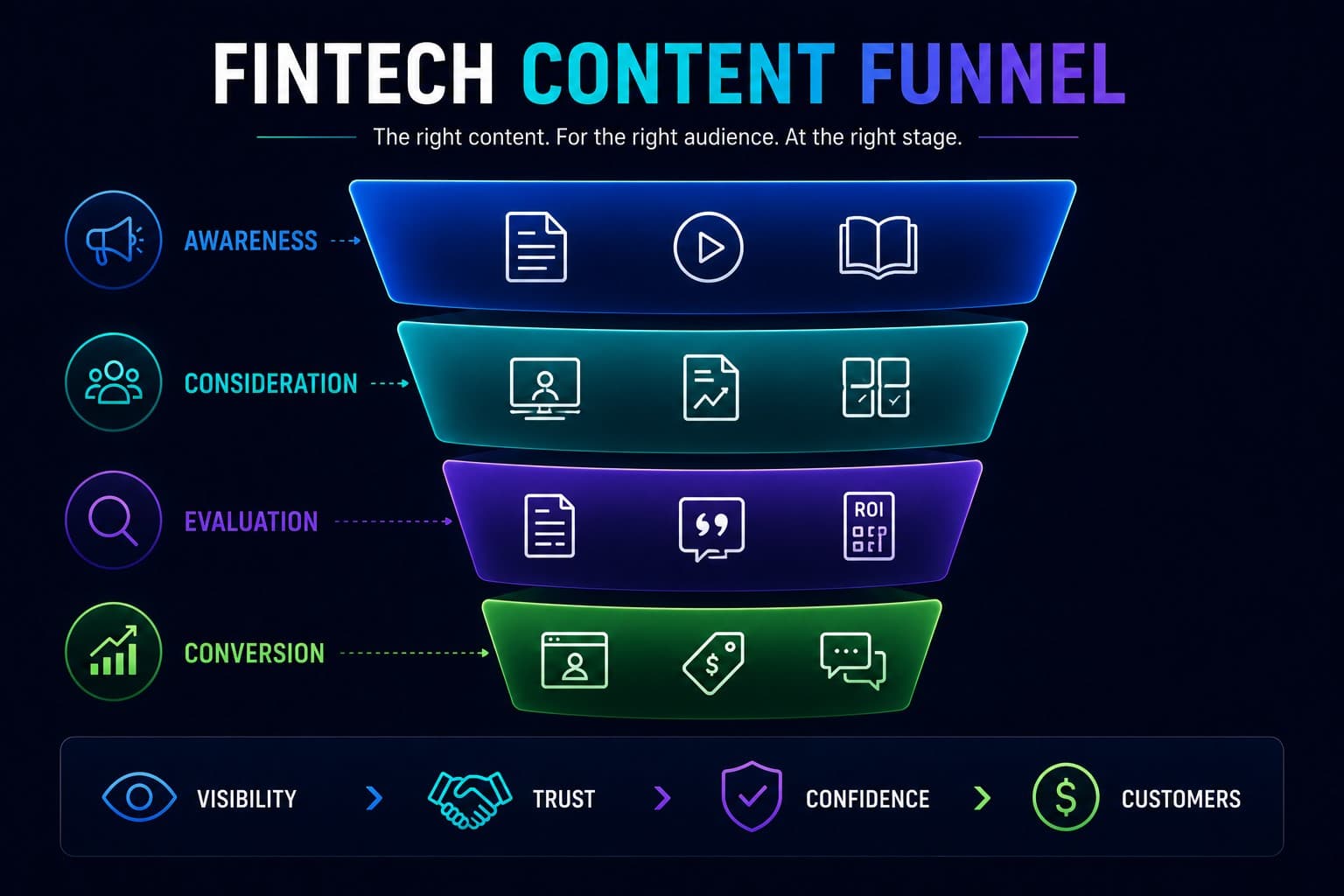
A successful content strategy also aligns with different stages of the buyer journey. Early-stage prospects require education, while later-stage prospects often need comparative information and validation.
Audiences consistently engage more with organizations that provide practical guidance and actionable insights than with brands focused solely on promotion.
Email Marketing for Lead Nurturing
Email remains one of the most effective channels for lead nurturing because it enables direct communication with interested prospects. Unlike social platforms, brands maintain ownership of audience access.
Successful email programs rely heavily on segmentation. Prospects researching investment products require different information than those evaluating payment solutions.
Personalization improves engagement by aligning communications with individual interests and behaviors. Relevant messaging typically produces stronger response rates than generic campaigns.
Effective nurture workflows should include:
- Segmentation by product interest
- Personalized educational content
- Behavioral email triggers
- Clear next-step offers
Social Media and Community Engagement
Social media supports inbound growth by expanding reach and encouraging ongoing interaction. Financial brands increasingly use these platforms to distribute insights and participate in industry discussions.
For fintech brands, social media works best when it supports:
- Expert commentary
- Community participation
- Educational content distribution
- Relationship building
The strongest social strategies focus on conversation rather than broadcasting. Meaningful engagement creates relationships that often influence future purchasing decisions.
As part of a broader inbound growth strategy, social channels amplify content distribution while reinforcing authority across multiple audience segments.

Creating High-Converting Fintech Content
High-performing fintech content does more than attract visitors. It moves prospects through the customer journey while addressing concerns that often delay financial purchasing decisions.
The most effective fintech inbound marketing strategies align content with buying-stage intent. Awareness content builds understanding, while decision-stage content supports evaluation and conversion.
Educational Content for Awareness
Educational content introduces financial concepts, explains industry developments, and helps users identify solutions to specific challenges. It serves as the foundation of sustainable inbound growth because it attracts audiences before they begin comparing vendors.
Many prospects start their research with informational searches rather than product-focused queries. Educational resources allow fintech brands to establish visibility during these early interactions.
Common awareness-stage content formats include:
- Beginner guides
- Industry explainers
- Financial education articles
- Market trend analysis
- Regulatory updates
Financial brands that consistently invest in educational resources often strengthen both customer trust and organic search visibility. This combination creates a durable competitive advantage.
For companies seeking broader strategic guidance, exploring modern approaches to fintech marketing can help align educational content with measurable growth objectives.
Conversion-Focused Content for Lead Generation
Conversion-focused content helps prospects evaluate solutions and take the next step. These assets target users who have progressed beyond basic awareness and are actively considering options.
Effective fintech lead generation often depends on providing deeper information that supports decision-making. Prospects evaluating financial products typically require more evidence than buyers in less regulated industries.
Several formats consistently perform well:
| Content Type | Primary Goal | Funnel Position |
| Case Studies | Demonstrate outcomes | Consideration |
| Webinars | Educate and qualify leads | Consideration |
| Product Comparisons | Support evaluation | Decision |
| Industry Reports | Capture contact information | Consideration |
| Buyer Guides | Reduce purchase uncertainty | Decision |
Case studies are particularly effective because they provide real-world validation. Prospects gain confidence when they see how similar organizations solved comparable challenges.
Webinars also perform well because they combine education with direct engagement. Attendees often demonstrate higher buying intent than visitors consuming general content.

Trust-Building Content for Regulated Industries
Trust-building content demonstrates expertise, transparency, and accountability. In regulated sectors, credibility often influences purchasing decisions more than product features alone.
Financial brands must communicate complex information while maintaining clarity. Content that explains processes, security practices, and regulatory standards helps reduce perceived risk.
Important trust-building assets include:
- Compliance resources
- Security documentation
- Expert commentary
- Customer success stories
- Regulatory guidance
Visible trust signals reinforce these efforts. Certifications, industry memberships, and transparent policies provide additional reassurance throughout the evaluation process.
Strong inbound marketing for fintech companies combines educational content with evidence-based credibility signals. This balance helps prospects feel informed and confident before making financial commitments.
For organizations looking to strengthen technical visibility, investing in specialized fintech SEO initiatives can help authoritative content reach highly qualified audiences.

Optimize for Search Visibility and Organic Traffic
Search visibility is one of the most valuable long-term assets a fintech company can build. Strong rankings generate recurring traffic while reducing dependence on paid acquisition channels.
Successful inbound programs treat SEO as a strategic growth function rather than a technical checklist. Search performance improves when content, authority, and user experience work together.
Fintech Keyword Research
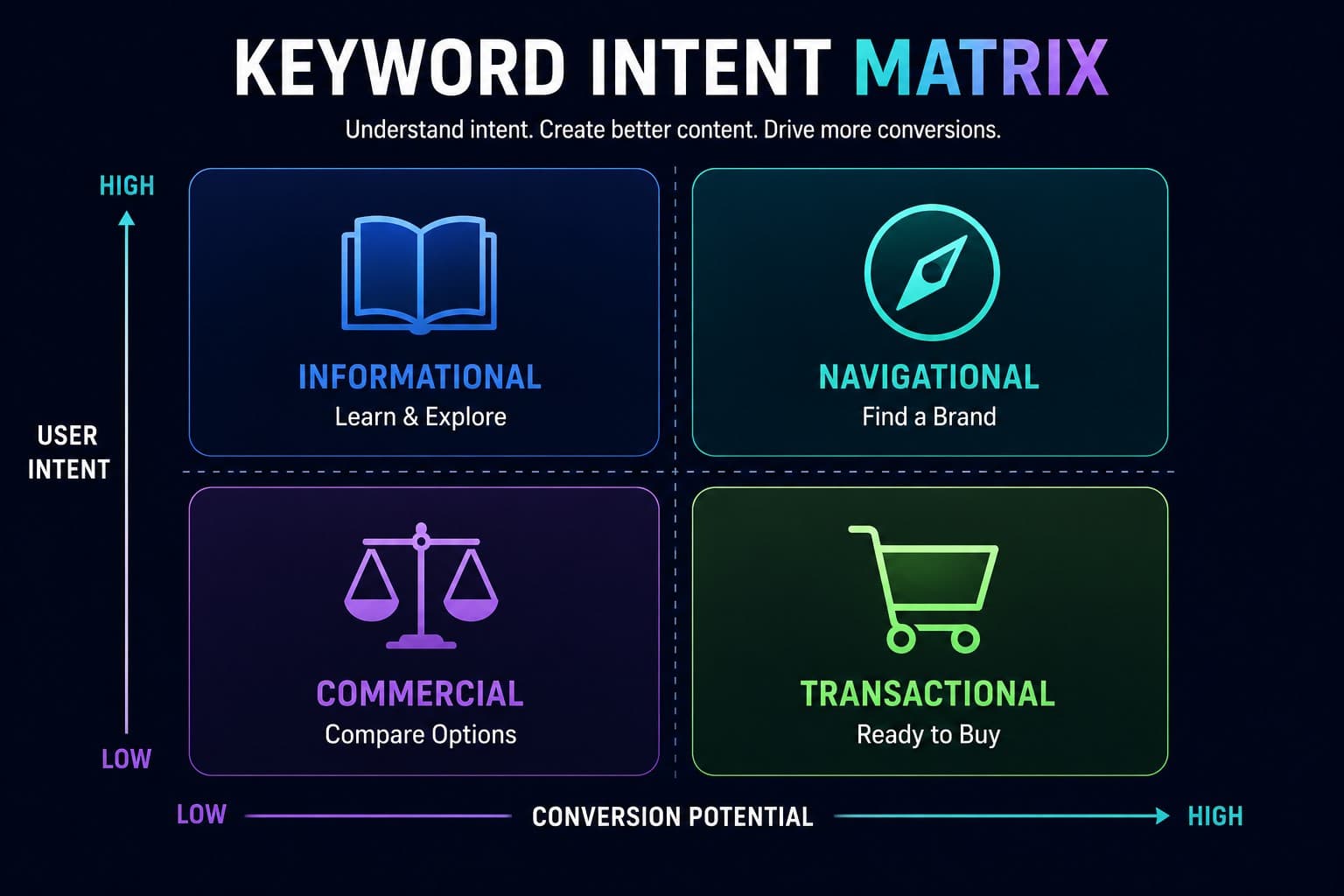
Keyword research identifies the terms prospects use when searching for financial information, products, and solutions. Effective research focuses on relevance and user intent rather than volume alone.
Many marketers pursue broad keywords that attract large audiences but generate limited business value. High-intent keywords often produce stronger results because they indicate active interest in solving a specific problem.
“Commercial-intent keywords tied to target services and landing pages usually generate stronger fintech leads than broad, high-volume terms. They attract users who are actively looking for a solution rather than only researching the industry.”
Olivia G., SEO Specialist at NinjaPromo
A practical keyword strategy should evaluate:
| Factor | Why It Matters |
| User Intent | Aligns content with prospect needs |
| Search Volume | Indicates demand levels |
| Competition | Determines ranking difficulty |
| Business Relevance | Supports conversion potential |
| Funnel Position | Matches buyer journey stage |
Balancing these factors improves content prioritization. It also helps teams allocate resources toward opportunities most likely to generate meaningful results.
The strongest keyword programs support both awareness and conversion objectives. This approach creates a more complete content ecosystem that serves prospects throughout the customer journey.
On-Page SEO Best Practices
On-page SEO helps search engines understand content while improving the user experience. Strong optimization increases the likelihood that valuable resources will earn visibility.
Several elements consistently influence performance:
- Clear content structure
- Descriptive metadata
- Strategic internal linking
- Optimized page speed
- Relevant keyword placement
Content organization remains especially important. Search engines increasingly reward pages that answer questions clearly and comprehensively.
Internal linking strengthens topical authority while helping visitors discover related resources. This improves navigation and distributes ranking value throughout the site.
Brands expanding their digital presence often combine organic content efforts with strategic fintech social media marketing programs that amplify visibility beyond search channels.
E-E-A-T and Regulatory Trust Signals
E-E-A-T stands for Experience, Expertise, Authoritativeness, and Trustworthiness. These principles are especially important for financial websites because inaccurate information can influence significant decisions.
Search engines evaluate credibility through multiple signals. Expert authorship, transparent policies, and verifiable business information all contribute to perceived trustworthiness.
Important regulatory trust signals include:
| Trust Signal | Business Impact |
| Expert Authors | Demonstrates subject knowledge |
| Compliance Information | Improves transparency |
| Security Disclosures | Reduces perceived risk |
| Customer Testimonials | Provides social proof |
| Clear Policies | Strengthens confidence |
Demonstrating expertise is particularly important in financial services marketing. Prospects expect evidence that content comes from knowledgeable professionals rather than anonymous sources.
Transparent communication also supports customer trust. When organizations clearly explain processes, limitations, and compliance standards, they create stronger relationships with prospective clients.
Companies that support content distribution through targeted fintech email marketing programs can further reinforce authority by delivering expert insights directly to engaged audiences.

Convert Traffic into Leads
Attracting visitors is only one part of a successful growth strategy. The real value of an inbound program comes from converting qualified traffic into sales opportunities.
Many fintech companies invest heavily in content creation but fail to establish effective conversion paths. Without clear next steps, even highly engaged visitors often leave without entering the sales funnel.
“The first thing to check is whether the website attracts the wrong audience or fails to match qualified visitors’ expectations. She recommends reviewing the gap between search intent and on-site messaging, then checking whether the path to a demo is clear and compelling.”
Maya Miller, Strategist at NinjaPromo
The most effective conversion strategies combine persuasive user experiences, strong trust signals, and relevant offers. Together, these elements transform organic traffic into measurable business outcomes.
High-Converting Landing Pages
Landing pages are designed to convert visitors into leads by focusing attention on a single action. Unlike standard website pages, they eliminate distractions and provide a clear path toward conversion.
Effective landing pages begin with a strong value proposition. Visitors should immediately understand what the offer provides and why it matters.
High-performing fintech landing pages typically include:
- Clear headline
- Benefit-focused messaging
- Trust signals
- Simple forms
- Strong call to action
Trust signals play an especially important role in financial services. Security certifications, compliance references, customer testimonials, and industry recognition help reduce friction during decision-making.
The strongest landing pages also support conversion rate optimization efforts through testing and continuous improvement. Small adjustments to messaging or page structure can produce meaningful gains in lead generation performance.
Lead Magnets for Fintech Audiences
Lead magnets encourage visitors to exchange contact information for valuable resources. They help fintech brands capture interest from prospects who may not yet be ready for direct sales conversations.
The best lead magnets provide immediate practical value. They solve a problem, answer a question, or help prospects make better decisions.
Popular fintech lead magnet formats include:
| Lead Magnet | Primary Benefit |
| Industry Reports | Market intelligence |
| Financial Calculators | Personalized insights |
| Investment Guides | Educational value |
| Templates | Time savings |
| Benchmark Studies | Decision support |
| Market Outlooks | Strategic planning |
Organizations focused on long-term organic growth often build multiple lead magnets tailored to different stages of the customer journey. This creates more opportunities to capture qualified prospects.
For brands seeking a comprehensive approach to financial-sector growth, specialized fintech marketing services can help align lead generation, SEO, and content strategy into a unified acquisition framework.
Email Capture and Nurturing Workflows
Capturing contact information is only the beginning of the conversion process. Long-term success depends on guiding prospects toward informed purchasing decisions through structured communication.
Automated workflows help deliver relevant information at the right time. This approach improves efficiency while ensuring prospects receive content aligned with their interests.
A typical lead nurturing process includes:
- Initial resource delivery
- Educational follow-up content
- Problem-focused guidance
- Solution evaluation resources
- Sales engagement opportunities
Successful lead nurturing programs are built around relevance. Prospects evaluating financial products expect useful information rather than repetitive promotional messages.
“The guide is only one touchpoint in the user journey. The next nurturing email should reflect the user’s segment, motivation, and funnel stage, then connect what the user needs with what the product can offer.”
Maya Miller, Strategist at NinjaPromo
Behavioral data further improves performance. Actions such as content downloads, webinar registrations, or page visits can trigger personalized communication sequences.

The most effective workflows support the buyer journey while gradually building confidence. As trust increases, prospects become more receptive to conversations about products and services.
Final Thoughts
Successful organic acquisition combines education, visibility, and trust-building into a unified growth strategy. Organizations that consistently publish valuable content while optimizing for search and conversion create sustainable advantages that compound over time.
As competition increases across financial markets, brands that invest in customer trust, organic traffic, and meaningful engagement will be better positioned to achieve long-term organic growth and scalable customer acquisition.