
While fintech products are all about numbers, your fintech marketing strategy will rely heavily on words to explain the complex concepts behind these digits. As such, content marketing remains a must-have strategy.
That said, it’s more than simply breaking down the math. You need to be trusted first before transactions will follow. Here’s how to become a credible voice and accessible resource that customers trust for financial decisions.
How Fintech Content Marketing Differs from Traditional Marketing
Finance is inherently more personal and users need to know that the product is trustworthy and compliant. Yet, for fintech brands, that trust isn’t a given. As such, content marketing in fintech focuses on creating educational content about financial topics to build trust among target audiences and highlight a product’s compliance.
By contrast, traditional financial brands usually already have trust because they’re regulated, licensed, and familiar. As such traditional marketing can start with the brand, before it shifts the focus to its product and customer.
In fintech, it’s often the opposite. You start with the customer’s problem and trace it back to the financial product.
“Communication has to start with the customer’s pain point and show, very clearly, how the product makes life easier, faster, or more transparent.”
Maya Miller, Strategist at NinjaPromo
Why Content Marketing Matters for Fintech Companies
Content, whether it’s a guide or thought leadership piece, lends itself well towards demonstrating expertise. This way, fintech brands can build credibility, which is everything in this sector.
Over time, your content marketing efforts also increase organic search traffic and social sharing. This, in return, reduces customer acquisition costs while steadily filling the pipeline with more qualified prospects.
The Unique Challenges of Fintech Content Marketing
When creating and promoting content, fintech brands have the added challenge of ensuring that whatever they publish meets strict regulations. Then, they still need a way for their content to set them apart from competitors without making product complexity the differentiating factor.
Building Trust in a Highly Regulated Industry
Fintech brands must work harder to establish authority and trust. This becomes even more challenging as strict regulations about financial advice and data privacy limit what fintech brands can say.
Before they use claims about returns, risk, or product performance, the content must first be checked from a legal and compliance viewpoint. This added step can slow down fintech content promotion and remove persuasive language that helps drive engagement.
Explaining Complex Financial Products
Fintech products often involve technical complexity that are genuinely hard to translate into engaging content. Oversimplified content can harm credibility among expert audiences, while jargon-heavy texts can alienate the mass audience.
Standing Out in a Crowded Market
Search engine results pages for high-intent terms are dominated by established fintech players. This makes it hard for newer brands to achieve organic visibility without significant, sustained investment.
Benefits of Fintech Content Marketing
While content marketing requires ongoing investment, it can deliver many measurable returns. What’s more, its benefits extend across acquisition, conversion, and retention.
Generate Qualified Leads
Content marketing is an especially powerful lead generation tool for fintech businesses as the target audiences tend to ask specific and technical questions. If your content directly answers search queries like “how to complete tax forms”, you don’t first need to convince them that they have a problem. Instead, you can simply use your content to show them that you’re the right solution.
By deliberating planning your content around the different stages of the buyer journey, you can also generate far more qualified leads. For example, at the awareness stage, you can use industry trend reports that position your brand as a credible authority and once they move into the consideration phase, you can use a gated ROI calculator or assessment tool.
Improve Brand Awareness
Each new content piece becomes an extra entry point for potential users to discover your brand. Over time, this also increases your online visibility as you build topical authority that signals to search engines that you’re a credible, expert source.
Increase Customer Retention
Educational content surfaces features that customers would otherwise overlook. When customers understand a product better, they engage more consistently, experience better outcomes, and are far less likely to churn.
Support SEO and Organic Growth
With SEO, you can target the exact search queries prospects use when researching financial solutions. This way, you can capture high-intent traffic without ongoing ad spend.
What’s more, unlike paid ads that stop the moment fintech marketing campaigns are paused, SEO builds evergreen assets. A comparison article today may drive organic traffic and brand impressions for years to come.
Establish Thought Leadership
Consistently including expert insights in high-quality content pieces can position a fintech company as an industry authority. It will take time, but the reward is that you become consumers’ go-to resource that they trust.
Building a Fintech Content Marketing Strategy
An effective content marketing strategy begins with audience research which is used to inform content planning. This way, every content piece will serve a defined purpose instead of just filling an empty slot on your publishing calendar.
Define Your Goals and KPIs
Each piece should be tied to a business outcome like lead generation, user activation, or brand authority. This way, you’ll avoid creating generic, misaligned content published on the wrong channels. In the case of resource-intensive formats like whitepapers and reports, defining your goals beforehand also helps to justify budget and resources to stakeholders and ensures you choose KPIs that reflect these goals.
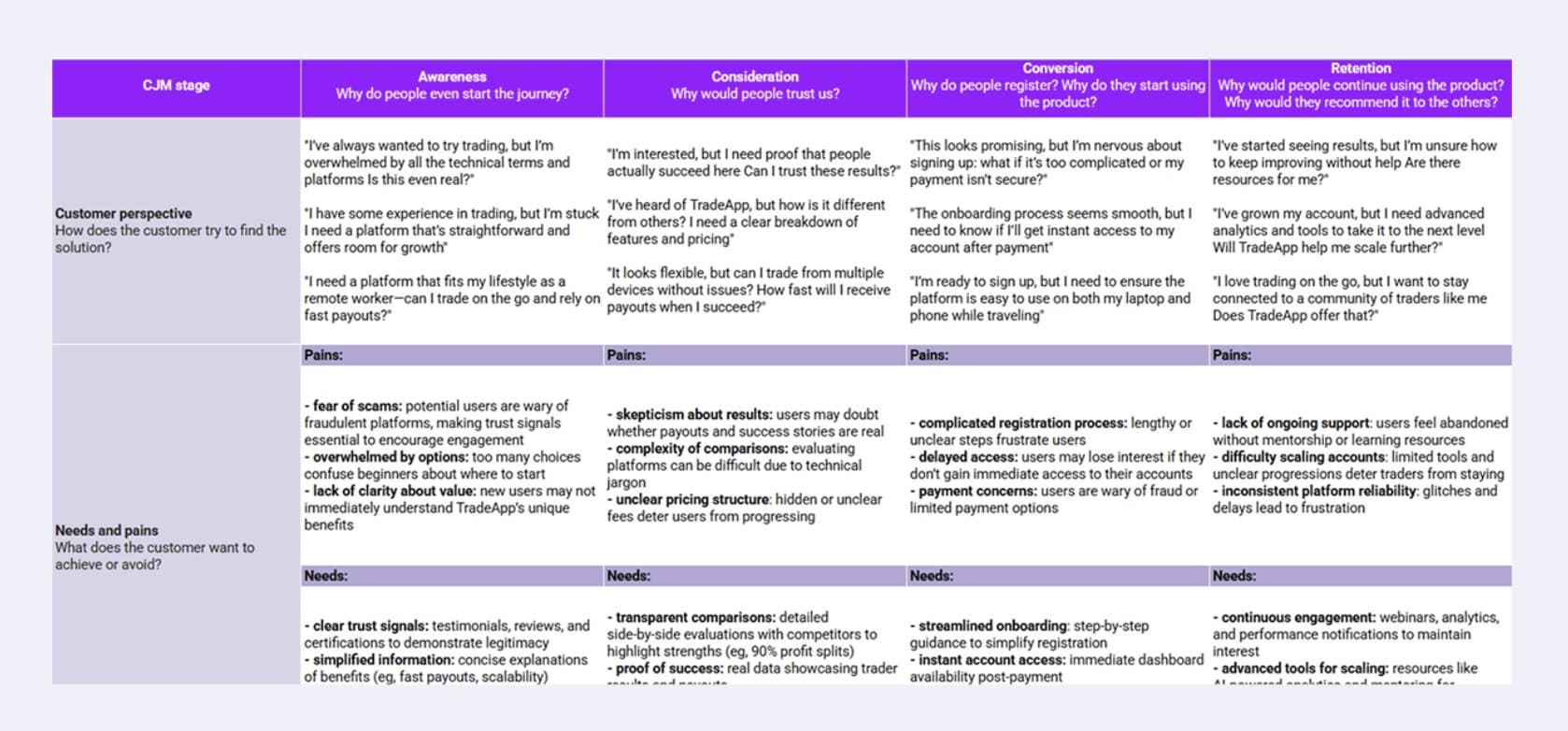
As for the KPIs you’ll track, in fintech especially, you’ll want to focus on trust, conversion, and retention. Examples of commonly used KPIs include:
- Backlinks, press mentions, and Net Promoter Scores to measure trust
- Customer acquisition cost and churn reduction to measure revenue and retention
- Email click-through rates, video completion rates, webinar sign-ups, and whitepaper downloads to measure conversion
Understand Your Target Audience
Understanding your target group’s needs, pain points, and search intent helps you to identify topics, tailor your strategy, and personalize your messaging so that it speaks directly to them. The latter is especially important as your customers are making decisions about personal matters like money, security, and their financial future.
To help link your content to outcomes that actually matter to them, you’ll need to divide your target audience into smaller groups. In fintech, common criteria you’ll use include:
- Income level
- Current banking habits
- Financial confidence
- Attitudes toward traditional banking
- Transaction volume
- Technology adoption stage
- Product usage patterns
- Geography (specifically for regulatory purposes)
Next, you can create buyer personas to represent each key segment. This profile will take it one step further than the criteria listed above to capture the group’s motivation and mindset too.
“The biggest breakdown usually happens between interest and activation. People become curious, but then they do not understand whether the product is right for them, whether it is safe, or what happens to their money and data.”
Maya Miller, Strategist at NinjaPromo
Map Content to the Customer Journey
Fintech customers move through three distinct stages before converting, namely awareness, consideration, and decision.
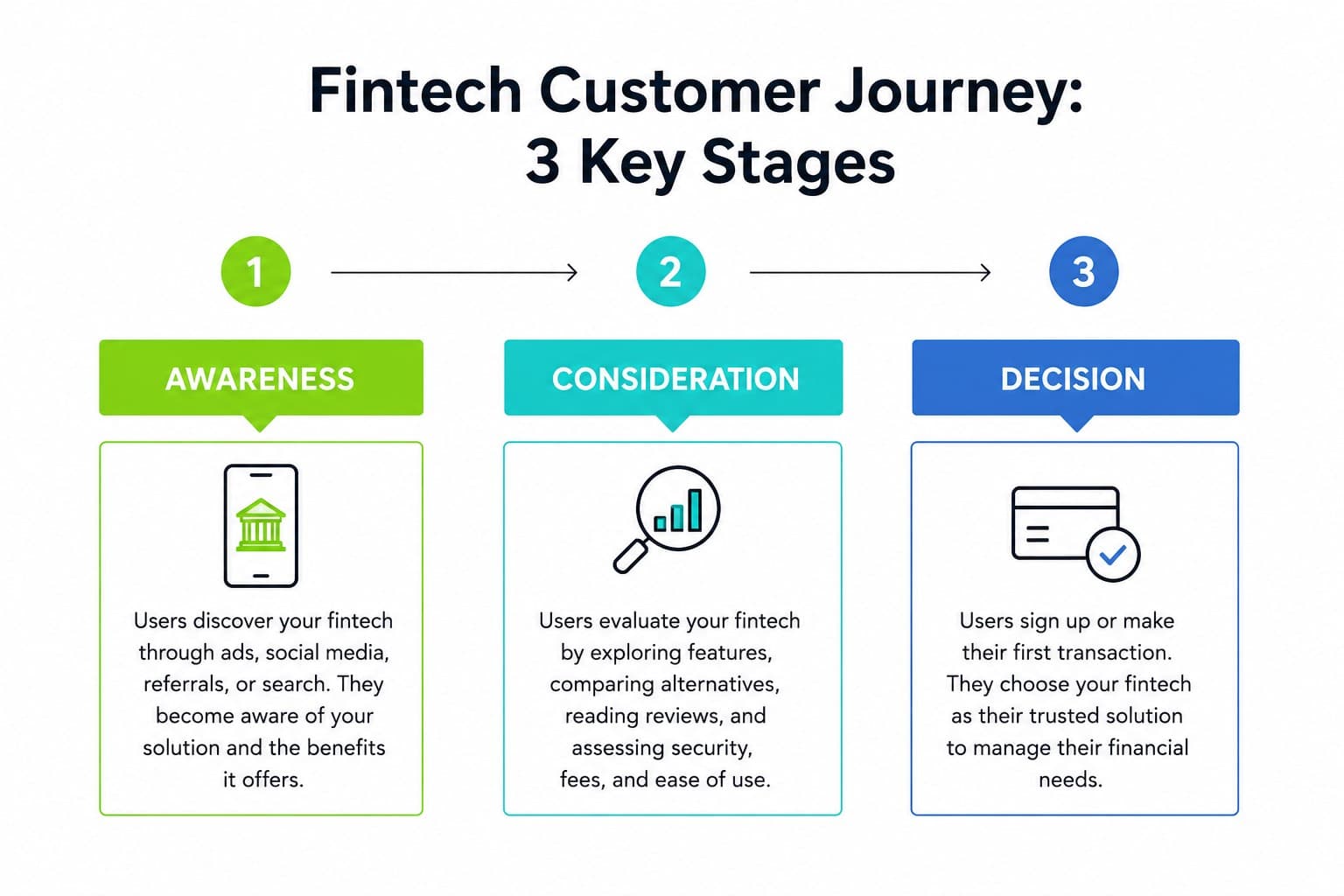
The impact this has on your strategy is that at each stage of the fintech marketing funnel, the content they’ll need will differ in terms of tone, purpose, and depth as the following table illustrates:
| Awareness Stage | Consideration Stage | Decision Stage | |
| Audience’s Mindset | Curious or frustrated | Cautiously evaluating | Ready, but still possibly hesitant |
| Content Goals | To get discovered, build trust, and educate | To communicate value and differentiate from competitors | To make the action feel safe, address last objections, and remove friction |
| Tone | Empathetic, non-promotional | Confident, evident-based | Reassuring and action-oriented |
| Content Examples |
|
|
|
Best Types of Content for Fintech Brands
There is no single format that always wins. What works best is a content system where different formats support different stages of the fintech marketing funnel.
Educational Blog Content
Fintech products typically deal with complex topics like tokenization that your target audience first needs to understand before they can evaluate and trust your offering. Educational blog articles help to improve this understanding by demystifying jargon and answering specific user questions and FAQs about how the product works, regulations, and risks.
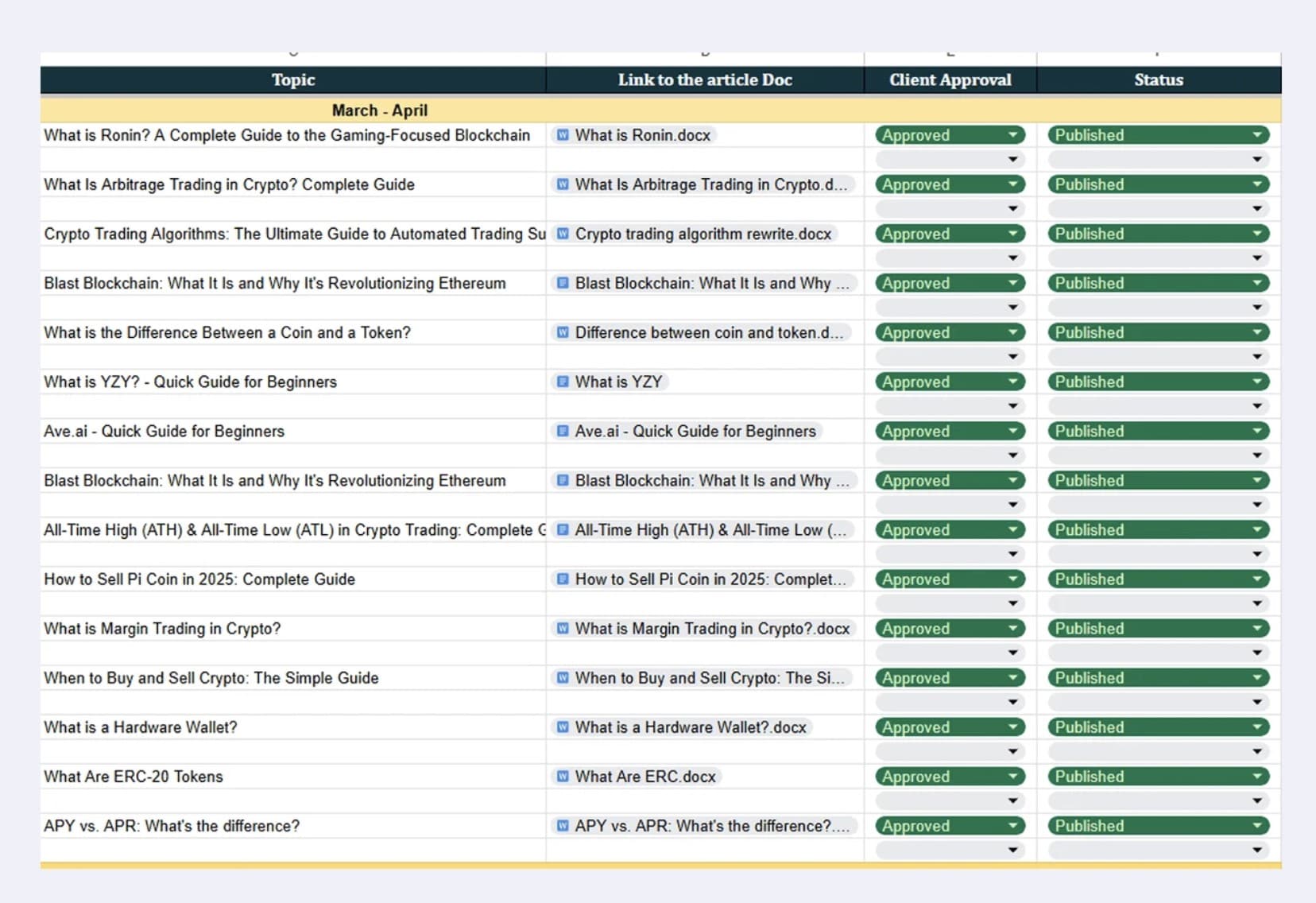
In addition to SEO, educational blog articles also play a role in thought leadership. It’s a great medium for sharing original perspectives and communicating your product expertise without being overly promotional.
Then, if you add a preview of a gated report, it doubles up as a thought leadership and lead generation tool. Even a subtle “Book a consultation” call to action can capture leads.
Industry Reports and Research
Sharing original research about your own transaction data, user behavior, or market insights turns your fintech company into a primary source that journalists, financial analysts, and even competitors want to quote in their content. What’s more, it will very likely generate multiple backlinks as your name becomes attached to a specific stat, trend, or benchmark.
This creates a flywheel effect. Once you get cited by third parties, your domain authority increases. This means that future research will rank faster and reach more people.
Original research can also build credibility without reading as self-promotion. For example, an industry report on disability coverage for the gig economy can indirectly validate that your product covers gaps legacy insurance products miss.
Case Studies
Case studies can be used to showcase quantified operational gains, like a reduction in transaction processing time, compliance outcomes, or integration and scalability. This way, you can turn abstract promises about speed, security, or savings into tangible outcomes.
In an industry associated with long sales cycles, high switching costs, and strict regulations, customers need strong evidence like case studies before they can commit. After all, if you’re expecting customers to trust you with their money and personal financial data, you need to set an example and be transparent about the results you’ve generated.
White Papers and Ebooks
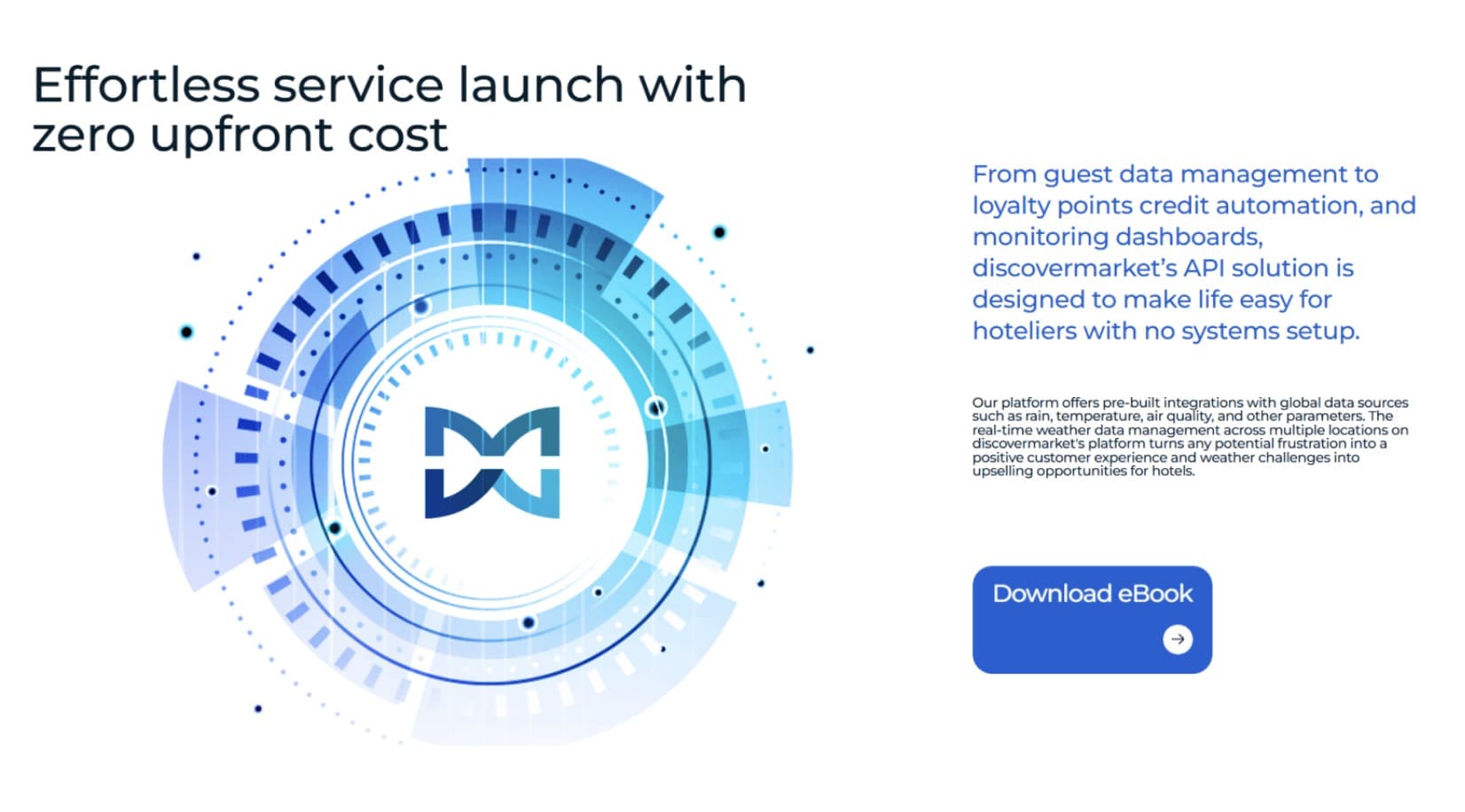
Before investing in a fintech product, prospects do extensive research. White papers and ebooks do the heavy lifting regarding explaining complex concepts like risk scoring that a landing page simply can’t. These formats can also easily be circulated among the different stakeholders. This way, without any additional sales effort, the multiple stakeholders that need convincing are already educated when it’s time to start a sales conversation.
White papers, in particular, can be useful, especially during the consideration and evaluation stages. Like industry reports and research, this format can double up as a source of original data.
Video Content
To support your fintech marketing campaigns, you can create:
- Educational videos to build financial literacy
- Product-focused videos like screen walkthroughs to reduce friction
- Explainer videos to earn trust
For example, using educational videos, you can structure your fintech content planning in such a way that you explain an abstract concept such as compound interest over the course of two to three lessons. This way, viewers can pause or replay key or difficult moments, allowing them to pace their own learning. Your brand benefits because spacing it out over a few videos makes engaging with your content a habit.
Email Newsletters
With email newsletters, your brand stays top of mind while positioning itself as a trusted advisor. That said, the majority of the content should focus on industry updates and educational topics instead of product mentions. It should feel more like a resource subscribers would miss if it stopped arriving than a marketing message.
Interactive Tools and Calculators
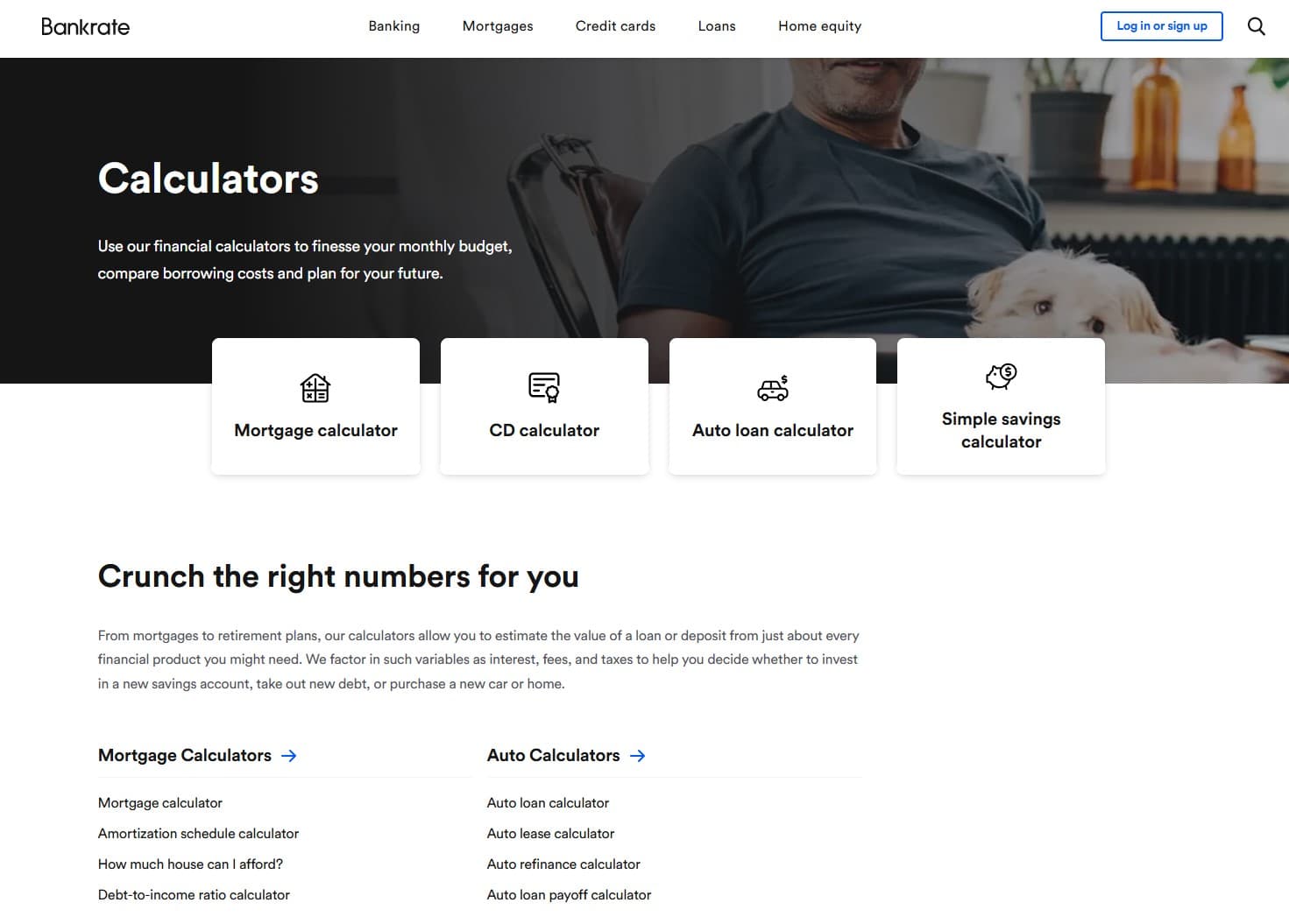
Interactive content like mortgage calculators, retirement readiness quizzes, and debt payoff planners replace generic advice with relevant content upon which they can act immediately. For example, a quiz can help name a need that can create a natural bridge to a product recommendation.
Brands benefit too. For example, tools like calculators can be used to qualify leads. A website visitor who uses a mortgage affordability calculator reveals their intent to buy a property.
Fintech Content Distribution Strategies
Fintech content delivers value only when it reaches the right audience. Distribution helps extend the reach of educational resources, product insights, and thought leadership content across the channels where potential customers already spend their time.
Organic Search
Financial products are among the most-researched purchases, making organic search a key long-term distribution channel. What’s more, with fintech SEO you can reveal where users are in their buying journey and let your brand appear at the exact moment of intent.
For example, a search query like “open a business bank account online” shows you that prospects are ready to act now. On the other hand, prospects searching phrases like “how to avoid foreign transaction fees” are only entering the funnel.
That said, Google will apply Your Money or Your Life (YMYL) standards to all the content you publish. This means that you’ll have to take extra measures to show your experience, expertise, authoritativeness, and trustworthiness (E-E-A-T).
Social Media Marketing
LinkedIn and X will be the best channels for your fintech social media marketing content. On LinkedIn, you’ll have direct access to CFOs and CTOs, while X is the place where regulatory announcements, market commentary, and funding rounds break first.
Content formats that work well for these two platforms include data visualizations, founder POV posts, and short-form video demos. For example, on LinkedIn, you can amplify the reach of your founder’s POV further by using LinkedIn groups and employee advocacy. By asking 10 employees to reshare a company post with a unique comment, you tap into their networks too.

Email Marketing
What makes email such an effective distribution channel is that your content will reach a captive audience directly. Those who’ve subscribed to your email newsletter have already indicated their interest and with a stream of relevant content delivered consistently you can nurture curious subscribers into loyal customers.
You can, for example, use it to send market updates weekly, product insights monthly, and reports quarterly. Then, if you specifically want to use fintech email marketing for lead nurturing, here’s what a nurture sequence might look like:
- Welcome email to introduce your value proposition
- Educational content like a how-to guide
- Social proof (e.g., case studies, testimonials, or user milestones)
- A product feature spotlight tied to a segment’s pain point
- A free trial, demo, or consultation offer
PR and Media Outreach
With public relations and media outreach, you can reach audiences that you can’t reach through your owned channels alone. Aside from expanding your content’s reach, PR for fintech also helps you strengthen your brand authority. For example, a journalist quoting your CEO or research acts as third-party validation.
Expert commentary, data studies, and industry insights should form the three pillars. For example, placing an executive as a quoted source in a news story lets readers associate your brand with timely, intelligent perspectives. In those instances where you need more control over the narrative, you can opt to share your industry insights in contributed articles or bylined pieces. Then, for topics that are more evergreen, you can use data studies which have a longer shelf life than expert commentary and thought leadership pieces.
Influencer and Expert Partnerships
When your fintech brand is linked with a recognized expert or legitimate influencer, audiences start to trust you by association. This is especially useful in an industry where new brands or features are met with skepticism as default.
What’s more, when there’s audience alignment, partnering with an expert can also put your brand in front of an audience who’s already interested in financial topics. This means that your message will land with pre-qualified communities, speeding up lead nurturing.
Future Trends in Fintech Content Marketing
Personalized content, powered by AI and real-time data, is becoming an expectation. Going forward, this will push brands to include contextually relevant content at every stage.
AI-Powered Content Creation
AI can help marketers scale fintech content creation and improve SEO and discoverability. You can for example use it for content planning, analyzing data to identify high-impact keywords, and measuring your content’s effectiveness.
That said, at no stage should it replace human expertise. The marketing teams who’ll create the most opportunities with AI will be the ones who use it to draft, optimize and grow output only. Insights, accuracy, and compliance should remain the marketers’ responsibility.
“In an era of ‘AI-powered’ everything, human content like webinars, AMAs, expert conversations, and customer stories often perform very well in fintech. Trust is built when people feel there are competent, accountable persons behind the product.”
Maya Miller, Strategist at NinjaPromo
Personalized Content Experiences
As fintech audiences grow more sophisticated, there will be a growing need to to use behavioral insights, financial profiles, and real-time data to deliver personalized content. The fintech brands that invest in creating personalized content experience will be rewarded with better engagement.
Interactive Financial Education
Interactive tools can dramatically improve comprehension and retention. For example, calculators that model real savings outcomes, risk-assessment quizzes, and investment simulators transform abstract financial concepts into personalized, immediately relevant insights.
This keeps users on-platform longer, and creates natural conversion moments. For example, a retirement calculator that reveals a savings gap is a prompt to act.
Final Thoughts
The fintech brands that will lead the next era will be the ones using personalization to create educational content that builds trust. Fintech marketing services that rely solely on promotion forget that purchases rarely happen impulsively. Instead, you should position your brand as a credible advisor that also wants to grow its customers’ understanding, not just their wealth.