Key Findings
- Fintech demand becomes more valuable when buyer relevance increases faster than campaign reach.
- Trust gaps can limit pipeline growth even when campaigns generate consistent engagement.
- Specialized B2B fintech markets often make channel coordination more valuable than maximizing individual channel volume.
- Strong early engagement can hide weak commercial demand when relevant buying groups remain inactive.
- Efficient demand programs invest according to pipeline constraints rather than historical channel performance.
B2B fintech demand generation creates awareness, develops buyer confidence, and converts market interest into qualified pipeline. It coordinates channels around buyer intent instead of treating every interaction as an immediate lead opportunity. This approach becomes especially important when complex products require substantial education before purchase.
Fintech buyers often evaluate solutions across multiple interactions and involve several stakeholders. Effective programs connect education, credibility, targeted distribution, and demand capture throughout that evaluation. Channel selection should therefore reflect how buyers progress toward commercial decisions.
How B2B Fintech Demand Generation Works
B2B fintech demand generation moves prospective buyers from initial awareness toward qualified commercial opportunities. B2B fintech marketing supports this progression by connecting education, trust-building, and conversion activities across the buyer journey. Each interaction should help buyers understand the problem, solution, or potential business value.
The process rarely follows a simple funnel. Buyers revisit problems, compare alternatives, and build internal consensus before committing. Multiple stakeholders may also enter the evaluation at different stages.
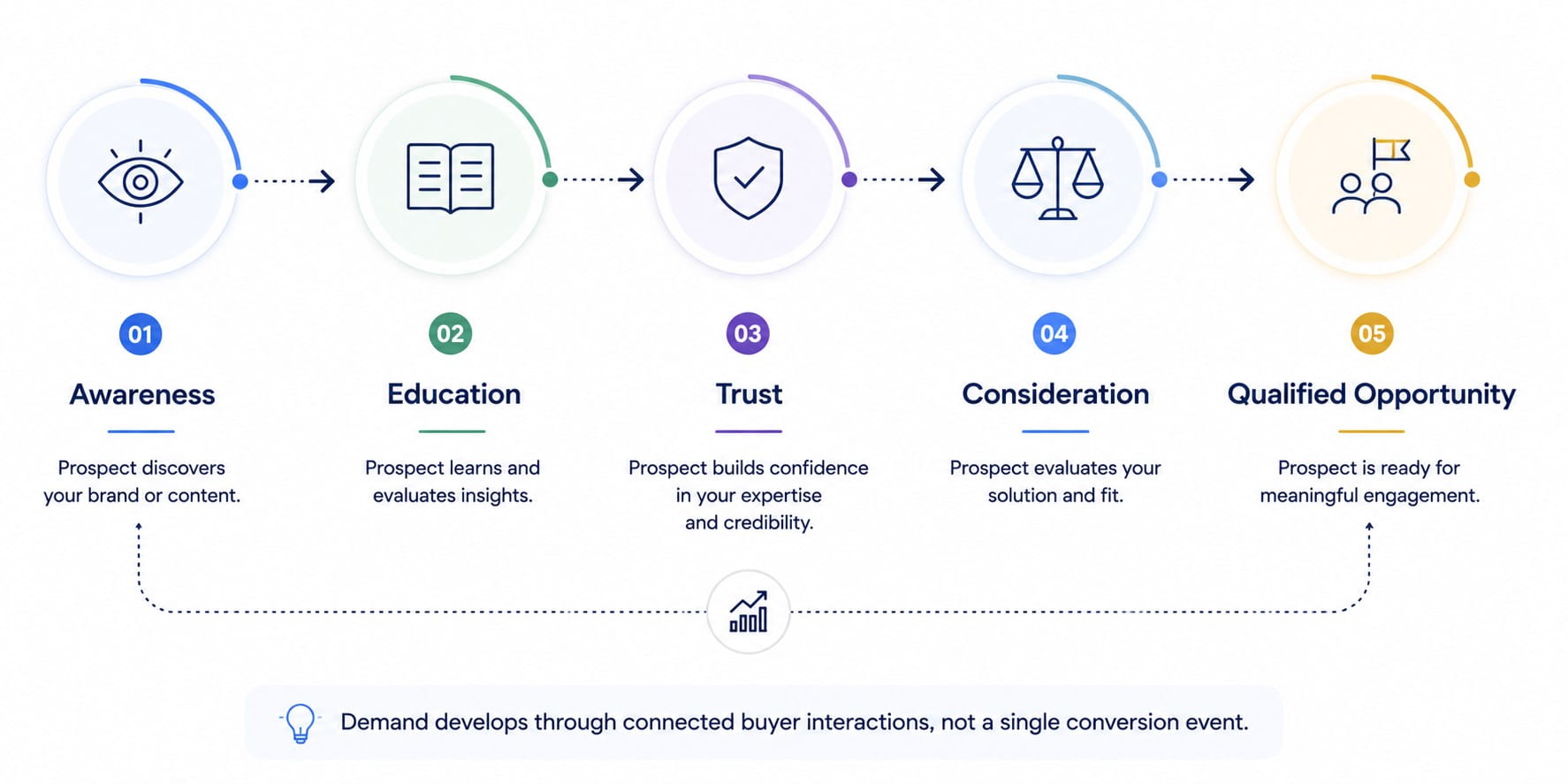
A practical demand generation process for B2B fintech brands connects five stages:
- Awareness
- Education
- Trust
- Consideration
- Qualified Opportunity
Each stage requires different evidence and interactions. Early activity creates problem recognition, while later activity helps buyers validate product fit. Trust connects these stages because financial buyers must feel confident before advancing.
Effective B2B demand generation also accounts for buying groups rather than isolated leads. One active contact does not necessarily indicate organization-wide purchasing intent. Account-level engagement can provide stronger evidence when several relevant stakeholders participate.
That complexity changes how demand generation for fintech should operate. Marketing must help different stakeholders understand value through relevant information. Sales also needs reliable signals showing when account interest becomes commercially meaningful.
Common Demand Generation Challenges in B2B Fintech
Demand generation for fintech faces constraints that make generic acquisition playbooks less reliable. Product complexity and specialized audiences can reduce the effectiveness of broad campaigns. Financial promotion rules can also restrict how fintech brands communicate product value.
Long decision cycles add another challenge. Engagement can develop well before buyers become sales-ready. Short attribution windows may therefore undervalue channels influencing early consideration.
| Challenge | Demand impact | Practical response |
| Complex products | Buyers struggle to understand differentiated value | Translate capabilities into business outcomes |
| Long buying cycles | Early influence remains difficult to attribute | Track account progression across stages |
| Specialized audiences | Broad reach creates inefficient spend | Prioritize role and account relevance |
| Trust barriers | Buyers require stronger validation | Use proof, expertise, and transparent claims |
| Regulatory considerations | Messaging requires tighter controls | Review claims before campaign distribution |
These constraints explain why demand gen for fintech needs coordinated channels. A single campaign rarely provides sufficient education, validation, and conversion support. Different channels should address different barriers across the buying process.
The strongest programs identify where demand is being blocked. Teams can then separate awareness problems from education, trust, or conversion problems. That diagnosis helps prevent unnecessary spending on channels that cannot solve the actual constraint.
Core B2B Fintech Demand Generation Channels
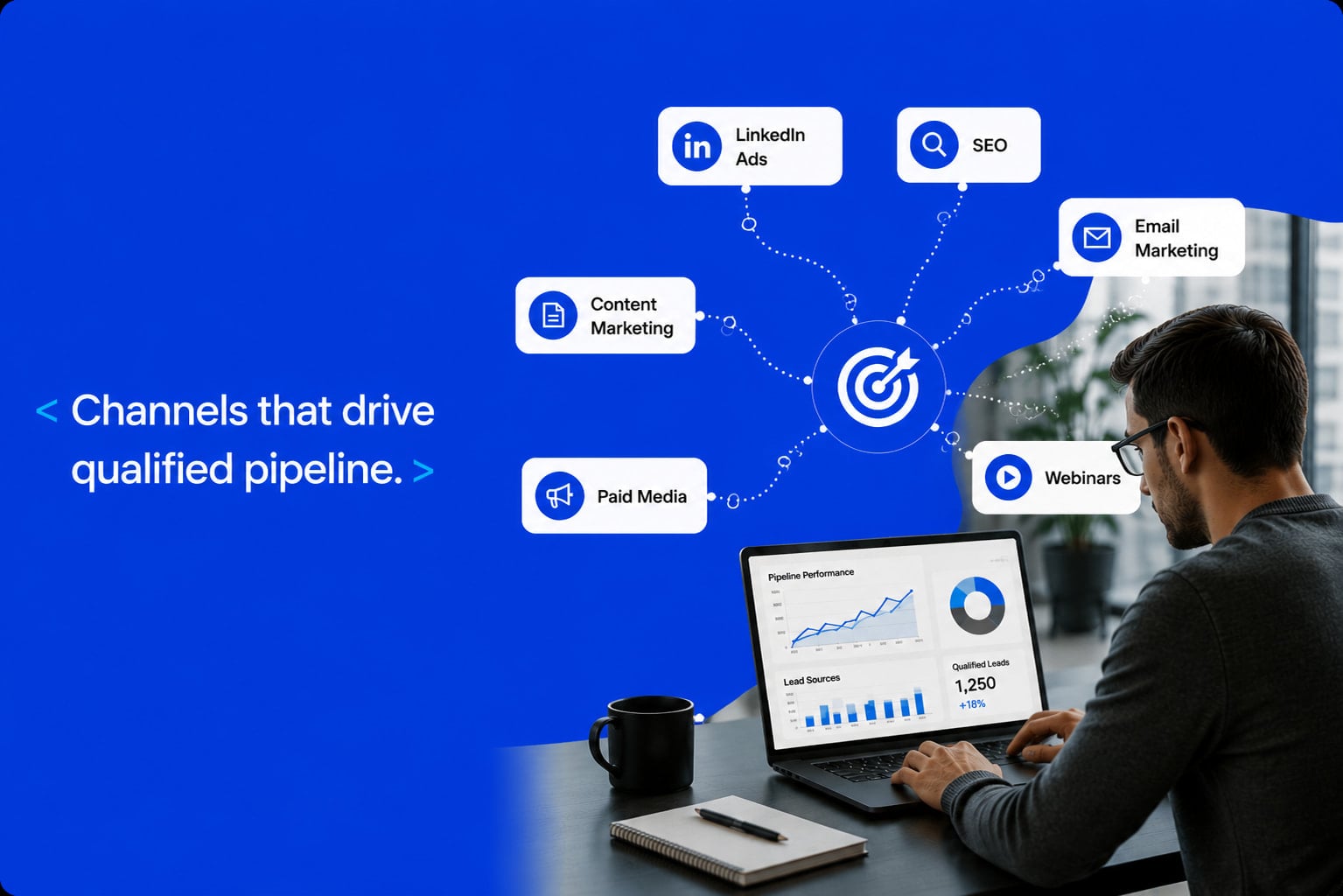
The strongest fintech demand channels perform different jobs across the buying process. Their placement below reflects their primary role, not an exclusive funnel stage. Some channels can influence buyers across several stages.
The useful distinction concerns each channel’s main contribution to demand development. Some primarily create awareness, while others deepen or capture demand. This framework helps teams assign appropriate objectives and metrics.
Awareness Channels
Awareness channels introduce relevant problems and perspectives before buyers actively evaluate vendors. They matter when solutions address unfamiliar or emerging financial challenges. Their role is creating relevant recognition rather than forcing premature conversions.
For demand gen for fintech, awareness should prioritize audience relevance over maximum impressions. Buyers need to connect the brand with problems they may eventually need to solve. Strong awareness makes subsequent education more effective because the problem already feels familiar.
Social Media
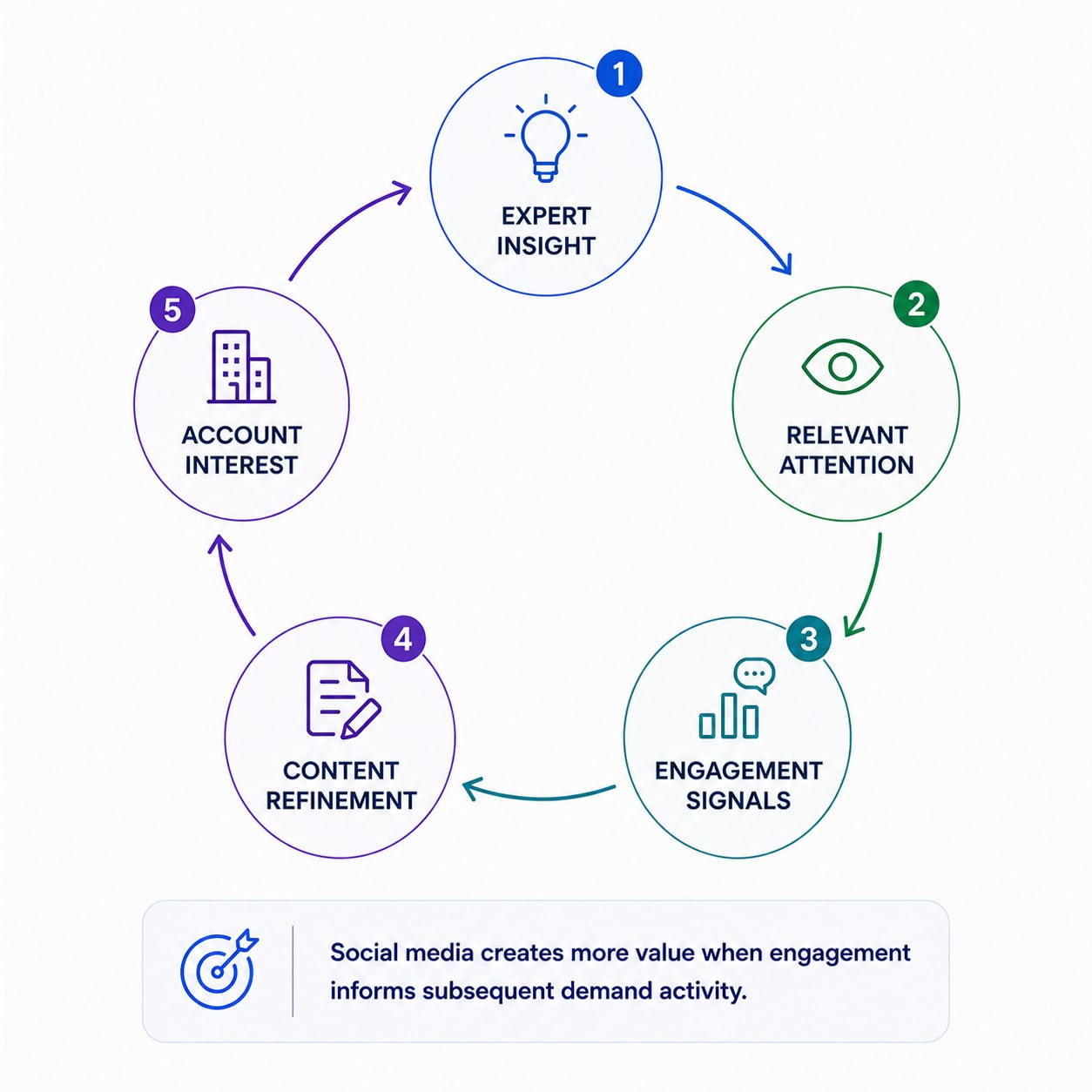
Social media gives fintech brands recurring access to specialized professional audiences. With fintech social media marketing, brands can build that familiarity through relevant perspectives on the issues their audiences already face. Consistent expertise can establish familiarity before prospects begin evaluating specific providers.
Useful formats include:
- executive perspectives on changing financial priorities,
- short explanations of operational problems,
- commentary on relevant industry developments,
- practical insights for specialized buyer roles.
PR & Thought Leadership
PR builds credibility around expertise, market perspective, and company relevance. Fintech PR strengthens this role by placing expert perspectives in publications buyers already know and trust. This external context can strengthen trust before direct vendor evaluation begins.
Educational thought leadership performs a different function from product promotion. It helps buyers understand changing problems and evaluate possible approaches. Strong perspectives can also clarify the consequences of delaying action.
This matters when teams need to engage financial decision-makers beyond immediate product users. Relevant insights can travel across buying groups and support internal discussions. Decision-makers can then encounter the brand through expertise rather than direct promotion.
Thought leadership should therefore offer a defensible point of view. Repeating familiar industry observations creates visibility without meaningful authority. Original analysis gives audiences a stronger reason to remember and revisit the brand.
Events
Events concentrate relevant buyers, experts, partners, and vendors within a shared context. They can accelerate conversations that otherwise develop through disconnected digital interactions. Direct interaction also helps teams understand buyer concerns more precisely.
Priority formats include:
- specialist industry conferences,
- executive roundtables,
- focused workshops,
- partner events,
- small account-based sessions.
Event activity should continue after attendance. Follow-up content can address questions raised during conversations. Account-specific outreach can then convert meaningful interactions into measurable demand signals.
SEO
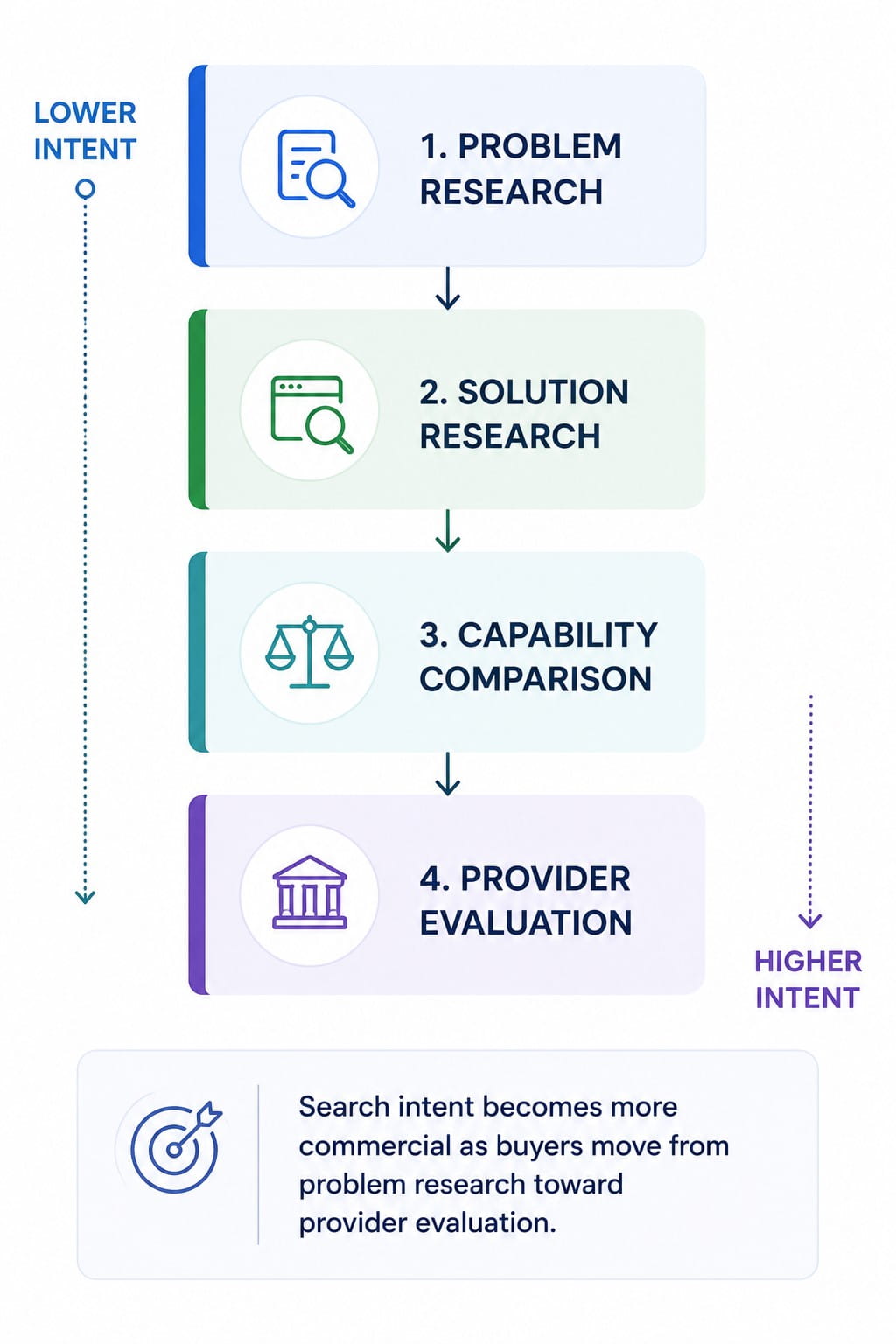
SEO captures research behavior while building awareness around problems buyers are beginning to investigate. Strong fintech SEO connects search demand with educational content across different intent levels. This makes search useful before prospects begin explicit vendor comparisons.
SEO therefore supports several stages despite its placement within awareness. Content architecture should distinguish educational discovery from high-intent evaluation. That separation also improves measurement because different search intentions require different outcomes.
Demand Creation Channels
Demand creation turns awareness into active interest by helping buyers understand problems, solutions, and potential business value. This stage requires deeper education than simple brand exposure. Prospects need reasons to continue exploring rather than merely remember the company.
For B2B fintech demand generation, these channels should create meaningful buying progress. Engagement matters when it improves understanding or reveals account interest. It becomes more valuable when buyers advance toward evaluation.
Content Marketing
Content marketing gives buyers information needed to understand complicated financial products independently. Fintech content marketing supports this process by answering specific questions that can prevent buyers from progressing. Each asset should reduce uncertainty around an important decision.
Useful content changes as consideration develops:
- problem analysis establishes relevance,
- frameworks help buyers structure decisions,
- use cases connect capabilities with outcomes,
- comparison content supports evaluation,
- proof helps validate potential choices.
Content should reduce decision difficulty rather than simply describe product capabilities. Stakeholders may require business, technical, operational, and risk-related justification. Different assets can address those concerns without forcing one document to serve every buyer.
Strong content also supports fintech demand creation beyond organic discovery. Teams can distribute proven assets through paid campaigns, social channels, partnerships, and account programs. This extends useful ideas to buyers who may not actively search for them.
Webinars
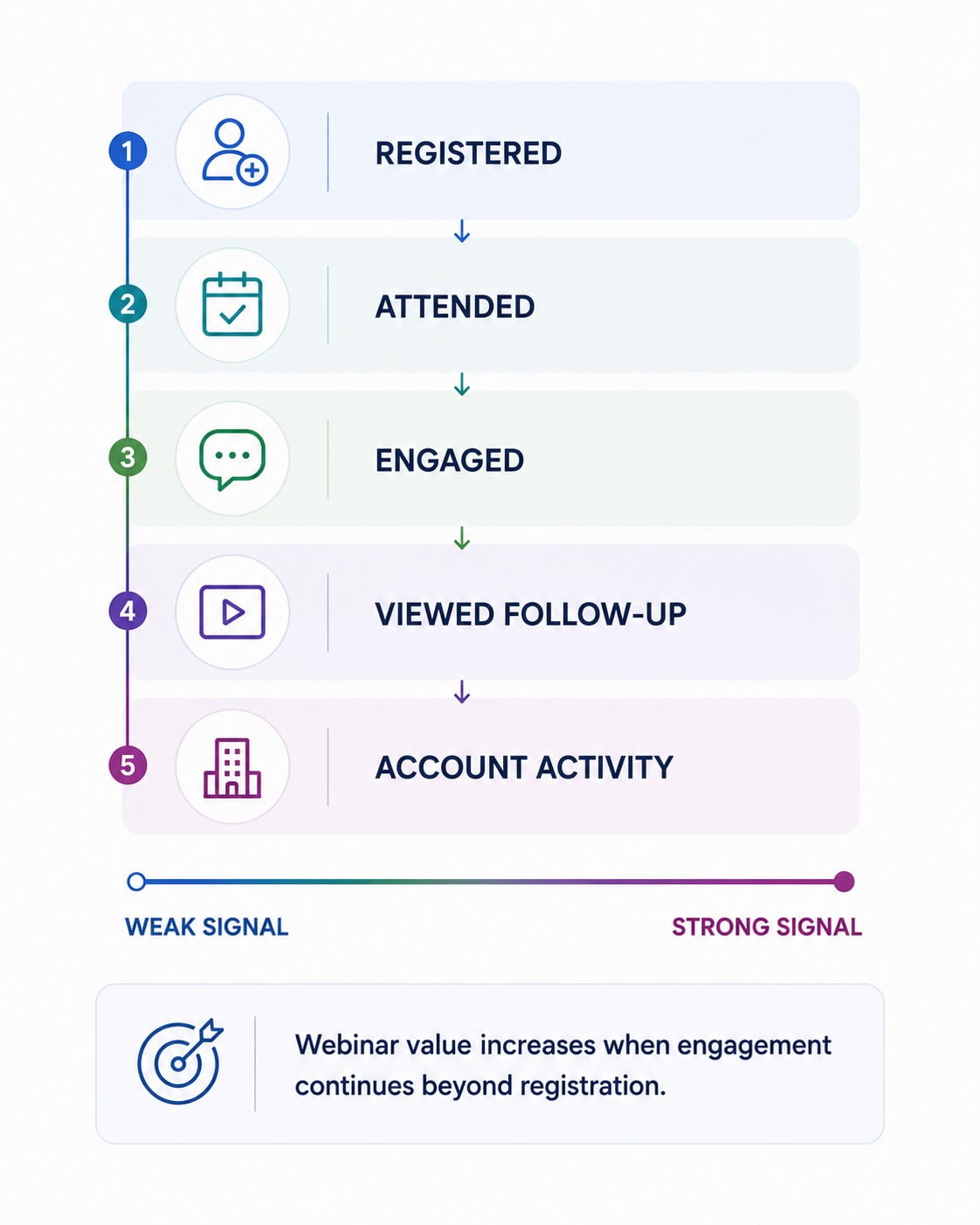
Webinars create space for deeper education when products or market issues need detailed explanation. They combine expert content with direct audience interaction. Questions from participants can also reveal unresolved concerns during consideration.
For complex products, demand generation for fintech benefits when webinars address questions that static content cannot resolve. Attendee behavior can then reveal which accounts need deeper follow-up. Teams can use questions and post-event engagement to prioritize relevant next steps.
Paid Media
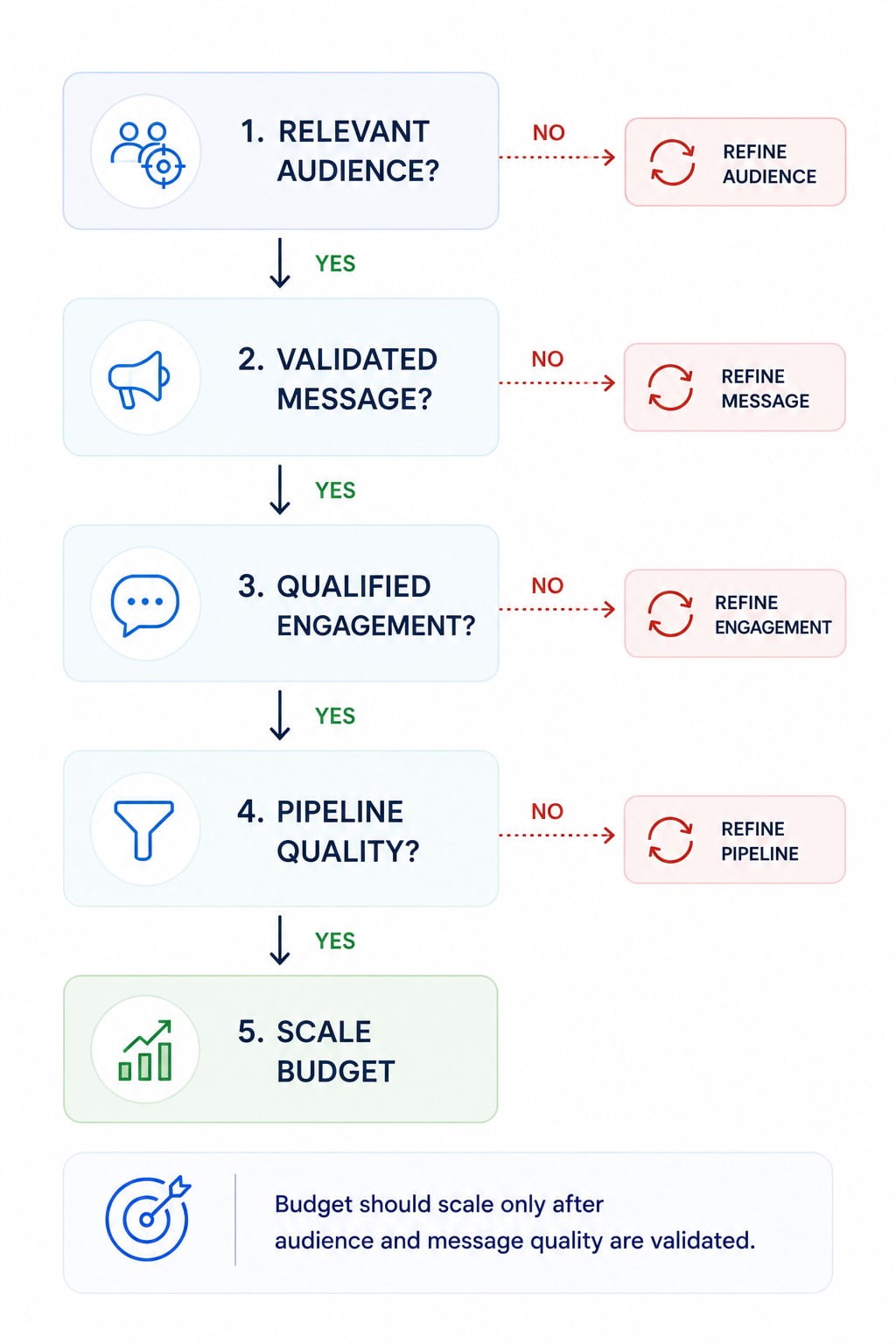
Paid media accelerates distribution toward audiences organic channels may reach slowly. For specialized audiences, fintech advertising can accelerate this distribution without relying on broad, inexpensive traffic. Campaign objectives should reflect the buyer stage being influenced.
Different campaigns can support different demand objectives:
- distribute educational perspectives to new audiences,
- amplify high-performing content,
- reach known target accounts,
- promote deeper evaluation assets,
- recapture previous site interest.
Account-Based Marketing
Account-based marketing concentrates resources around high-value target accounts rather than broad lead volume. It works well when potential customers are identifiable and economically significant. This focus makes relevance more important than audience size.
ABM should coordinate account selection, relevant content, advertising, and sales engagement. Multiple contacts from one organization can indicate stronger demand than one active individual. Account activity should therefore be interpreted collectively where possible.
Trigger-based outbound can strengthen this model when outreach follows meaningful account signals. Useful triggers include repeated content engagement, event activity, or high-intent website behavior. Outreach becomes more relevant when it reflects what the account already explored.
This approach makes B2B fintech lead generation more selective. Marketing and sales can prioritize accounts showing strategic fit and developing intent. That reduces attention spent on leads unlikely to become valuable opportunities.
Partnerships
Partnerships create access to audiences that already trust another organization or professional network. That borrowed context can reduce initial credibility barriers. Relevant partners can also introduce expertise that one brand cannot provide independently.
Effective formats include:
- joint educational content,
- co-hosted webinars,
- integration campaigns,
- shared research,
- referral programs.

Demand Capture Channels
Demand capture focuses on buyers who already demonstrate meaningful interest. The objective shifts from creating recognition toward helping prospects take an appropriate next action. Existing intent changes both messaging and channel priorities.
These channels are critical for demand gen for fintech because long buying cycles produce many incomplete journeys. Existing interests should receive more relevant treatment than cold audiences. Effective capture programs respond to previous behavior instead of restarting the buying conversation.
Retargeting
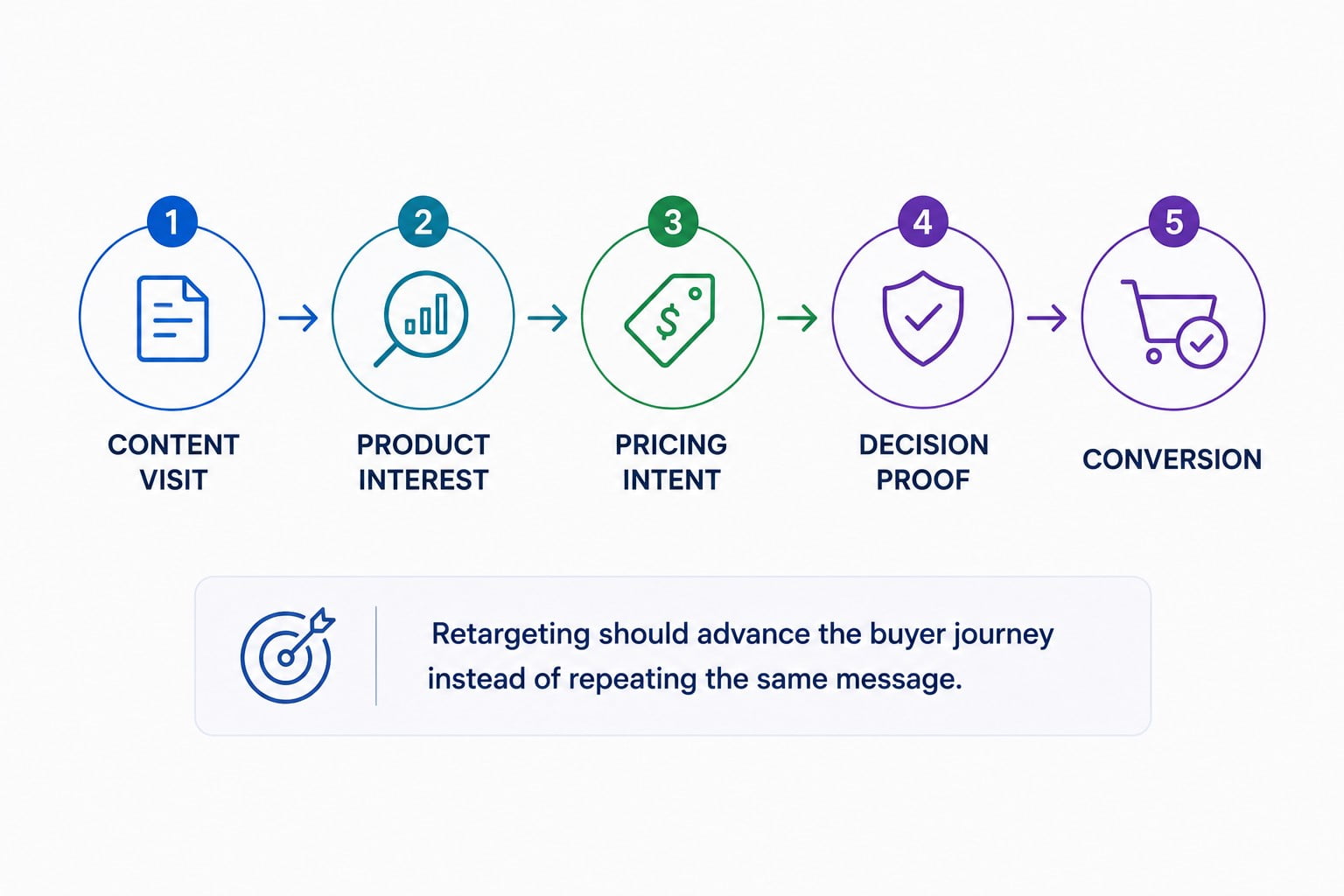
Retargeting reconnects with prospects after relevant interactions. Its value comes from advancing previous interest rather than repeating introductory messages. Audience structure should therefore reflect what prospects already know.
Audience segments can reflect meaningful behavior:
- educational content visitors receive deeper guidance,
- product visitors receive capability evidence,
- pricing visitors receive decision-stage proof,
- event attendees receive related follow-up,
- returning accounts receive stronger evaluation content.
Email Marketing
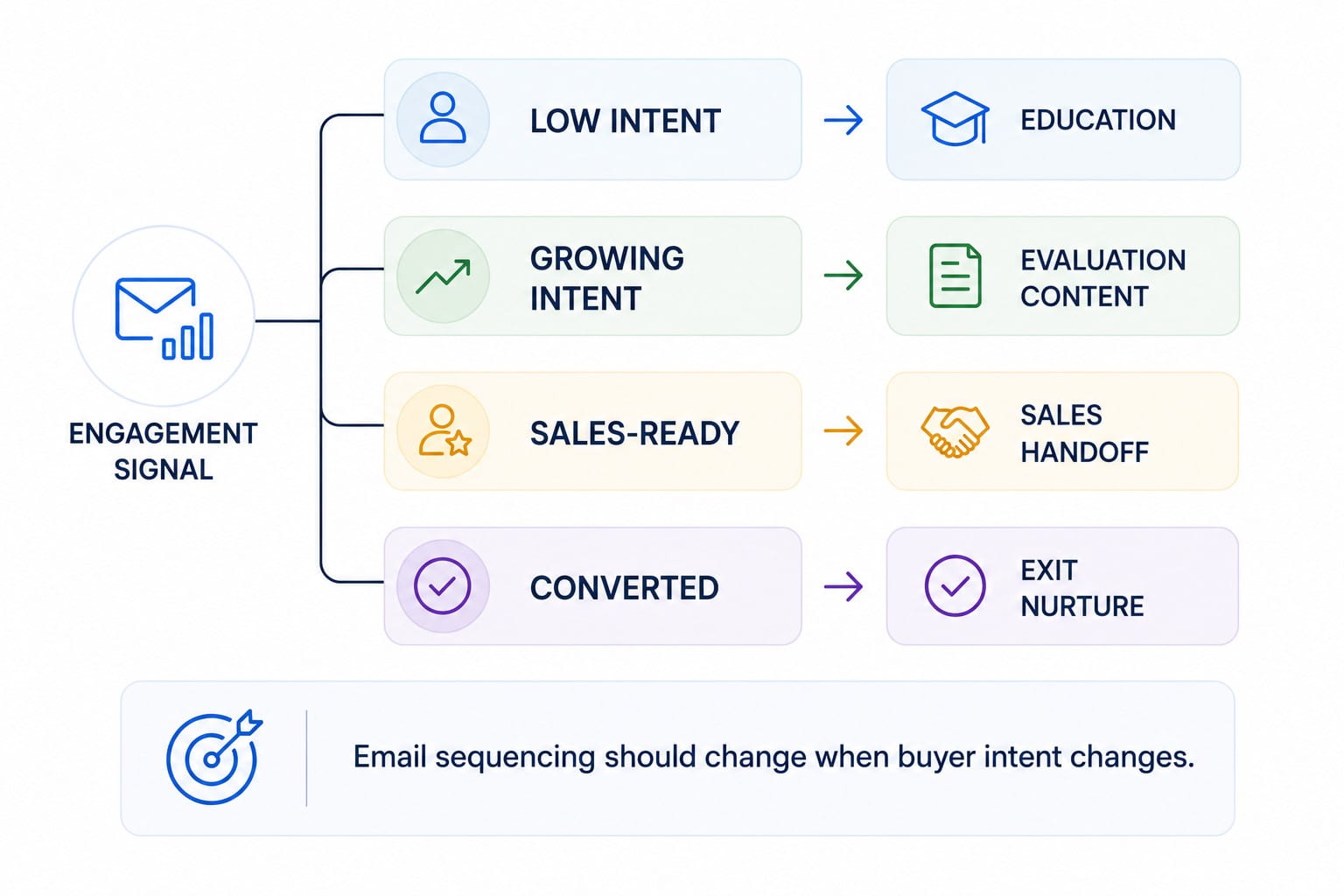
Email supports ongoing education when prospects are not ready for immediate sales engagement. Fintech email marketing supports this ongoing education by adapting information to buyer interests and previous engagement.
Segmentation can use content topics, account characteristics, previous engagement, or declared needs. Each signal should influence which information appears next. Relevant sequencing helps nurture interest without creating unnecessary sales pressure.
Conversion Optimization
Conversion optimization removes friction when interested buyers are ready to progress. It should improve decision clarity rather than simply increase form submissions. High-intent experiences must answer critical questions without creating unnecessary work.
High-intent pages should answer essential questions quickly:
- What problem does the solution address?
- Who is the product designed for?
- What business value can buyers expect?
- What evidence supports the claims?
- What should the prospect do next?
How to Choose the Right B2B Fintech Marketing Channels
Choosing channels for demand generation for B2B fintech starts with identifying the specific pipeline constraint. Awareness channels help when relevant buyers rarely encounter the brand, while creation channels deepen understanding and consideration. Capture channels become more important when existing interest fails to progress toward qualified opportunities.
| Channel | Primary role | Best use | Main limitation |
| Social Media | Awareness | Continuous market visibility | Attention may lack intent |
| PR & Thought Leadership | Awareness | Credibility and authority | Influence can be indirect |
| Events | Awareness | High-value conversations | Reach is constrained |
| SEO | Awareness | Capturing research behavior | Results develop gradually |
| Content Marketing | Creation | Buyer education | Requires strong distribution |
| Webinars | Creation | Complex product education | Registration may overstate intent |
| Paid Media | Creation | Targeted distribution | Weak targeting wastes spend |
| ABM | Creation | Priority accounts | Requires sales alignment |
| Partnerships | Creation | Trusted audience access | Partner relevance varies |
| Retargeting | Capture | Re-engagement | Depends on prior traffic |
| Email Marketing | Capture | Long-cycle nurturing | Generic sequences lose relevance |
| Conversion Optimization | Capture | Removing decision friction | Cannot create missing demand |
The comparison shows why demand generation channels for B2B fintech should not share one success metric. Each channel creates value at a different point in buyer progression. Comparing them through identical conversion targets can distort investment decisions.
A demand generation strategy for B2B fintech should allocate investment by channel role. The budget should follow the constraint currently limiting pipeline growth. Historical channel preferences should not determine future allocation without performance evidence.
How to Measure B2B Fintech Demand Generation Performance
Measurement should connect market attention with pipeline and revenue rather than count conversions alone. B2B demand generation for fintech creates useful signals before prospects become sales-ready. Measurement therefore needs several levels of commercial progression.
A useful measurement hierarchy separates four levels:
- Awareness: brand awareness, branded search, relevant website traffic.
- Engagement: content consumption, return visits, event activity, account engagement.
- Pipeline: qualified opportunities, conversion rates, pipeline value.
- Revenue: CAC, closed revenue, and revenue contribution.
These levels prevent early channels from being judged solely by immediate leads. They also prevent engagement metrics from becoming substitutes for commercial outcomes. Each level should explain whether demand is progressing toward the next stage.
Demand generation for B2B fintech should examine movement between measurement levels. Rising awareness without deeper engagement may indicate weak relevance or insufficient education. Strong traffic alone cannot establish meaningful buyer progress.
Likewise, strong engagement without pipeline progression can expose qualification or conversion problems. Teams should investigate where buyer movement stops before reallocating budgets. This diagnosis makes optimization more precise than simply cutting expensive channels.
The measurement model should also support demand-led growth for fintech. Marketing investment becomes easier to defend when demand signals connect with a qualified pipeline. Revenue contribution then provides a final commercial reference point.
This approach changes optimization priorities. Teams can scale channels producing valuable customer progression instead of rewarding cheap isolated conversions. CAC should also be interpreted alongside opportunity and customer quality.
Final Thoughts
Effective B2B fintech demand generation coordinates channels around how buyers discover, understand, validate, and evaluate complex solutions. No channel performs every role equally well. Teams should therefore assign channels according to their primary contribution to buyer progression.
The strongest programs balance fintech demand creation with demand capture and measure progress beyond immediate leads. This approach creates clearer investment decisions and stronger pipeline accountability. It also helps teams improve weak stages without disrupting channels already performing their intended role.