PPC marketing helps businesses reach customers who are already searching for relevant products or services. It often takes months for organic channels to build momentum. In contrast, pay-per-click advertising can reach high-intent audiences almost immediately.
As advertising platforms become more sophisticated, PPC has evolved far beyond keyword bidding. Today, successful campaigns combine data, automation, AI, and continuous optimization. This helps improve ROI while controlling acquisition costs. Businesses that connect these elements can generate more predictable growth in competitive markets.
This guide explains how PPC marketing works. It also covers platforms, campaign types, optimization, and AI-driven changes.
What Is PPC Marketing?
PPC marketing is a digital advertising model where advertisers pay only when someone clicks an ad. Instead of earning organic visibility, businesses bid for paid placements. These placements appear across search, social, marketplaces, and publisher sites.
The primary advantage of PPC is intent. Many campaigns reach users while they research, compare providers, or prepare to buy. This helps advertisers reach prospects at key decision-making moments.
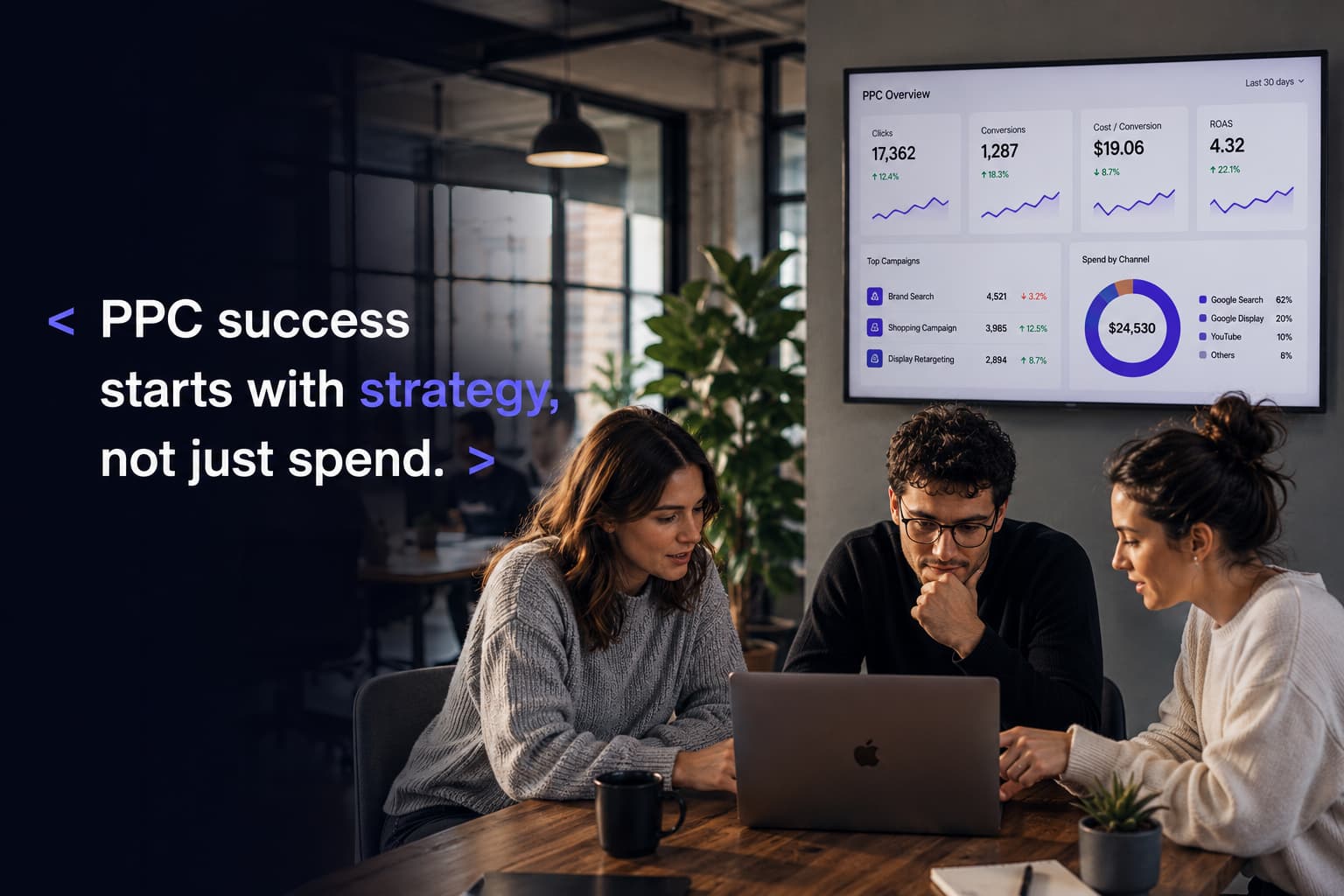
Traditional advertising often focuses on impressions. However, PPC campaigns provide measurable data throughout the customer journey. Marketers can track clicks, conversions, costs, and revenue. Then, they use this data to refine their campaigns.
How Pay-Per-Click Advertising Works
Every PPC campaign begins with selecting ads and an audience. You can target your ads using keywords, demographics, behavior, interests, or previous website visits.
When advertisers compete for the same audience, platforms hold automated ad auctions. The winning bid is determined by more than just the highest price. Platforms also evaluate ad relevance, expected engagement, landing page quality, and user experience.
After clicking, users are directed to a page designed for a specific action. This action may include making a purchase, submitting a form, or downloading an app. Campaign data feeds the platform’s algorithms. This improves the efficiency of future bids and targeting.

Key PPC Platforms
PPC principles stay similar across platforms. Each network supports different goals and customer behaviors.
- Google Ads captures demand from users actively searching for products or services.
- Meta Ads help businesses build awareness and demand through Facebook and Instagram targeting.
- LinkedIn Ads focus on professional audiences. They work well for B2B leads and account-based campaigns.
The right platform depends on where customers spend time and how they buy. Businesses entering new countries often use international PPC. These strategies adapt targeting, messaging, and bidding by region.
Why PPC Marketing Matters for Businesses
PPC marketing gives businesses direct control over visibility, budget allocation, and campaign performance. Advertisers do not have to wait for organic rankings. They can quickly reach audiences, test messaging, and measure results.
Another advantage is transparency. Marketers can measure each customer journey stage. This shows which keywords, audiences, and pages drive revenue. Companies reviewing the benefits of PPC often value its speed, flexibility, and measurable performance.
Explore the latest PPC statistics to understand why paid advertising remains a key driver for launches, customer acquisition, and market expansion.
Immediate Traffic vs SEO
SEO and PPC both increase online visibility, but they achieve this in different ways. SEO builds long-term authority through content, technical work, and backlinks. PPC delivers immediate visibility to users searching for relevant offers.
Neither channel replaces the other. Many successful organizations combine both approaches by using PPC to generate immediate traffic while SEO steadily increases organic visibility. This balance captures demand today while building future acquisition channels.
Key differences include:
- PPC delivers traffic almost immediately after campaigns launch.
- SEO typically requires sustained optimization before rankings improve.
- PPC provides greater control over targeting, budgets, and campaign timing.
- SEO continues generating traffic without paying for every individual click.
- Combining both channels often produces stronger long-term marketing performance.
Scalability and Predictable ROI
Unlike many traditional advertising channels, PPC campaigns can scale gradually based on performance data. Businesses often start with small budgets. Then they validate demand, refine campaigns, and scale proven investments.
Optimizing before increasing spending reduces financial risk and improves efficiency. Marketers should identify keywords, audiences, and ads that consistently convert before scaling budgets.
Predictable growth also depends on disciplined budget management. A clear PPC budget helps teams balance acquisition costs, expected revenue, and profitability.
When PPC Is the Right Growth Channel
PPC is particularly effective when businesses need measurable results within a relatively short timeframe. Companies use paid advertising for launches, seasonal campaigns, or limited organic visibility.
PPC is often the right choice when businesses need to:
- Generate qualified leads quickly.
- Launch new products or services.
- Test messaging before larger marketing investments.
- Enter highly competitive markets.
- Support sales during seasonal demand.
- Complement long-term SEO initiatives.
Although PPC delivers rapid visibility, sustainable success depends on continuous optimization rather than simply increasing advertising budgets. Campaigns improve when teams review audience quality, creative performance, and conversions before adjusting strategy.
Core PPC Campaign Types
Different PPC advertising formats support different stages of the customer journey. Some campaigns address existing demand. Others introduce products to new audiences. Marketers can develop a balanced acquisition strategy by understanding each format.
Search Advertising Campaigns
Search advertising places text ads on search engine results pages in response to relevant user queries. These users are actively searching. This makes search campaigns highly effective.
A successful search campaign requires more than just selecting popular keywords. Advertisers must align their keywords, ads, and landing pages. Users should be able to find what they’re looking for immediately.
Search campaigns are commonly used for:
- Lead generation
- Ecommerce sales
- Local service promotion
- SaaS customer acquisition
- Brand protection campaigns
Display Advertising Campaigns
Display campaigns show banner ads on websites and apps across the Google Display Network. Unlike search advertising, display advertising builds brand awareness during longer buying journeys. Since users are not actively searching, visual creativity is more important. Strong visuals and clear offers attract attention and reinforce brand recognition.
Display campaigns are particularly effective for:
- Brand awareness
- Product launches
- Prospect nurturing
- Remarketing campaigns
- Customer retention
Shopping Ads for Ecommerce
Shopping campaigns display product images, prices, and store information next to search results. This helps customers compare products before visiting a website. The quality of product feeds significantly impacts campaign performance. Accurate titles, strong descriptions, competitive prices, and quality images can improve visibility and CTR.
Large catalogs need regular feed, bid, and inventory reviews.
Video Ads and YouTube Advertising
Video advertising allows brands to educate, demonstrate products, and build trust before asking users to convert. YouTube supports goals related to brand awareness, consideration, lead generation, and direct response.
Educational content works well because it explains complex products before buyers decide. Demos, tutorials, walkthroughs, and customer stories often outperform purely promotional ads.
Video campaigns commonly support:
- Brand awareness
- Product education
- Customer testimonials
- Product demonstrations
- Event promotion
Remarketing and Retargeting Campaigns
Most website visitors do not convert during their first interaction. Remarketing reconnects businesses with previous visitors. It encourages them to return and complete the desired action.
Modern remarketing strategies rely on audience behavior rather than generic repetition. Advertisers can tailor messages by visited pages, viewed products, or buying stage.
Effective remarketing often includes:
- Dynamic product ads for previous visitors.
- Sequential messaging that changes over time.
- Offers tailored to customer behavior.
- Cross-selling and upselling campaigns.
- Audience exclusions to prevent unnecessary ad spend.
Well-managed remarketing often produces strong returns. These campaigns focus on audiences that already showed interest.
How PPC Advertising Works Step by Step
Launching a successful PPC campaign involves much more than selecting keywords and setting a budget. Every stage, from audience research to conversion tracking, influences campaign performance. A structured approach allows marketers to improve efficiency while reducing wasted advertising spend over time.
Keyword Research and Intent Mapping
Keyword research shapes when ads appear and who sees them. However, search volume alone should never determine keyword selection. Understanding search intent is equally important because it reveals where potential customers are in the buying journey.
Most PPC keywords fall into three intent categories:
- Informational: Users researching a topic or learning about a problem.
- Commercial: Users comparing products or evaluating different providers.
- Transactional: Users ready to purchase, subscribe, or contact a business.
Intent mapping helps advertisers create more relevant ads and landing pages. Regular PPC competitor analysis reveals keyword opportunities, messaging trends, and competitor gaps.
Ad Creation and Copywriting
Strong PPC ads attract clicks and encourage users to take action. Effective ad copy clearly communicates value and sets realistic expectations.
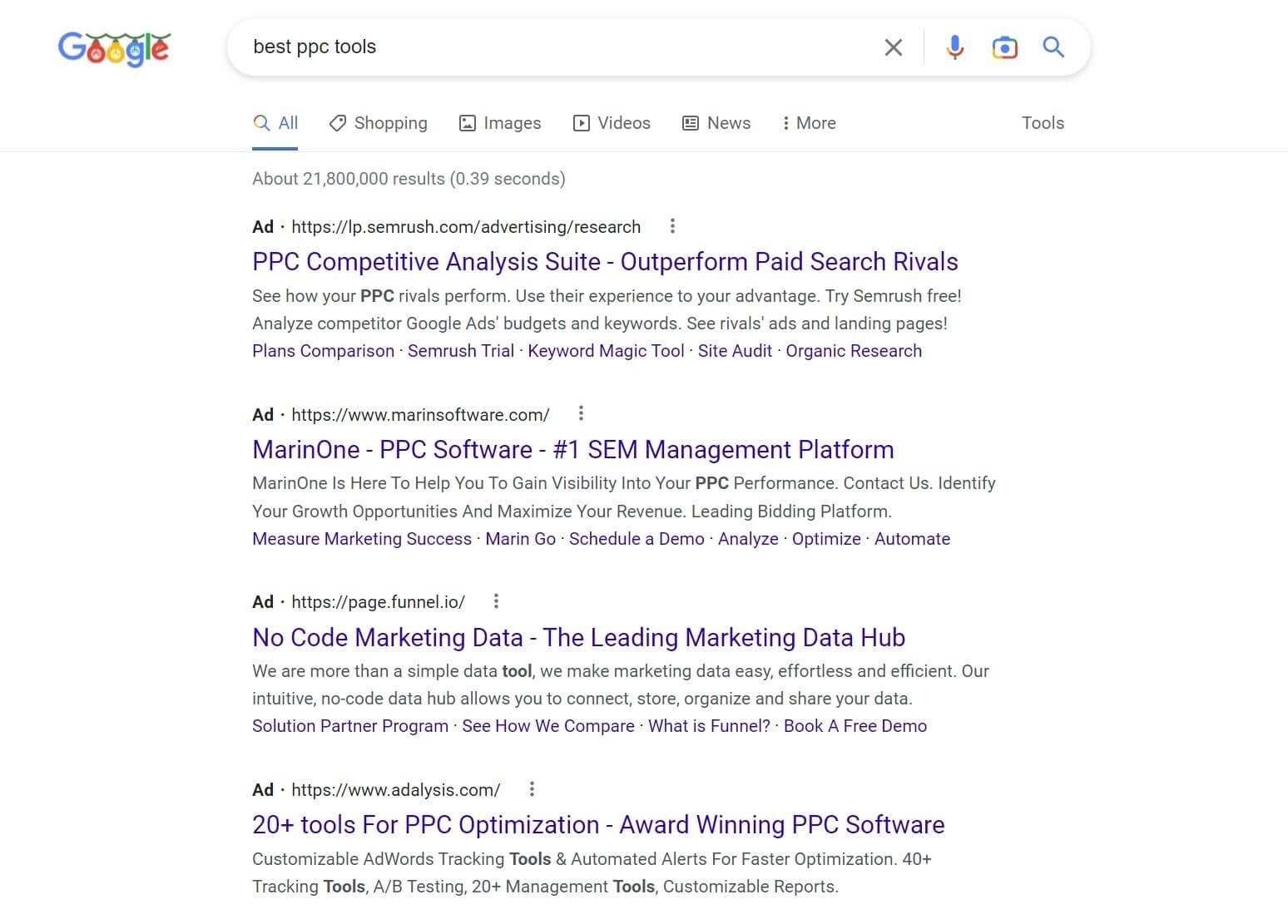
High-performing PPC ads typically include:
- A headline aligned with the user’s search.
- A concise description highlighting key benefits.
- A clear call to action.
- Relevant keywords that reinforce ad relevance.
- Messaging consistent with the destination page.
Experienced marketers test ad variations with focus. They usually compare elements like headlines, descriptions, and calls to action. This approach provides meaningful performance insights while maintaining consistent messaging.
Landing Page Optimization
Even the highest-performing advertisements cannot compensate for weak landing pages. After the click, the landing page must build trust and guide conversion.
Effective landing pages usually share several characteristics:
- One primary conversion goal.
- Messaging that matches the advertisement.
- Fast loading speed.
- Simple navigation with minimal distractions.
- Clear trust signals such as reviews, certifications, or guarantees.
Successful PPC optimization extends beyond advertisements themselves. Landing page improvements often outperform budget increases. They convert more existing visitors.
Bidding Strategies and Budget Allocation
Modern advertising platforms offer multiple bidding strategies designed to support different campaign objectives. Some prioritize traffic, while others optimize toward leads, purchases, or return on ad spend.
Common bidding approaches include:
- Manual CPC.
- Maximize Clicks.
- Maximize Conversions.
- Target CPA.
- Target ROAS.
The right strategy depends on campaign maturity, conversion data, and business goals. As campaigns evolve, advertisers should review performance and adjust bids using conversion data. They should refine the PPC budget instead of simply increasing spend.
PPC Strategy Development
A successful PPC campaign begins with a clear strategy rather than individual tactics. Campaign structure, targeting, keyword organization, and measurement should all support the same business objective. Without this alignment, even well-funded campaigns can generate traffic that fails to produce meaningful business results.
Defining Campaign Goals
Each PPC campaign should be optimized for a single primary objective. Having multiple goals makes optimization more difficult. This confuses the platforms because they receive conflicting performance signals.
Common PPC objectives include:
- Brand awareness
- Website traffic
- Lead generation
- Ecommerce sales
- App downloads
- Customer retention
Each objective requires different bidding strategies, creative assets, audience targeting, and conversion tracking. Defining campaign goals before launch makes optimization more consistent and simplifies performance analysis as campaigns mature.

Audience Targeting and Segmentation
Audience targeting has evolved far beyond demographics. Modern PPC platforms consider behavior, intent, interests, site interactions, and first-party data. These factors allow advertisers to reach potential customers.
Effective audience segmentation may include:
- New prospects.
- Returning website visitors.
- Existing customers.
- Lookalike audiences.
- In-market audiences.
- Custom intent audiences.
B2B and B2C campaigns require different targeting logic. B2C PPC usually focuses on individual intent, shorter buying cycles, and direct conversion actions. B2B campaigns often involve longer decision paths, multiple stakeholders, and lead quality scoring.
That difference changes how audiences should be built. B2B PPC campaigns often combine audience segmentation with CRM data. This improves lead quality and reduces waste.
Keyword Match Types and Structure
Keyword match types determine how closely searches must match the selected keywords. Selecting the appropriate match type balances reach and relevance while reducing unnecessary clicks.
The three primary match types include:
| Match Type | Best Used For | Typical Reach |
| Exact Match | High-intent searches | Narrow |
| Phrase Match | Related commercial searches | Moderate |
| Broad Match | Discovery and expansion | Wide |
The most successful PPC accounts use a combination of match types instead of relying on just one. Exact match captures qualified searches. Phrase match expands reach. When paired with negative keywords, broad match can reveal new opportunities.
Funnel-Based PPC Strategy
Different stages of the customer journey require different campaign objectives and messaging. A funnel-based PPC strategy keeps ads relevant across awareness, comparison, and purchase stages.
A simplified funnel may look like this:
| Funnel Stage | Campaign Focus | Typical Objective |
| Awareness | Display, Video, Social Ads | Reach new audiences |
| Consideration | Search, Remarketing | Generate qualified traffic |
| Conversion | Search, Shopping, Performance Max | Drive sales or leads |
Campaign management becomes significantly more effective when each stage of the funnel is built upon the previous one. Advertisers should not evaluate campaigns in isolation. PPC functions as an interconnected acquisition system spanning awareness, consideration, and conversion.
As campaigns grow, structure, reporting, and optimization discipline become more important. Strong PPC account management helps advertisers scale while keeping budgets aligned with business goals.
The Impact of AI on PPC Marketing and the Rise of Conversational Advertising
Artificial intelligence has fundamentally changed how PPC campaigns are planned, managed, and optimized. Tasks that once required hours of manual analysis can now be automated using machine learning. As a result, marketers spend less time managing campaigns manually and more time making strategic decisions based on performance insights.
AI is changing the way people find information online. Users no longer rely solely on traditional search engines. Now, they ask conversational AI platforms for direct answers and recommendations. This broadens the scope of paid advertising beyond search results. It also creates new opportunities for brand discovery.
How AI Is Transforming PPC Campaign Management
Modern PPC platforms rely heavily on AI for campaign management automation. Machine learning evaluates various signals, such as behavior, device type, location, intent, and conversion history. These improvements occur in real time.
AI now supports marketers by helping them:
- Automate bid adjustments.
- Predict conversion probability.
- Identify high-performing audiences.
- Recommend budget allocation.
- Generate ad variations.
- Detect performance anomalies.
AI does not replace PPC specialists. It lets them focus on strategy, testing, and customer experience. AI has made PPC marketing more adaptive, but it has also increased the need for stronger human oversight.
AI-Powered Optimization and Real-Time Decision Making
AI makes campaign optimization more dynamic. Rather than waiting for manual reviews, it continuously analyzes performance. Platforms can react within minutes. They can adjust bids, reallocate budgets, and prioritize audiences with higher intent.
Real-time optimization commonly improves:
- Budget efficiency.
- Audience targeting.
- Bid management.
- Creative performance.
- Conversion forecasting.
Automation has become more advanced. However, marketers still need to validate recommendations against business goals. AI can identify patterns in large data sets. But business priorities, seasonality, and positioning still require human judgment.

The Rise of Advertising in AI Platforms
Conversational AI is reshaping the world of digital advertising. ChatGPT, Gemini, and Perplexity are increasingly offering direct responses. These responses often include citations, recommendations, and interactive follow-ups. This shift is changing the way users discover brands and evaluate purchasing options.
While conversational advertising is still evolving, marketers should expect future PPC strategies to extend beyond traditional search engines. Sponsored recommendations and AI-assisted discovery will likely grow. Conversational commerce may also become more important.
Businesses should begin preparing by:
- Creating authoritative, well-structured content.
- Building strong brand credibility.
- Maintaining accurate product information.
- Improving first-party customer data.
- Monitoring emerging AI advertising opportunities.
How Marketers Should Adapt to AI-Driven PPC Ecosystems
Successful marketers combine automation with strategic oversight. They shouldn’t rely solely on manual work or full automation. AI processes data well at scale. However, long-term growth still hinges on customer insight, compelling offers, and valuable experiences.
Organizations adapting to AI-driven PPC should prioritize:
- First-party data collection.
- Continuous creative testing.
- Cross-channel attribution.
- Privacy-compliant measurement.
- Ongoing human review of automated decisions.
Businesses that combine AI with expert strategy can improve the efficiency of their campaigns. They can also maintain control over acquisition and profitability.
How to Optimize PPC Campaign Performance
Launching a campaign is only the beginning of the optimization process. Effective PPC marketing depends on improving the full path from impression to conversion. Experienced marketers avoid large, random changes. They make small improvements based on data.
Businesses managing several paid channels often benefit from professional PPC services that combine campaign optimization, reporting, testing, and budget management into one continuous performance system.
Improving Quality Score
A Quality Score is Google’s estimate of how relevant and useful an ad is to users. However, it is not the only ranking factor. Still, higher scores can reduce costs and improve visibility.
Several factors influence Quality Score:
- Expected click-through rate.
- Ad relevance.
- Landing page experience.
- Keyword relevance.
- Historical account performance.
To improve Quality Score, there must be consistent alignment between keywords, advertisements, and landing pages. Users should find what the ad promised. Landing pages should load quickly and facilitate conversion.
A/B Testing Ad Creatives
Even well-performing campaigns can usually be improved through structured experimentation. A/B testing compares creative elements. It shows which versions drive better engagement and conversions.
Common testing opportunities include:
- Headlines.
- Descriptions.
- Calls to action.
- Display URLs.
- Images and video assets.
- Landing page layouts.
Testing should focus on one variable at a time whenever possible. Making multiple changes simultaneously often makes it difficult to determine which adjustment influenced campaign performance.
Reducing Cost Per Click
Lowering CPC is not simply about bidding less. Sustainable CPC reductions come from better quality, relevance, and targeting.
Advertisers often reduce CPC by:
- Improving Quality Score.
- Refining keyword targeting.
- Expanding negative keyword lists.
- Increasing ad relevance.
- Improving landing page experience.
Regular campaign reviews also help identify inefficient spending before it affects overall profitability. A routine PPC audit can reveal weak keywords, duplicate targeting, and outdated settings.
Increasing Conversion Rate
Generating clicks without conversions creates unnecessary acquisition costs. Conversion rate optimization increases the share of visitors who complete meaningful actions.
Areas that commonly influence conversion performance include:
- Message consistency between ads and landing pages.
- Mobile usability.
- Page loading speed.
- Form simplicity.
- Trust signals and customer reviews.
- Clear calls to action.
Rather than optimizing advertisements and landing pages independently, marketers should evaluate the entire customer journey. Small improvements across several touchpoints often outperform one major campaign change.
PPC Metrics and KPIs You Must Track
Campaign activity alone does not indicate PPC advertising success. Metrics become valuable only when they help marketers understand how advertising contributes to business objectives. Meaningful KPIs help teams optimize for revenue, profitability, and customer acquisition.
CTR, CPC, CPA Explained
Several core metrics provide a foundation for evaluating campaign performance.
| Metric | What It Measures | Why It Matters |
| CTR | Percentage of users who click an ad | Indicates ad relevance and engagement |
| CPC | Average cost for each click | Measures traffic acquisition efficiency |
| CPA | Cost to acquire a conversion | Connects advertising spend to business outcomes |
These metrics are most effective when evaluated together, rather than individually. For example, a high CTR does not necessarily indicate success. A higher CPC can be effective if it attracts qualified customers.

ROAS and ROI Measurement
ROAS and ROI demonstrate whether advertising generates profitable growth rather than just increased traffic. ROAS measures revenue generated for every dollar spent on advertising. ROI measures profitability after accounting for broader business costs.
Marketers should regularly compare:
- Revenue generated.
- Advertising costs.
- Customer acquisition costs.
- Customer lifetime value.
- Overall profitability.
Evaluating campaigns through both ROAS and ROI provides a more complete picture of long-term marketing performance.
Conversion Tracking Setup
Accurate conversion tracking enables platforms to optimize for outcomes rather than clicks alone. Without reliable tracking, automated bidding receives weak signals. Over time, campaign efficiency declines.
Effective conversion tracking typically includes:
- Lead form submissions.
- Ecommerce purchases.
- Phone calls.
- Demo requests.
- Newsletter subscriptions.
- App installations.
Tracking should also extend beyond the initial conversion whenever possible. Measure qualified leads, repeat purchases, and lifetime value. This shows which campaigns create long-term growth.
Common PPC Mistakes to Avoid
Even experienced advertisers make mistakes that reduce campaign performance and increase acquisition costs. Many of these issues develop gradually, making them difficult to identify without regular performance reviews. Recognizing common pitfalls allows marketers to resolve problems before they significantly affect return on investment.
Poor Keyword Targeting
Keyword selection influences every stage of campaign performance. Poor keyword lists attract users with low intent. This results in wasted clicks and lower conversion rates.
Common keyword targeting mistakes include:
- Focusing only on search volume.
- Ignoring search intent.
- Using overly broad keyword groups.
- Mixing unrelated themes within one ad group.
- Failing to update keyword lists as campaigns evolve.
Regular keyword reviews help advertisers maintain relevance while adapting campaigns to changing customer behavior and market conditions.
Weak Landing Pages
While a compelling advertisement can generate clicks, landing pages determine whether visitors become customers. Users will leave if they encounter confusing layouts, slow pages, or mismatched messaging.
High-performing landing pages typically provide:
- A clear value proposition.
- Consistent messaging with the advertisement.
- Fast page speed.
- Simple navigation.
- Strong calls to action.
- Trust-building elements.
Landing page optimization should continue as expectations, competitors, and campaign goals change.
Ignoring Negative Keywords
Negative keywords prevent advertisements from appearing in searches that are unlikely to result in qualified leads. Many advertisers only set negative keywords once. However, it is important to maintain them regularly.
Effective negative keyword management helps marketers:
- Eliminate irrelevant traffic.
- Improve click quality.
- Reduce wasted advertising spend.
- Increase campaign relevance.
- Improve conversion efficiency.
Regular search term reviews reveal negative keyword opportunities before waste grows.
Lack of Conversion Tracking
Campaign optimization depends on accurate measurement. Without reliable tracking, platforms cannot identify valuable customers. Automated bidding becomes less effective.
Reliable tracking should measure actions that contribute directly to business objectives rather than superficial engagement. Regular audits reveal tracking gaps, attribution errors, and missing events before they hurt results.
If internal teams lack time for ongoing testing and reporting, this guide explains when it makes sense to outsource PPC management.
PPC Tools and Platforms
Modern PPC management relies on a combination of advertising platforms, research tools, and automation software. Successful marketers do not rely on one app. They build tool stacks for planning, optimization, and analysis.
Google Ads Manager
Google Ads Manager gives advertisers access to Search, Display, Shopping, Video, Demand Gen, and Performance Max.
Key capabilities include:
- Campaign creation and management.
- Audience targeting.
- Automated bidding.
- Conversion tracking.
- Performance reporting.
- Budget management.
Its automation features support scale while preserving control over targeting and measurement.
Meta Ads Manager
Meta Ads Manager helps businesses reach audiences across Facebook, Instagram, Messenger, and the Meta Audience Network. Unlike search, Meta campaigns focus on audience discovery through behavior, interests, demographics, and first-party data.
Meta Ads are commonly used for:
- Brand awareness.
- Prospecting.
- Lead generation.
- Ecommerce sales.
- Remarketing.
Creative quality often matters more than keywords. Users are browsing, not actively searching.
SEMrush and Ahrefs for PPC Research
Although SEMrush and Ahrefs are widely recognized as SEO platforms, both provide valuable insights for PPC planning. They help advertisers find keywords, evaluate competitors, estimate demand, and identify campaign gaps.
These platforms support PPC research by helping marketers:
- Discover commercial keywords.
- Analyze competitor advertising.
- Estimate keyword difficulty.
- Evaluate search trends.
- Identify new campaign opportunities.
Used with ad platforms, they improve planning before budgets are spent.

Automation and AI Tools in PPC
Automation platforms now support bidding, creative generation, and predictive reporting. AI helps marketers analyze large data sets and identify hidden performance opportunities.
Modern PPC workflows often combine:
- AI-powered bid management.
- Automated reporting dashboards.
- Creative generation tools.
- Predictive analytics.
- Budget forecasting.
- Performance monitoring.
Automation should enhance decision-making rather than replace it. Human expertise still matters for strategy, positioning, and business interpretation.
PPC Trends and Future of Paid Advertising
Paid advertising keeps evolving as AI, privacy rules, and customer behavior change. Organizations that adapt early can maintain efficient acquisition in automated ad environments.
AI and Machine Learning in PPC
Artificial intelligence is becoming central to campaign optimization. Ad platforms use machine learning to evaluate behavior, predict conversions, and optimize bids.
Future PPC strategies will rely more heavily on:
- Predictive audience modeling.
- AI-generated creative variations.
- Automated bidding decisions.
- Real-time budget allocation.
- Cross-channel optimization.
AI does not replace marketers. It gives them more time for strategy.
Automation-First Campaign Management
Manual campaign management is gradually being replaced by automated workflows. Advertisers are increasingly turning to smart bidding, dynamic creatives, and predictive reporting.
However, teams using automation should still review performance. Machine learning should support business goals, not just platform objectives.
Privacy Changes and Cookieless Tracking
Stronger privacy protections are changing the way advertisers use customer data. As third-party cookies become less effective, marketers are increasingly relying on first-party data, consent tools, and server-side tracking.
Successful advertisers are adapting by:
- Strengthening first-party data strategies.
- Improving CRM integration.
- Expanding server-side tracking.
- Using privacy-compliant attribution models.
- Diversifying acquisition channels.
Privacy-first marketers with accurate measurement will be better prepared for future advertising.
Conclusion
Modern PPC marketing remains one of the most effective ways to generate measurable business growth. Long-term success depends on much more than launching advertisements.
Advertising platforms keep evolving. Businesses that review performance, use automation carefully, and adapt to customer behavior can improve acquisition efficiency.