Pay-per-click (PPC) optimization has become a data-driven discipline where automation, AI-assisted bidding, and behavioral analytics define success. It is no longer just a tactical lever for lead acquisition but a central pillar of performance marketing strategy, balancing algorithmic precision with human insight.
The challenge arises when there’s no strategic approach to how to optimize PPC campaigns for continuous algorithm updates and shifting consumer behaviors, causing campaigns to drain budgets without delivering meaningful results. In other words, this is where the “set-it-and-forget-it” approach does not cut it anymore.
While the average return for PPC campaigns is $2 for every dollar spent, with an average cost per click ranging from $1 to $2 on Google Ads, constant optimization is necessary to achieve this. From nailing smart bidding to perfecting audience targeting to routine PPC audits, every campaign component needs to work smarter, not harder.
This guide will provide actionable insights and strategies for maximizing PPC performance and improving ROI to what you can expect to shell out for your next PPC campaign. Let’s dive in.
What Is PPC Optimization?
PPC optimization involves refining every aspect of your pay-per-click campaign for ultimate performance. Leveraging PPC expertise helps save ad spending and reduce waste, leading to better returns on investment. It’s not just about running ads but about running them smarter, guided by data-driven insights that adapt to audience behavior and evolving market requirements.
Why It’s Critically Important to Regularly Optimize PPC Campaigns
Regularly optimizing your PPC campaigns is not just maintenance — it’s the difference between wasting ad budget and driving consistent, scalable growth. Let’s take a closer look at the key reasons why it’s critically important to do it:
- Algorithms constantly evolve. Major advertising platforms frequently refine their algorithms, changing how ads are ranked, shown, and priced.
- Google Ads updates happen in real time. Ongoing shifts in quality score and bidding logic can drastically alter your Google Ads cost if not addressed promptly.
- Consumer behavior keeps changing. New trends, search intent patterns, and seasonal dynamics require frequent recalibration of ad copy and targeting.
- Competitors never stop optimizing. Every unoptimized campaign is a missed opportunity, allowing rivals to capture your audience and outperform your metrics.
- Campaign performance decays quickly. Neglecting updates leads to lower visibility, wasted spend, and declining return on ad spend (ROAS).
- Continuous optimization fuels long-term success. Regular audits and adjustments improve efficiency, lower acquisition costs, and sustain growth over time.
Main Types of PPC Optimizations
When it comes to PPC optimization, it’s not just about throwing a dart and hoping it hits the bullseye. It’s a layered strategy that aligns perfectly with the PPC funnel stages—TOFU (Top of the Funnel), MOFU (Middle of the Funnel), and BOFU (Bottom of the Funnel). Each stage demands a unique approach to keep users moving smoothly through the funnel while maximizing your ad spend.

Source: Single Grain
🔑 Keyword Optimization
- Do thorough keyword research to find high-intent keywords
- Block irrelevant traffic and avoid wasted spend by using negative keywords
- Go back to your keyword list regularly and make updates according to the changing search trends.
✍️ Ad Text Optimization
- Craft compelling ad copy that resonates with your target audience.
- Ensure that ad copies are in tandem with the landing page for a better user experience and improvement in the Ad Quality Score.
- A/B tests on Headlines, Descriptions, and CTAs should be run to fetch High CTRs and Conversions.
🎯 Audience Targeting
- Segment audiences by demographics, behaviors, and interests.
- Apply remarketing strategies for past visitors.
- Apply geo-targeting and time-of-day adjustments to fine-tune the best-performing segments.
💰 Bid Management
- Use intelligent bidding, which incorporates tools that run bids automatically for real-time data optimization.
- Adjust the bids across the times and locations most likely to drive conversions and yield the best performance.
- Keep an eye on CPA and ROAS to ensure cost efficiency.
Do you really know what’s hidden inside your ad reports? Find out how effective PPC account management uncovers new opportunities.
🧭 Landing Page Optimization
- Design appealing but fast-loading landing pages geared around conversion.
- Include clear calls to action and try to use social proof, such as reviews or testimonials, that build trust.
- Align the page’s content with ad messaging to increase relevance and decrease bounce rates.
📊 Performance Analysis
- Monitor the health of your campaigns through KPIs like CTR, CR, and CPA.
- Employ deep analytics to sift through what’s working and what needs attention.
- Apply changes based on performance trends to stay competitive.
Related Content: Key Benefits of Outsourcing PPC for Your Business Success
20 Expert Tactics to Improve Your Pay-Per-Click Campaigns
While the benefits of pay per click are undeniable, success ultimately depends on consistent fine-tuning. Even the best campaigns can lose effectiveness without practical, ongoing improvements. The following expert tactics focus on actionable steps you can take to instantly enhance performance and boost the overall impact of your PPC efforts.
Keyword Optimization
Effective keyword management is the backbone of any successful PPC campaign. These keywords connect your PPC ads to active users looking for your products or services. Leverage a balanced mix that includes high-intent long-tail keywords, routine refreshes, and purposeful negatives to zero in your campaign on the right users while filtering out unwanted traffic. Add in some PPC competitor analysis, and you’ll be armed with the insight to whittle down your strategy and make it razor-sharp in front of the competition.
1. Use Long-Tail Keywords
Long-tail keywords are your competitive edge to having killer PPC strategies in your holster. Unlike generic, high-volume keywords, long-tail terms are highly specific, aligning closely with user intent and often carrying less competition.
| Generic Keyword | Example Long‑Tail Keyword | Search Intent Focus |
| Toothbrush | eco‑friendly bamboo toothbrush for kids | Product‑specific, sustainability‑focused buyers |
| Running shoes | lightweight trail running shoes for women | Gender + activity targeted |
| Coffee subscription | organic fair‑trade coffee subscription box | Ethical consumer / recurring purchase intent |
| SaaS software | project management SaaS for remote teams | B2B niche with clear use case |
| Skin care | anti‑aging serum for sensitive skin | Pain‑point + demographic targeting |
The most effective long-tail keywords would be researched using Google Keyword Planner or SEMrush. Both allow analysis of search volume, competitive difficulty, and keyword variations. Focus on niche, high-intent phrases that match your target audience’s needs. If integrated properly into a pay-per-click optimization strategy, such keywords will help capture users deeper in their decision-making process and improve CTR and conversion rates while reducing CPA.
2. Regularly Analyze and Update Your Keyword List
Bad keywords waste money and reduce your Ad Quality Score by demoting the ad’s position, lowering the overall match, and ultimately driving up the cost of CPCs.
Build a consistent Google Ads strategy to analyze performance reports and reallocate your budget. Weed out the low-performing keywords with the help of the performance reports in a campaign through Google Ads. Follow emerging trends and add those high-performing terms to keep your keyword list from getting stale. Updates will make the PPC agile and adjust to user behavior changes.
3. Use Negative Keywords
Negative keywords keep your ad from appearing for irrelevant searches and ensure that your budget targets only the right audience. By filtering out terms irrelevant to the goals of your campaign, you can target high-intent traffic. For instance, a luxury brand would want to filter out “free” or “cheap” in searches to avoid wasted clicks and preserve its budget.
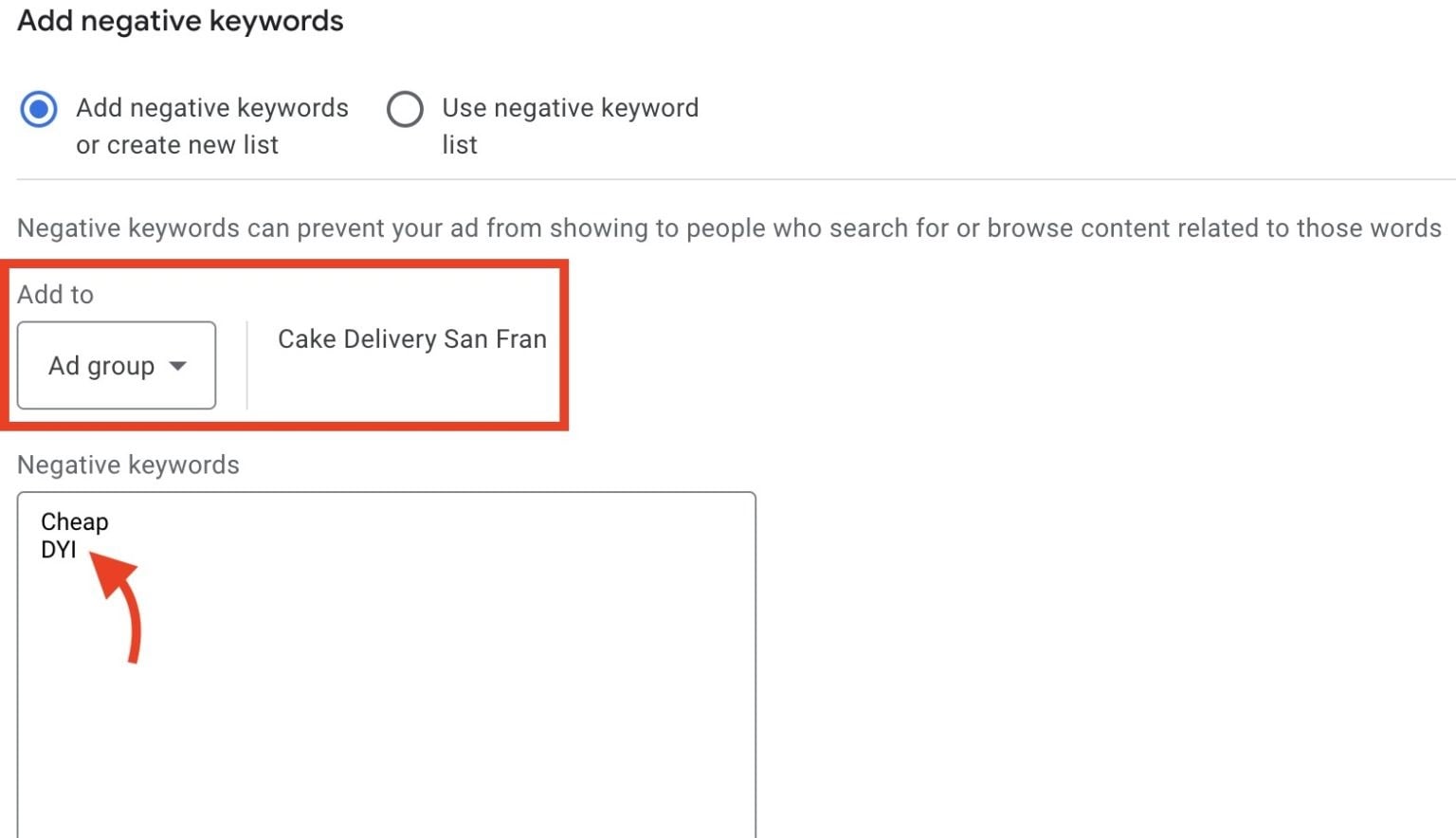
Regularly review your search term reports and PPC KPIs to identify irrelevant queries that trigger your ads. Tools like Google Ads’ search term functionality can help spot these mismatches. Once identified, add these terms to your negative keyword list to refine your targeting, improve CTR, and boost ROAS by focusing on high-intent traffic.
4. Analyze Competitor Keywords
Analyzing your PPC competitors not only improves the performance of your campaign analysis but also positions your ads in the best position among your rivals in search results. Mastering these keyword optimization strategies will set a strong foundation for PPC optimization that drives meaningful conversions and assures superior ROI.
✅ Competitor keyword analysis checklist
- Identify main competitors — list both direct and indirect rivals in your niche and use tools like SpyFu, Ahrefs, or SEMrush to explore their paid keyword data.
- Review their keyword portfolio — observe which keywords bring the most traffic or conversions, and compare overlaps and gaps with your own list.
- Evaluate keyword performance — check metrics such as search volume, CPC, and competition to pinpoint high‑intent, cost‑effective keywords.
- Spot content and targeting gaps — find strong keywords competitors rank for that you haven’t targeted, and avoid low‑ROI ones they overspend on.
- Examine ad messaging and landing relevance — analyze how competitors align ad copy, tone, and CTAs with their landing pages to boost CTR.
- Update and refine regularly — integrate promising new keywords into your campaigns, and remove weak or overpriced terms draining your budget.
Ad Text Optimization
In PPC, your ad text isn’t just an attention grabber, it’s the moment a user decides whether your offer is worth a click. Great ad copy cuts through the noise by addressing user intent and communicating value in under a second. High-performing ads combine clarity, relevancy, and motivation rather than empty slogans.
For example:
❌ “Buy shoes online – Great prices and fast shipping.”
✅ “Run faster with lightweight women’s trail shoes – Free 2-day shipping today.”
The second version specifies the audience, emphasizes the benefit, and includes a timely incentive: all signals that improve CTR and conversion potential. Beyond wording, alignment with the landing page is crucial. If an ad promises “eco-friendly office furniture”, the landing page must reinforce that promise with matching visuals and copy.
5. Ensure Ad Copy Matches the Landing Page
Think of clicking an ad saying “50% Off Luxury Watches” and landing on a page selling sunglasses. That disconnects tank conversion rates and frustrates users. In PPC campaign optimization, ensure your ad text and landing page are delivered seamlessly.
Make sure your ad copy is an extension of your landing page. If your landing page promotes earth-friendly products, use ad verbiage such as “Sustainable Solutions Await.” This congruence helps your Ad Quality Score, decreases bounces, and inches a user closer to a conversion.
6. Test Different Ad Copy Versions (A/B Testing)
Not all ads are created equal. What will make your PPC perform even better? A/B testing. Test headlines, descriptions, and CTAs to determine what works for your audience.
A/B test, for instance, “Save Big Now” versus “Get Exclusive Deals Today.” Success can be measured in metrics such as CTR and CPA. Through continuous analysis of results, you can refine your ad copy for maximum impact, a very important component of PPC optimization strategies.
7. Use Compelling Calls to Action (CTA)
A good CTA is like a compass: it points users in a direction and guides them on their journey. Strong CTAs don’t tell users what to do; they inspire action.
For instance, add clarity and urgency to CTAs, such as “Start Your Free Trial” or “Unlock Exclusive Savings.” Keep the action relevant to user intent in your calls to action, and use active verbs. Place them strategically in your ad to get better CTR and more qualified clicks—an almost surefire way to tell if effective PPC optimization is going on.
8. Incorporate Unique Offers or Promotions
Nothing screams exclusivity like scarcity. To make your campaign unique, wrap your ad text in limited-time offers, discounts, or special deals that create urgency. For example, “Limited Time: Free Shipping on Orders Over $50” is a value proposition and creates urgency. Sprinkle special deals unique to your company in your pay-per-click ads to drive conversions by encouraging user interaction. That ensures your PPC marketing rises above the competitive noise.
Bid Management
Bid management is essential for achieving cost-effective PPC advertising, ensuring your campaigns maintain visibility while staying within budget during competitive ad auctions. With a strong bid strategy, every dollar spent will go toward your campaign goals, moving you closer to maximum ROI without overspending. Setting strategic limits on the bids, leveraging smart bidding, and tailoring your bids to performance trends will keep your campaigns agile and profitable.
Related Content: How to Calculate PPC Budget and Manage Ad Spend Wisely
9. Set Max and Min Bid Limits
Setting a max bid controls the cost and caps spending on high-cost keywords, although setting this too low might reduce ad visibility in very competitive auctions. On the other hand, setting minimum bids ensures your ad will remain competitive enough to hold the placements at or below budget thresholds.
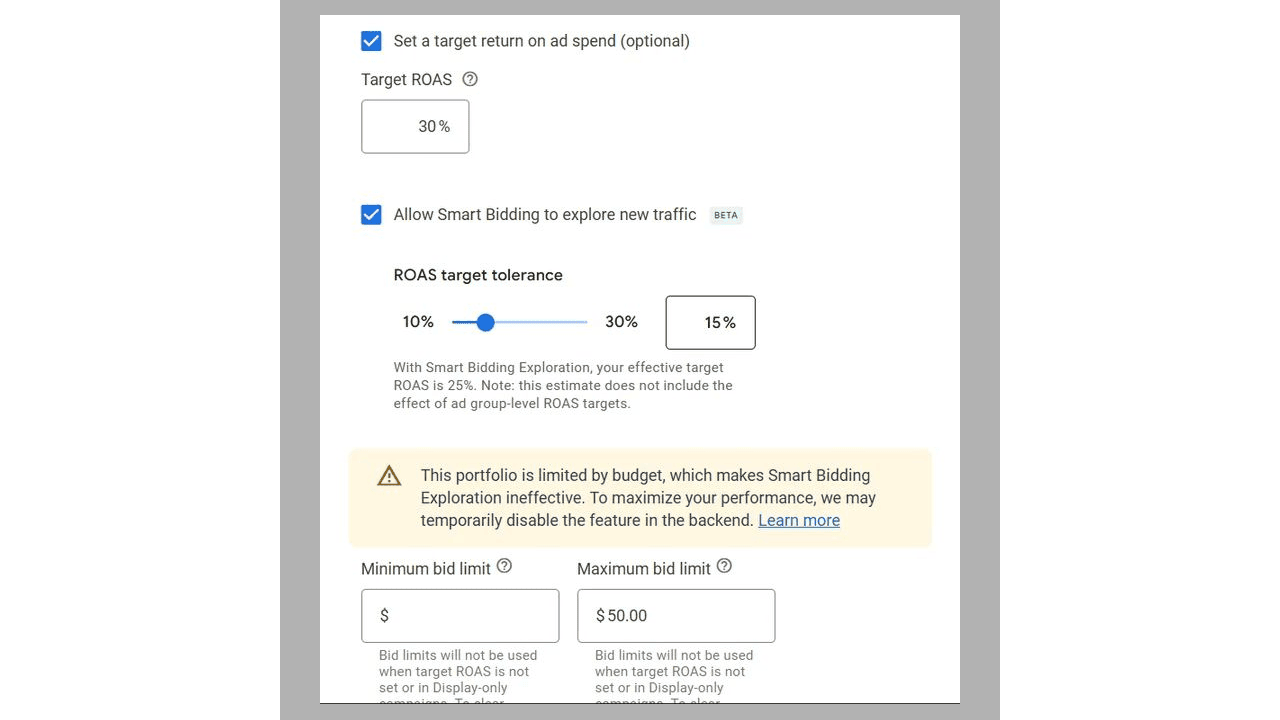
For example, your CPA target is $10; you would set your max below that to stay inside cost control, whereas the minimum defends against lost impressions of high-intent keywords. You, therefore, maintain an adaptable system that continues shifting with competition and then continually readjusts the edges along the path of greater campaign optimization by going back frequently and rebidding.
10. Use Automated Bidding (Smart Bidding)
Smart bidding, powered by machine learning, eliminates the guessing game of bid adjustments. Various tools, including Google Ads Target ROAS and Enhanced CPC, consider user behavior, device, and other contextual signals in real-time to bid high when a conversion is likely.
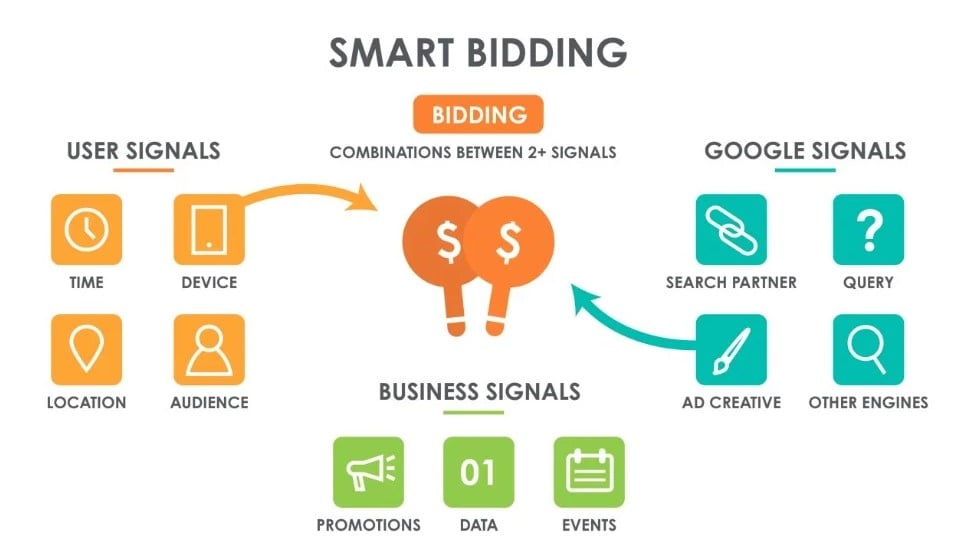
For example, if maximizing ROAS is your goal, it automatically adjusts the bid so that you can stay competitive during moments of peak demand. This technique returns data-driven results by saving time, becoming an invaluable tactic within a pay-per-click optimization process.

11. Adjust Bids by Time of Day and Week
Performance trends often reveal that either day-of-week or day-part timing yields a higher CTR and conversion rate. Research this to know how to split your budget across time. For example, an ecommerce store must see higher traffic on evening or weekend nights.
For such time slotting, you need to increase the amount you want to bid to be at the top of advertisers during users’ peak availability. The granular approach pays off by enhancing campaign performance analysis and will surely boost your PPC optimization.
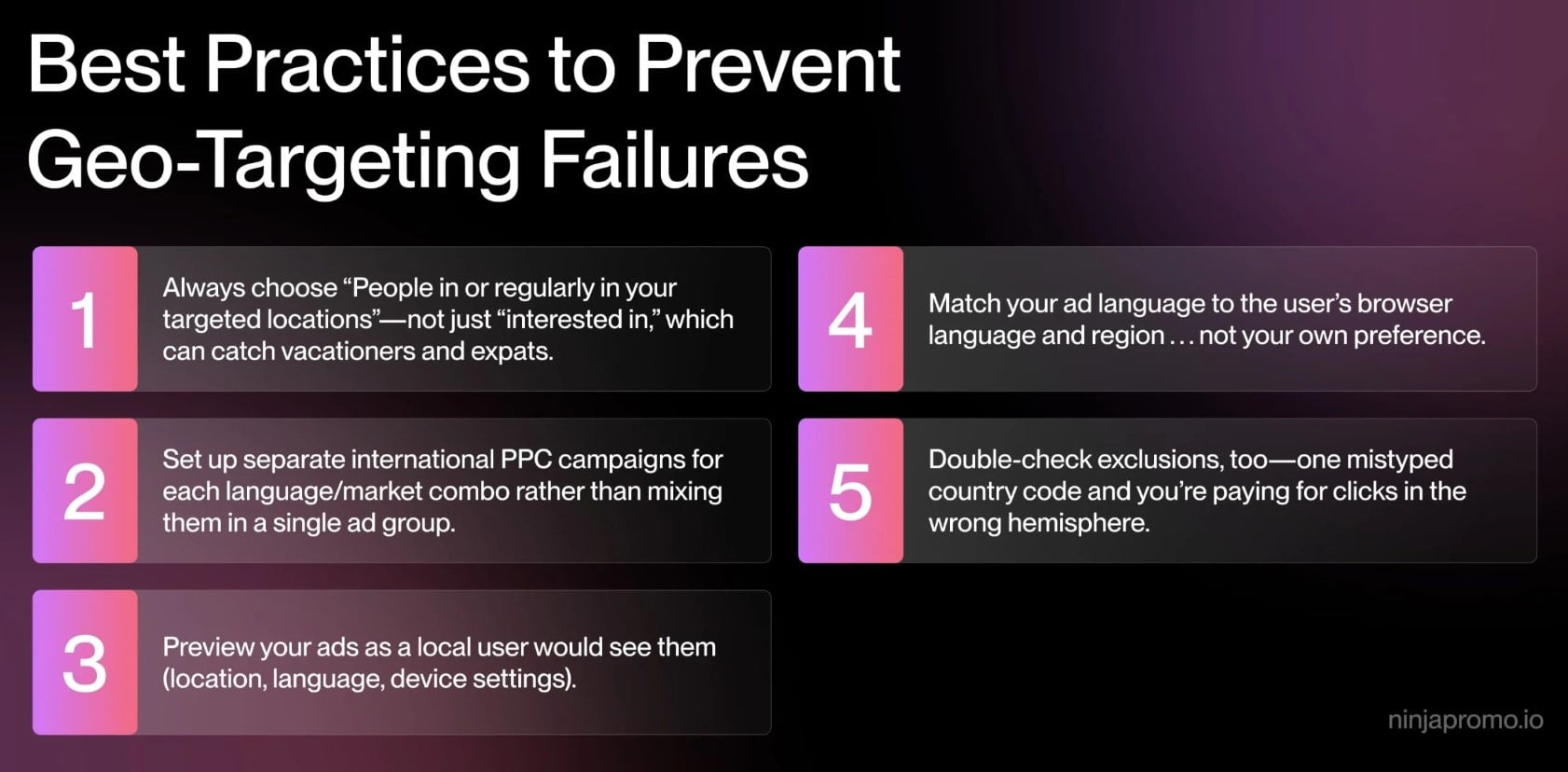
12. Use Geo-Targeting for Bid Adjustments
Geographical bid adjustments allow businesses to target locations that drive the best results from their advertisements. If a clothing retailer finds that urban areas tend to convert better, they might increase their bids for those locations while lessening spending in other less profitable regions.
It will be a godsend for geo-targeting to ensure that localized businesses match ad spending up with regional demand. You’ll then be able to use these insights to refine your strategy, tune your PPC campaigns for maximum impact, drive localized relevance, and increase ROI using these insights.
Landing Page Optimization
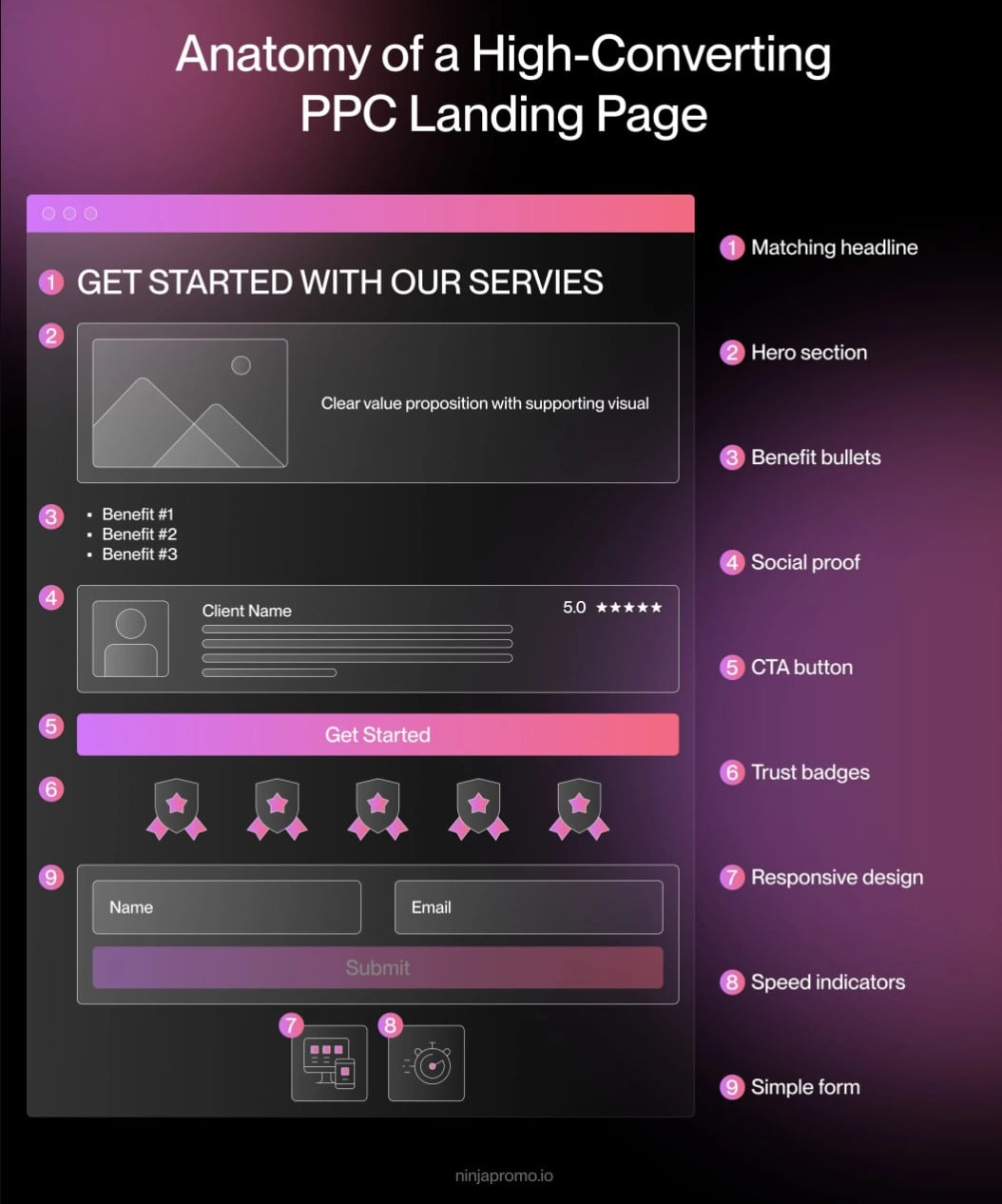
Each PPC campaign needs an optimized landing page, which bridges the gap between ad clickers and conversions. Tailor these pages to user intent, supported by seamless design elements that ramp up the conversion rate and PPC KPIs like CTR and ROAS. Let’s detail the key elements of Landing Page Optimization that will change how your campaigns perform.
13. Create Personalized Pages
Personalized landing pages help turn ad clicks into conversions by matching what users searched for, what they clicked, and what they expect to see. The closer the page is to the ad message and search intent, the less friction there is after the click.
✅ Checklist for personalized pages
- Match the headline to the keyword or ad promise.
- Keep the offer consistent from ad to page.
- Show benefits that fit the user’s intent, not generic product copy.
- Use dynamic text replacement for keywords, locations, or campaigns where it makes sense.
- Adapt CTAs to the audience stage, such as “Get a demo” for B2B or “Shop now” for Ecommerce.
- Add relevant proof, such as reviews, certifications, logos, or case studies.
- Reduce distractions so the visitor stays focused on one clear action.
For example, if someone clicks an ad for “eco-friendly kitchenware,” the page should immediately show sustainable materials, certifications, product benefits, and a CTA that fits that intent. That kind of message match improves relevance and helps reduce bounce rates.
14. Optimize Page Load Speed
Nothing quite kills a potential conversion, like a page that loads slowly. Each added second of load time can cost you CTR and drive users away. Check your pages’ load speed with tools like Google PageSpeed Insights, which can also point out bottlenecks. Compress images, minimize scripts, and enable caching to improve performance. Faster-loading pages enhance user experience and improve PPC performance by contributing to a higher Ad Quality Score—a key factor in PPC optimization.
15. Use Social Proof
You can also add testimonials, reviews, case studies, etc., to build trust and compel them to act. Social proof shows that your product or service lives up to expectations.
Include customer testimonials highlighting specific benefits or use cases relevant to the ad’s focus. For example, on a landing page for a fitness app, testimonials about reaching weight-loss goals or improving health metrics help build credibility and support conversion optimization.
16. Use Clear, Attractive Calls to Action
A well-designed CTA can make or break your landing page’s performance. Your call-to-action should be visually outstanding, use action-oriented language, and align with the user’s intent. Utilize calls-to-action such as instead of “Submit,” “Get My Free Trial,” or “Start Saving Today.” Place them above the fold and at logical points down the page. Match and contrast colors and whitespace to draw the eye to them, so they bring about engagement and improvement in the results of a campaign for PPC optimization.
By focusing on these key elements, your landing pages can drive greater ROI and enhance the overall success of your PPC optimization strategy. It’s all about crafting an experience that intuitively feels natural, trustworthy, and compelling to your audience.
Audience Targeting Optimization
Audience targeting allows businesses to reach users at the right time and maximize impact. Harnessing accurate targeting techniques, supported by thorough campaign performance analysis, can enhance performance manifold. Optimize your ROI using some essential tips discussed here: behavioral data use, implementation of remarketing campaigns, demographic segmentation, and timing enhancement for better PPC results.
17. Use Behavioral Data
Behavioral data is one of the main pillars holding up PPC campaigns that resonate with your audience and drive conversions. It is about how users interact with your website and your ads and go on to make purchase decisions. You can glean insight from page visits, time spent on each section, clicks, and purchase history to understand patterns and preferences for more effective targeting.
For instance, Google Analytics and Facebook Audience Insights can help you track user activity across your website and ads. Some of the key actions you can analyze include:
| Action | What to Analyze |
| Pages Viewed | Establish the most popular products or services to fine-tune ad focus. |
| Time on Page | Understand what content keeps readers engaged and adjust the campaigns to focus on similar themes. |
| Search Queries | Capture the user’s active searches and ensure your ad keywords fit their intent. |
| Purchase History | Suggest similar products based on purchase habits or run retargeting campaigns to ensure repeat purchases. |
| Ad Engagement | Test CTRs and engagement to determine the best messaging and ad format. Behavioral data can inform campaigns focused on user values (e.g., eco-friendly products). |
By effectively leveraging behavioral data, you are not merely running ads; you are running impactful, targeted campaigns that truly connect with your audience.
18. Setup Remarketing
Remarketing campaigns are a game-changer in re-establishing lost visitors who did not convert upon first interaction. These campaigns remind users about your offering and keep your brand at the top of their minds so they will return and complete their purchase.
Incorporating remarketing into your PPC optimization strategy through platforms like Google Ads and Facebook Ads Manager involves creating audience lists based on site visits or specific actions. This approach enhances campaign performance by capitalizing on warm leads, driving higher CTR and better ROAS.
19. Demographic-based segmentation
Demographic segmentation will enable you to refine your audience targeting by age, gender, location, and income. By making ads more relevant to particular groups, you will speak directly to their unique needs.
This may be applied, for example, in that a luxury watch may only have a target segment of high-income professionals in the 30-50-year-olds bracket. At the same time, an advert for fitness gear may cover a younger and health-aware audience. This level of specificity makes the ads highly relative to their target audience and ensures maximum value from your Pay Per Click KPIs.
20. Time of Day and Days of the Week Optimization
Timing can affect a campaign’s overall outcome. So analyze when your audience is most active, whether they can browse during lunch or after dinner, and schedule ads accordingly. By applying the knowledge gleaned from PPC platforms like Google Ads, you’ll be able to find the hours of top performance and distribute your budget more intelligently. Ads will only show when users are most likely to click and convert, further optimizing your CPA and overall ROI.
With these targeting methods, you can learn to fine-tune your campaigns and involve better leads while driving more sustainable growth through effective PPC optimization.
How Often Should You Optimize Your PPC Campaigns?
The key to PPC optimization success lies in consistency and timing. Optimization frequency should align with your campaign size, industry dynamics, and business goals. Regular adjustments keep your ads relevant, cost-efficient, and aligned with performance targets. Let’s break it down.
| Frequency | Focus Area | Example PPC Optimization Tasks |
| Daily | Monitoring and quick reaction | Track impressions, clicks and CTR, spot anomalies in ad performance, review underperforming ads, and align daily spend with goals. |
| Weekly | Fine tuning and testing | Adjust bids based on performance, add new negative keywords to filter out irrelevant traffic, test different ad copy and CTAs, and refine audiences using smart bidding. |
| Monthly | Strategic review and reallocation | Analyze keyword performance, keep top performers and pause low quality terms, review how well your ads resonate with target audiences, examine conversion rates, and shift budgets toward high value segments. |
| Seasonal | Campaign adaptation for peaks | Increase bids on high demand keywords during peak periods, update ad creatives and offers for holidays or events, personalize landing pages to match seasonal campaigns and promotions. |
Why Continuous Optimization Matters
Frequent updates will ensure that your campaigns:
- Stay ahead of competitors, adapting to market changes.
- Avoid ad fatigue by refreshing the content regularly.
- Cut wasted ad spend by targeting more precisely.
- Create a holistic optimization schedule with daily, weekly, and monthly updates.
Learn how to approach Google Ads optimization effectively to improve performance, control costs, and achieve more consistent results from your campaigns.
Final Thoughts
This guide shows that effective PPC optimization is not about one‑time fixes but about building a disciplined, data‑driven routine. From keyword research and smart bidding to personalized landing pages and regular performance checks, every step shapes how efficiently your budget turns into real results.