


HVAC SEO improves local search visibility so your business shows up when nearby customers need heating or cooling services. SEO for HVAC works best when it’s treated as a lead generation system. That’s the core idea behind SEO for lead generation — connecting visibility directly to inquiries.
For a service area business, demand is driven by local search intent, especially during emergency repair searches. Customers don’t call blindly — they compare options first. In fact, consumers use Google to research local businesses before choosing who to contact. Showing up at that moment is what drives inquiries.
What Is HVAC SEO and Why Local Visibility Is Critical
HVAC SEO focuses on improving visibility in location-based search results, especially within Google Maps and the local map pack. Put simply, HVAC SEO is about showing your business to nearby customers when they search for your services. This is one of the core SEO basics for HVAC companies.
Local visibility is shaped by a few key elements:
- Google Maps presence
- Map pack visibility
- Consistent local organic presence
- Strong proximity-based search results
Nearly half of all Google searches (around 46%) have local intent, which means that a lot of people are already looking for services nearby. If you’re not showing up there, you’re simply not part of the decision.
| Search Type | Example Query | What the User Needs | Urgency | Likelihood to Book |
| Emergency | “AC repair near me” | Immediate fix for a broken system | Very high | Very high |
| Service | “furnace installation Sydney” | Comparing providers for a planned job | High | High |
| Informational | “why is my AC leaking” | Diagnosis or basic troubleshooting | Medium | Medium |
In HVAC, transactional search intent often comes with urgency. Emergency repair searches, in particular, lead to fast decisions.
Around 88% of people who search for a local business on their phone will call or visit within a day. In most cases, they’re not browsing — they’re trying to get something fixed quickly.
How Google Ranks Local HVAC Businesses: The Ranking Triad
When someone searches for an HVAC service, Google carefully selects the results. It weighs a few key local ranking factors to decide which businesses show up.
For HVAC, the decision usually comes down to three things: relevance, distance, and prominence. Each one plays a different role, and more importantly, they don’t work in isolation. Strong visibility tends to come from getting all three right at once.
Relevance: Matching Service Offerings to Intent
Relevance is about how clearly your website matches what someone is actually looking for. In HVAC, most searches are tied to transactional search intent — people aren’t browsing, they’re trying to fix a problem.
This area is often where sites fall short.
“After the technical basics are checked, what usually stands out is how weak the on-page side is. Titles, headings, and internal linking are often inconsistent, but the bigger issue is that pages don’t match how people actually search. A lot of sites end up copying competitors instead of building around real demand and how users convert.”
Olivia G, SEO Specialist at NinjaPromo
For example:
- A generic “HVAC Services” page gives Google very little to work with
- A page titled “Emergency AC Repair in Parramatta” is much clearer
A conversion-driven page structure solves this problem by breaking services into focused pages. Each one targets a specific service and location, which makes it easier to rank and easier for users to act.
Distance: Understanding the Proximity Factor
Distance is more straightforward, but it still gets misunderstood. Google looks at how close your business is to the person searching, which is why proximity-based search results matter so much — especially for urgent jobs.
That’s where service area targeting comes in.
Your Google Business Profile plays a big role here. It helps define:
- Where you operate
- Which areas you want to appear in
- How Google connects your business to nearby searches
But distance on its own isn’t enough.
Prominence: Strengthening Reputation and Authority
Prominence is where trust comes in. It’s more about how your business appears online than what you say on your website.
This includes things like:
- Reviews
- Mentions on other websites
- Consistent business details
- Overall local brand authority
Effective online review management is a significant factor here, and recency and responses also play a role.
| Factor | What It Tells Google | Real-World Effect |
| Review volume | People are actively using your service | Builds baseline trust |
| Review recency | The business is still active | Keeps rankings stable |
| Local mentions | You’re known in the area | Improves local relevance |
| Backlinks | Other sites trust your business | Supports broader visibility |
You won’t see results from this overnight. It builds gradually, and once it does, it tends to stick.
The Core Pillars of a Winning HVAC SEO Strategy
If you strip HVAC SEO back to what actually drives results, a few things consistently matter more than others. These aren’t equal tasks you work on at random — they’re the core levers behind most successful SEO for HVAC companies. Get these right first, and everything else tends to build more easily on top.
Google Business Profile (GBP) Optimization
For most HVAC businesses, your Google Business Profile is one of the first places customers interact with your brand. It directly affects your Google Maps presence and whether you appear in the local map pack.
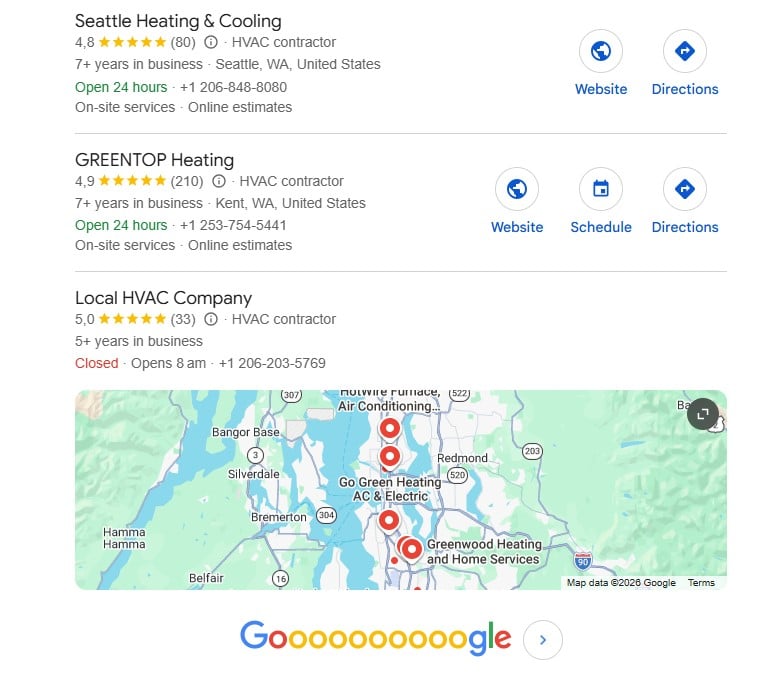
For local queries, 42% of searchers click on results inside the Google Maps Pack. This means a large share of traffic never even reaches traditional search listings.
A few things make the biggest difference here:
- Choosing the right primary and secondary categories
- Defining your service areas clearly
- Uploading real photos (branded vans, technicians, completed work, etc.)
Stock images don’t carry the same weight. Real photos give both Google and potential customers more confidence that the business is active and legitimate.
Customer Reviews and Reputation Management
Reviews tend to influence both how you rank and whether someone actually calls. They’re one of the most visible customer trust signals, and people rely on them heavily when comparing options.
This process tends to follow a clear pattern:
“In HVAC SEO, well-built service pages usually make the biggest difference first because they match local demand and drive conversions. Reviews come next, especially for local rankings, while backlinks tend to build impact more gradually over time.”
Vadzim Z, Head of SEO at NinjaPromo
In fact, more than half of consumers won’t use a business with less than a 4-star rating. That makes review quality just as important as quantity.
Strong online review management usually comes down to two things:
- Keeping a steady flow of new reviews (review velocity)
- Having a consistent review response strategy
Responding to feedback — good or bad — shows that the business is engaged and reliable. It also helps reinforce trust at the point where people are deciding who to contact.
Local Citations and Business Consistency
Local citations are often overlooked, but they play a quiet role in how Google verifies your business.
Consistency matters here. If details vary across platforms, it creates uncertainty — not just for Google, but for potential customers as well.
This is why local business citations need to be managed properly:
- Keep NAP (name, address, phone number) consistent
- Update details across major directories
- Avoid duplicate or outdated listings
There’s a practical reason for this. 62% of people would avoid using a business if they encountered inaccurate information about it online. Even small inconsistencies can cost you inquiries.

How to Structure an HVAC Website for Search and Conversion
A lot of HVAC sites don’t have a visibility problem — they have a structure problem. If pages aren’t organized clearly, both Google and users struggle to navigate your site. This is where SEO for HVAC companies truly begins to have an impact.
A conversion-driven page structure keeps things simple and predictable:
Home → Services → Locations → Blog → Contact
Each section has a purpose. Services capture demand, location pages expand reach, and the rest supports both visibility and trust.
High-Converting Service Pages
Service pages do most of the heavy lifting. These are the pages that show up for transactional search intent, where someone is actively looking to book a job.
The common mistake is grouping everything together. When one page tries to cover multiple services, it becomes less relevant for each one.
A better approach is:
- One service = one page
“With a limited budget, we usually start with high-intent services like AC repair, emergency jobs, or furnace installs in the main service areas. Once those pages start bringing in inquiries, then it makes sense to expand into other services and nearby locations.”
Olivia G, SEO Specialist at NinjaPromo
This is usually where most of the early traction comes from. These pages should follow a clear flow:
- Problem → what’s gone wrong
- Solution → how you fix it
- CTA → how to get in touch
In some cases, these can also tie into service area pages if you’re targeting specific locations alongside services.
Service-Area and Location Pages
Location pages help you show up in areas where you actually work. Done properly, they build location-specific relevance.
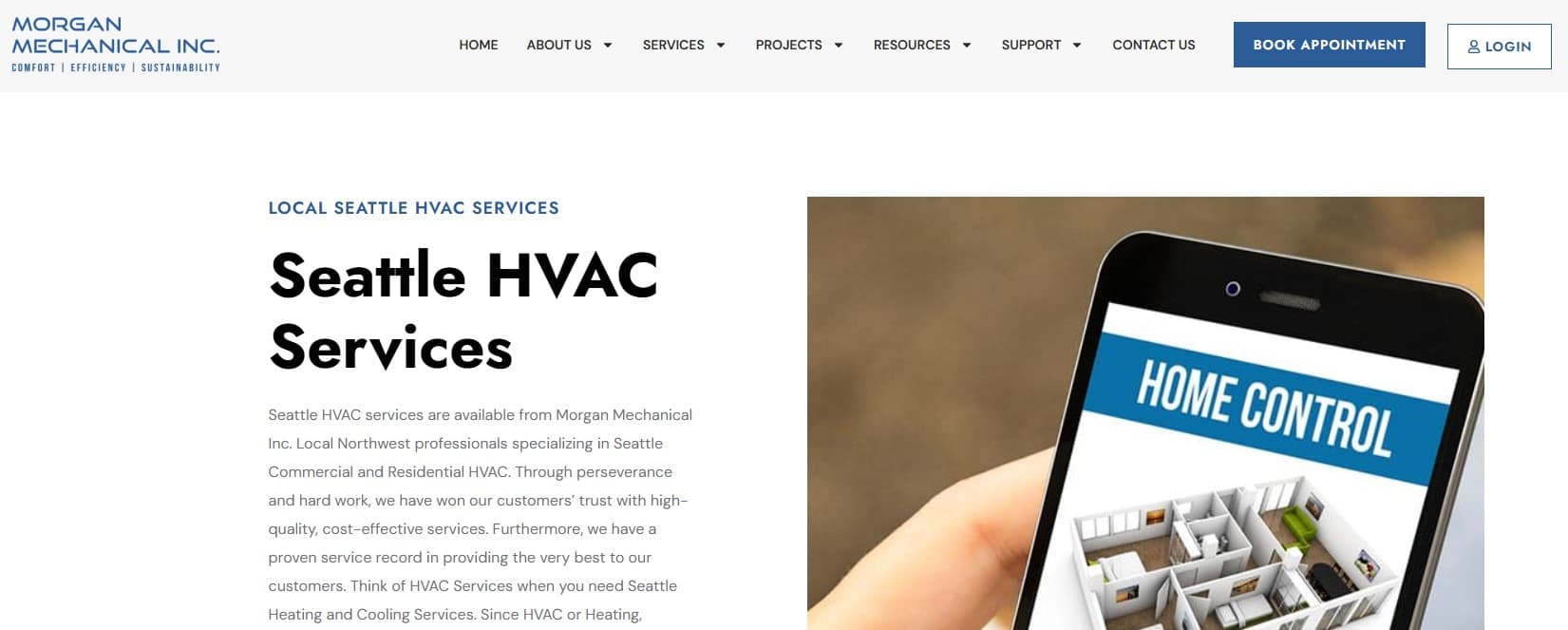
Strong location-based service pages usually include:
- Clear service area targeting
- References to real jobs or suburbs
- Details that reflect local conditions or common issues
What doesn’t work is copying the same page across multiple locations and just swapping out the suburb name. Google can spot that quickly, and it rarely performs well.
“Smaller HVAC businesses don’t need to compete with directories everywhere. The ones that do well focus on specific services in specific areas, where larger platforms aren’t as strong or as relevant.”
Vadzim Z, Head of SEO at NinjaPromo
If you’re looking to go deeper into how localization works across different markets and regions, this breakdown of SEO localization explains how to adapt content more effectively.
Keyword Research: Capturing Transactional and Seasonal Intent
Keyword research for HVAC isn’t about chasing traffic — it’s about showing up for the searches that actually turn into work. For most SEO for HVAC companies, that means focusing on transactional search intent while staying aware of seasonal service demand.
Some searches come from urgency. Others build over time as customers compare options or try to understand a problem. If your keyword strategy only targets one type, you end up missing part of the demand.
A more structured approach to planning your content is outlined in this SEO content strategy guide.
| Keyword Type | Example Search | What the User Is Trying to Do | Best Outcome |
| Transactional | “AC repair near me” | Fix an immediate issue | Book a job quickly |
| Service | “ducted AC installation Sydney” | Compare providers for a planned service | Generate qualified leads |
| Informational | “why is AC leaking” | Understand a problem before acting | Bring in future customers |
Transactional searches tend to convert fastest, especially when tied to urgent problems. Service-based searches are slightly less urgent but still high value. Informational searches sit earlier in the process, but they help you stay visible before a decision is made.
There’s also the seasonality element to consider. HVAC demand shifts throughout the year—cooling services spike in warmer months, while heating-related searches increase as temperatures drop. Aligning your pages and content with these patterns makes it easier to capture demand when it rises.
Local behavior reinforces this. Around 8 in 10 consumers search for a local business at least once per week, which is why our goal shouldn’t just be to rank for keywords but to consistently appear across the different ways people search as their needs change.
Content Marketing: Connecting Troubleshooting to Leads
Content plays a different role in HVAC compared to many other industries. It’s not just there to bring in traffic — it helps you show up earlier in the decision process, before someone is ready to book. HVAC search optimization uses content to connect problem-based searches with actual services.
Not every search is ready to book. Many start with questions, which is where content plays a role.
| Stage | What the User Is Thinking | Content Type | What It Should Do |
| Problem | “Something’s not working” | Blog | Explain the issue clearly and build trust |
| Solution | “I need someone to fix this” | Service page | Show how you solve it and why you’re the right choice |
| Action | “I’m ready to contact someone” | Call/quote page | Make it easy to get in touch immediately |
Blog content usually shows up for early searches like “why is my AC leaking” or “why is my heater not working properly.” These don’t always turn into bookings straight away, but they still matter. If someone finds a clear answer on your site, they’re more likely to stay, look around, and come back when they actually need the work done.
Content works best when it’s tied directly to the services you offer. If someone lands on a blog post, there should be a clear path to the relevant service page — otherwise, the traffic doesn’t go anywhere.
Trust Signals That Turn Visitors Into Booked Jobs
Once someone lands on your site, they’re usually deciding between a few options — not whether they need the service. This is where customer trust signals start to matter.
Most people are scanning for quick signs that the business is legitimate.
Common things that help build trust quickly:
- NATE certification
- EPA certification
- Relevant licenses
- Insurance coverage
- Real job-site photos (not stock images)
These details don’t need long explanations. They just need to be easy to find. Together, they support your local brand authority and make it easier for someone to feel comfortable reaching out.
Legitimacy and trust are often the factors that tip the decision. Two businesses might offer the same service, but the one that feels more credible usually gets the call.
SEO vs. PPC vs. Local Services Ads (LSA)
Most HVAC businesses don’t rely on just one channel.
HVAC search optimization tends to build over time, while paid channels bring in faster results.
| Channel | Speed | Cost | Sustainability |
| SEO | Slower to build | Medium | High |
| PPC | Immediate traffic | High | Low |
| LSA | Immediate leads | Pay-per-lead | Medium |
Each channel plays a different role. PPC and LSA can generate inquiries quickly, especially when you need leads right away. SEO takes longer, but once it’s working, it tends to bring in consistent traffic without the same ongoing cost.
Over time, many businesses find that SEO becomes the most stable source of inquiries, while paid channels are used to fill gaps or support growth.
If you want a breakdown of how these compare in more detail, see our article on SEO vs. PPC.
Measuring HVAC SEO Success: Key Business Metrics
A lot of businesses ask how to improve SEO for HVAC businesses, but what really matters is what you measure. Rankings can change without affecting inquiries.
The metrics that tend to matter most are:
- Phone calls
- Quote requests
- Google Business Profile actions (calls, direction clicks, website visits)
These show whether your local organic presence and Google Maps presence are actually bringing in work. If those numbers are moving, your visibility is doing something useful.
Traffic and rankings still have a place, but they don’t always reflect intent. It’s possible to rank for terms that don’t lead to jobs. What you’re looking for instead is a steady flow of inquiries tied to the services you want more of.
Final Thoughts
SEO for HVAC tends to reward consistency more than anything else, building momentum gradually rather than delivering instant results. The businesses that succeed are usually the ones that keep their approach simple and focused, creating pages that reflect how people actually search, showing clear signals of reliability and activity, and maintaining strong visibility across local results. No single tactic drives success on its own, as it is the steady combination of these efforts over time that leads to more consistent inquiries.