

Google Ads for dentists is one of the fastest ways to bring in patients actively searching for treatment. If you set it up properly, clicks turn into inquiries you can track.
Adding Google Ads is the performance layer of dentist advertising. You’re capturing demand as it occurs rather than waiting for SEO or depending on recommendations.
Google Ads for dentists supports both short-term and long-term outcomes. It fills gaps in your calendar with immediate inquiries while building a predictable system for dentist lead generation. Over time, it translates into more reliable patient acquisition for dental clinics — not spikes in demand, but consistency you can plan around.
What Is Google Ads for Dentists
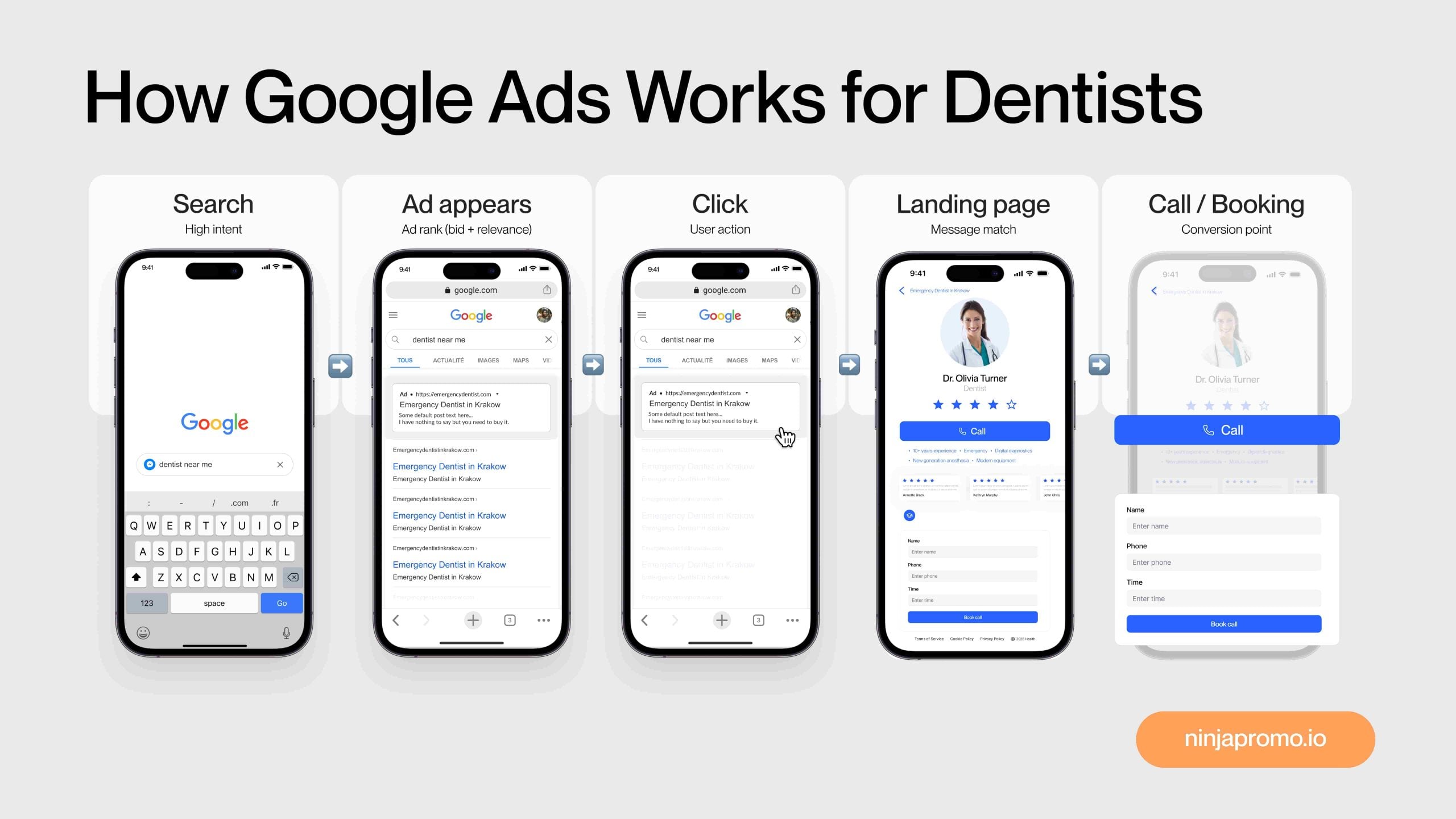
Google Ads for dentists is a form of dental PPC that places your clinic at the top of search results when someone is actively looking for treatment. You’re showing up at the moment of intent.
Behind the scenes, it works as an auction. You bid on keywords, but visibility depends on both bid and relevance — how well your ad and landing page match the search.
At a basic level, performance comes down to three things:
- Keywords → what the patient searches (e.g., treatments, “near me”)
- Ads → how clearly you match that intent
- Landing page → how easily someone can take the next step
When these align, dental Google Ads campaigns become more efficient — lower cost per click and higher conversion rates.
In the context of dentist advertising, this approach is the key difference. You’re meeting people who are already looking for a dentist rather than attempting to draw attention.
Why Google Ads Matters for Dental Clinics in 2026
Costs have moved up as more clinics compete for the same terms. In dentistry, average cost per click often sits around $6.50 to $9.75 and can go higher for treatments like implants or cosmetic work.
That means inefficient campaigns can become expensive quickly.
Performance varies depending on the type of search. Dental Google Ads campaigns tend to convert well, depending on setup and intent.
Organic visibility still matters, but it doesn’t always show up where it counts. Ads and map results often take up most of the space at the top, so even well-ranked pages get pushed down.
People aren’t spending much time comparing. Instead, they’re usually picking from what’s visible straight away. Data from Google shows that 70% of mobile users contact a business directly from search, often without visiting multiple sites.
Key Benefits of Google Ads for Dentists
With Google Ads, you’re dealing with people who are already searching for a dentist. That makes performance easier to track — you can see what leads to inquiries and what doesn’t.
Key benefits include:
- Immediate visibility for high-intent searches
- Full control over budget, targeting, and spend allocation
- Clear view of what’s driving inquiries and cost per patient
- Scalable dentist lead generation as demand increases
- Ability to prioritize high-value treatments (e.g., implants, Invisalign)
In dentistry, conversion rates from search tend to sit higher than average. Benchmarks place them at around 9%. It varies depending on intent — the more specific the query, the more likely it is to turn into an inquiry.
You’re not relying as much on referrals or waiting for organic traffic to build — you’re bringing in inquiries from people already looking, and you can adjust based on what’s actually working.

Types of Google Ads Campaigns for Dentists
Not all campaign types do the same job. Some bring in immediate inquiries, others support visibility earlier in the process. Most clinics end up using a mix rather than relying on one format.
Each campaign type plays a different role:
| Campaign Type | Best Use Case | Strength | Limitation |
| Search Ads | High-intent treatment searches | Highest conversion rates | Higher CPC in competitive areas |
| Local Services Ads | Local patient inquiries | Strong trust + pay-per-lead model | Limited control over targeting |
| Display Ads | Awareness + consideration phase | Broad reach | Low direct conversion |
| Performance Max | Scaling across channels | Automation + reach | Less transparency/control |
| Remarketing | Re-engaging past visitors | High conversion lift | Depends on existing traffic |
Search Ads for High-Intent Keywords
Search ads show up when someone is already looking for a specific treatment. That’s why they tend to drive most inquiries in dental PPC.
They show up when someone searches for:
- emergency dentist
- dental implants
- Invisalign near me
- dentist open now
- teeth whitening cost
These are decision-stage searches. The person isn’t exploring options broadly — they’re trying to solve something. That’s why well-structured dental Google Ads campaigns usually prioritize search first.
In the context of dentist advertising, this area is where most inquiries come from and where your budget does the most work.
Local Services Ads for Dentists
Local Services Ads sit above traditional search ads and come with built-in trust signals like reviews, verification, and the Google badge. For many users, this is the first thing they see — before they even scroll.
They operate on a pay-per-lead model, which shifts focus from clicks to actual inquiries. You’re paying for calls or messages, not just traffic.
What makes them effective:
- Top-of-page placement above standard ads
- Visible reviews and star ratings
- Google verification badge
- Simple call or message actions
- Pricing transparency in some cases
- Strong alignment with local dental advertising
They’re not a replacement for search campaigns, but they can strengthen visibility where trust plays a big role in the decision.
Display Ads for Brand Awareness
Display ads show up while people are browsing other sites, using apps, or watching YouTube. They’re less about immediate bookings and more about staying visible.
They tend to matter more for treatments where people take their time deciding, like cosmetic work or anything higher cost. It keeps your clinic in mind while they’re still comparing options.
Typical use cases include:
- Staying visible after someone visits your site
- Reinforcing brand recognition in your local area
- Supporting longer decision cycles (e.g., cosmetic work)
- Introducing your clinic to new audiences
- Maintaining visibility outside search
Performance Max Campaigns
Performance Max runs ads across different Google channels like search, display, YouTube, and Gmail — all from one campaign.
It can work well once there’s enough data behind it. Without that, it tends to spread the budget too broadly, and results can be inconsistent.
Where it tends to work best:
- Once you already have conversion data
- When scaling beyond search-only campaigns
- When testing additional demand across channels
- When you want broader coverage without managing multiple campaigns
Similar setups are often used in Google Ads for healthcare, particularly when campaigns need to cover multiple channels while maintaining compliance.
Remarketing Campaigns
Remarketing targets users who visited your site but didn’t book. In most dental funnels, that’s a large percentage of traffic.
Instead of losing those visitors, you stay visible as they continue researching or comparing options. This is where reminder-based messaging works — not aggressive selling, just staying present.
Remarketing often lifts overall results because you’re reaching people who have already shown interest. In some cases, conversion rates can increase by up to 70%.
Best Google Ads Strategies for Dentists
High-performing dental campaigns are built on structure, intent targeting, and conversion optimization. Most inefficiencies come from how campaigns are set up, not how much is spent.
Not all searches behave the same, which is where structure starts to matter.
| Keyword Type | Example Search | Intent Level | Conversion Likelihood | Strategy Focus |
| Emergency / urgent | emergency dentist near me | Very high | Very high | Prioritize calls + availability |
| Treatment-specific | dental implants cost | High | High | Dedicated landing pages |
| Insurance-related | dentist accepting Bupa | High | High | Highlight coverage + pricing |
| General service | dentist near me | Medium | Medium | Strong local targeting |
| Informational | how much is teeth whitening | Low–medium | Low | Use for remarketing, not primary |
Segment Campaigns by Procedure Profitability
“Most wasted spend in dental campaigns comes from structure — grouping different services and intents into one campaign. Separating by service type, intent, and location makes it easier to control budgets and match traffic to the right landing page.”
Dennis F, PPC Team Lead at NinjaPromo
When everything sits in one place, it’s harder to control spending or see what’s actually working.
Splitting campaigns by value makes things clearer. Higher-margin work like implants or Invisalign can handle higher costs, while lower-value services need tighter limits. That way, spend follows revenue rather than just traffic.
Capture High-Intent Emergency Searches
Emergency searches behave differently. Someone typing “emergency dentist near me” is usually in pain or dealing with urgency — they’re not comparing multiple options.
These searches convert quickly. People usually want a solution straight away, not a detailed comparison. Availability, location, and a clear way to call matter more here than anything else.
If we don’t cover this segment, many ready-to-book inquiries will go elsewhere.
Use Hyper-Local Targeting (Radius + ZIP Codes)
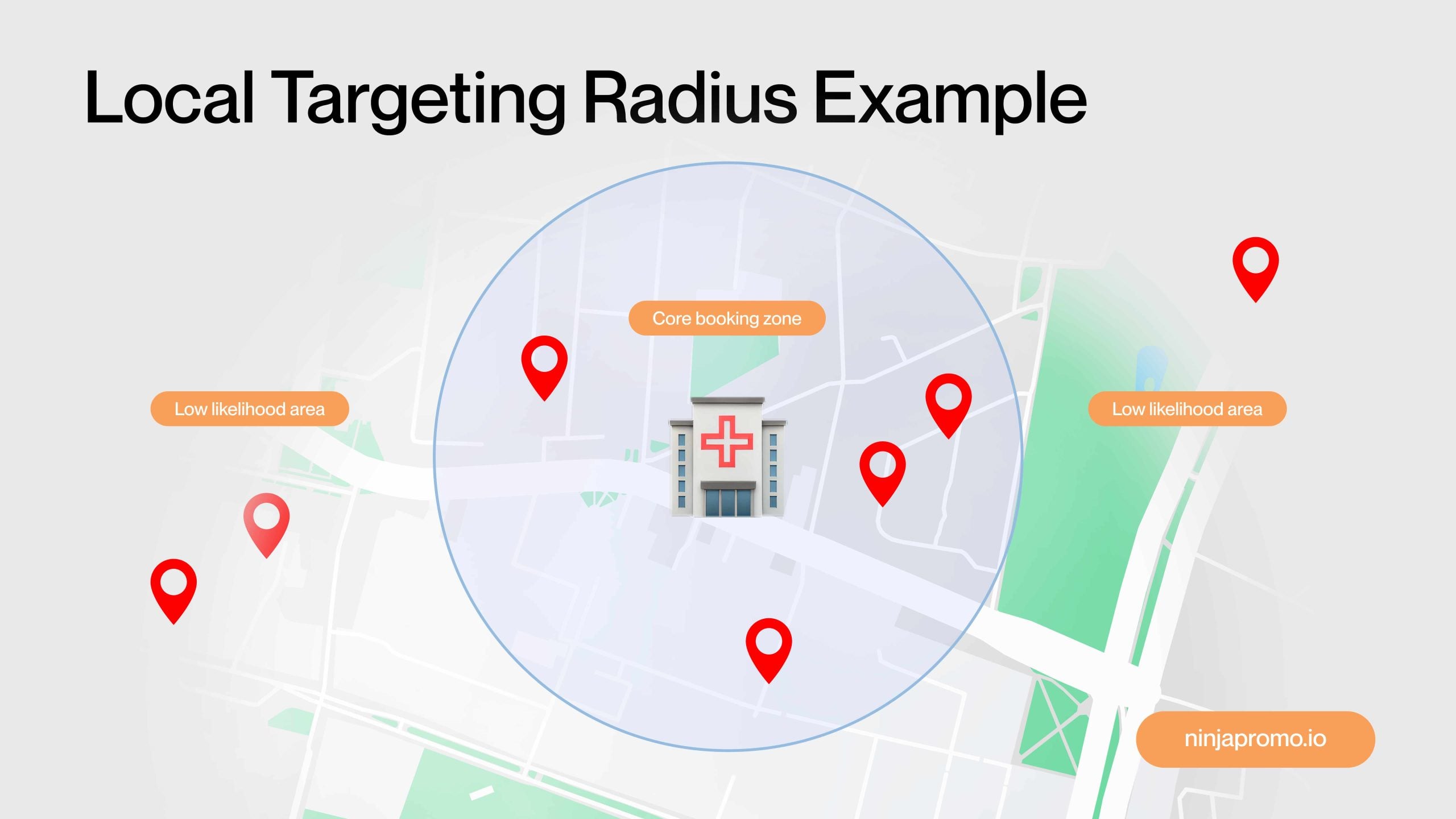
Broad targeting looks efficient on paper, but often pulls in low-quality clicks. Most patients choose clinics within a limited distance unless the treatment requires travel.
“One of the most common issues is targeting too wide an area. Clinics end up paying for clicks from users who are unlikely to book. Mixing different intent types and relying too heavily on broad match also brings in low-quality traffic.”
Dennis F, PPC Team Lead at NinjaPromo
Refining your targeting by radius or postcode helps reduce wasted spend and improves lead quality. It also strengthens local dental advertising by focusing on areas where conversion is actually likely.
Build Dedicated Landing Pages for Each Procedure
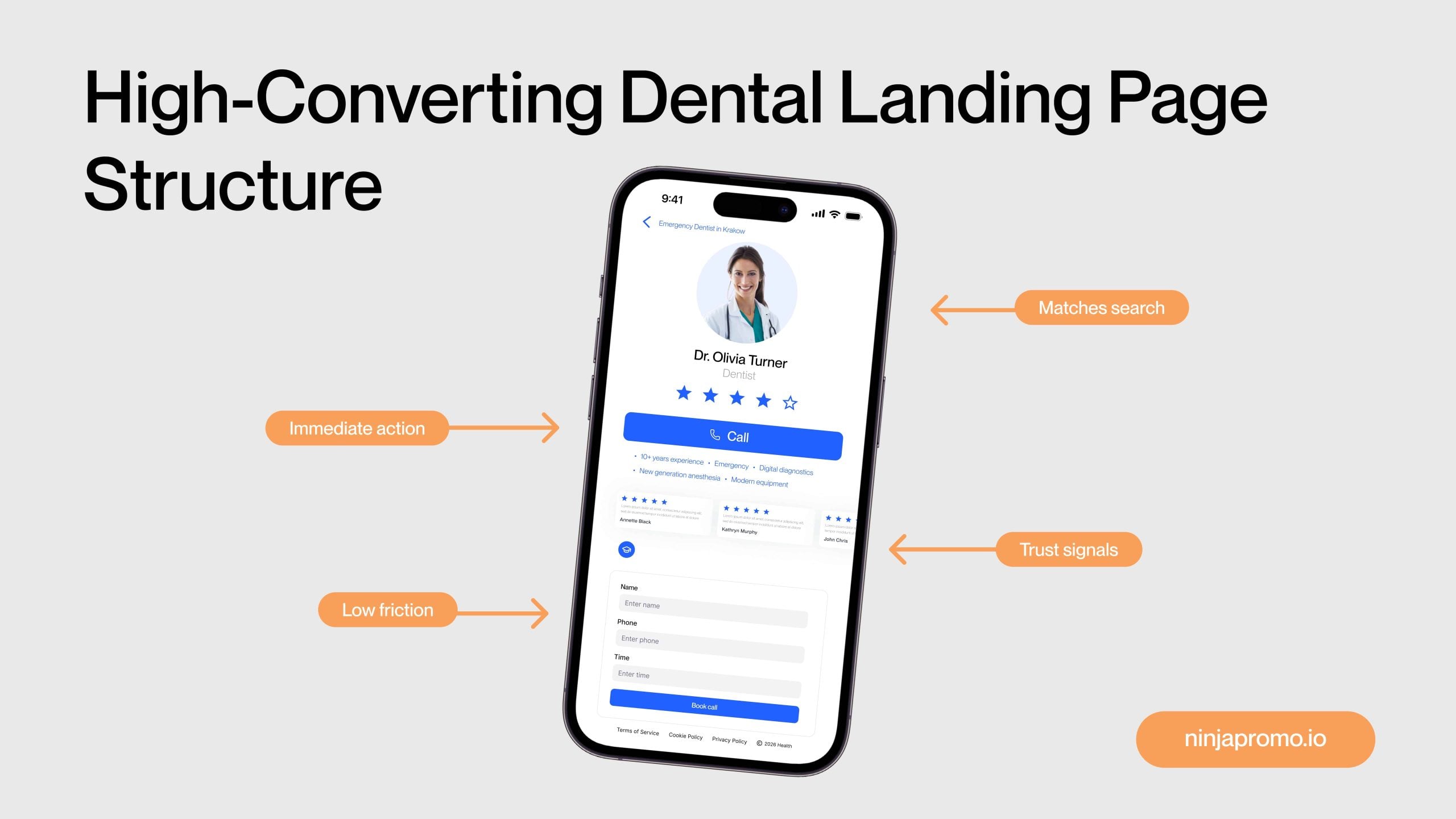
Sending all traffic to a homepage creates friction. Patients expect to land on a page that matches exactly what they searched for.
When the page aligns with intent, conversion improves without increasing traffic.
“The page needs to match the search straight away. Users should see the service, location, and next step immediately. Strong headlines, clear benefits, reviews, and visible call options usually make the difference.”
Dennis F, PPC Team Lead at NinjaPromo
Optimize for Calls, Not Just Form Fills
Calls usually convert differently from forms. When someone picks up the phone, they’re already closer to making a decision.
Forms still matter, but they slow things down a bit. A visible phone number gives people a quicker way to act, especially when timing matters or they have a specific question.
If everything is set up around form submissions, a chunk of those inquiries never comes through. Making calls easy to find — and easy to track — tends to shift results pretty quickly.
Target Insurance-Based Keywords
Insurance-related searches often come from users who are closer to booking. They’re filtering options based on coverage, which narrows the decision.
Terms like “dentist accepting [insurance]” or “payment plan dentist” tend to attract more qualified traffic. This improves patient acquisition for dental practices because the intent is already narrowed before the click.
Use Fear-of-Pain Remarketing Angles
A large percentage of users don’t convert on the first visit. In many cases, the hesitation isn’t price — it’s uncertainty or fear.
Remarketing can address this by focusing on reassurance. Messaging around comfort, sedation options, or what to expect can reduce hesitation without pushing too hard. The goal is to remove friction, not create pressure.
Apply Dayparting Based on Patient Behavior
Not all hours perform the same. Sometimes windows consistently drive more calls, especially when patients are actively looking for availability.
Adjusting your schedule allows you to:
- Prioritize high-conversion hours
- Reduce spend during low-intent periods
- Align ads with when your team can actually respond
Even small adjustments here can improve efficiency without increasing budget.
Leverage Trust & Offer Extensions Aggressively
Ad extensions improve how your ads appear before someone clicks. They add context — reviews, credentials, offers — which helps users decide faster.
Google reports that ads with extensions can improve click-through rates by 10–15%, largely because they provide more useful information upfront.
Changes like these don’t look major, but they shift how the ad appears before someone clicks. Reviews, pricing, and extra details make the decision quicker.
Essentially, adjusting how ads show often does more than simply increasing the budget.
How to Optimize and Scale Your Campaigns
Scaling dental Google Ads campaigns comes down to what the data is actually showing. Results vary quite a bit between campaigns, and the difference is often in how they’re set up. It’s best to improve what’s already working, then expand it carefully.
Track Conversions Properly
If you’re not tracking the right actions, you’re optimizing blindly. Clicks don’t tell you much on their own — you need to see what turns into actual inquiries and bookings.
At a minimum, track:
- Phone calls
- Form submissions
- Booked appointments
The key is tying these back to revenue. Once you know what a patient is worth, you can make decisions based on cost per acquisition. As a general benchmark, Google Ads is often cited as delivering around a 2:1 return on ad spend, which helps frame what sustainable performance can look like — but your own data is what should guide decisions over time.
“Clicks and leads don’t tell the full story. The focus should be on booked and attended appointments, treatment value, and revenue. The most useful metrics are cost per booked appointment and cost per acquired patient.”
Dennis F, PPC Team Lead at NinjaPromo
A/B Test Ad Copy
Ad performance changes over time. What works now won’t necessarily work in a few months.
Testing should focus on:
- Headlines (treatment-focused vs offer-driven)
- Messaging (price, availability, trust signals)
Even small changes can shift click-through and conversion rates. The goal isn’t one perfect version — it’s continuous improvement.
Improve Quality Score
Quality score directly affects both visibility and cost. Google rewards ads that closely match what users are searching for.
This comes down to:
- Keyword relevance
- Ad clarity
- And landing page alignment
Google data shows that improving Quality Score can reduce cost per click by up to 50%, which makes this one of the most practical levers for efficiency.
Adjust Bids Based on Performance
Performance usually varies across keywords and campaigns. Some consistently bring in inquiries, while others don’t justify the spend.
The budget tends to shift toward what’s already working. Bids are adjusted in line with that — increased where results are steady, pulled back where they’re not.
That movement alone can change overall efficiency, especially when it’s done gradually rather than all at once.
Expand Winning Campaigns
Once a campaign is performing consistently, the next step is controlled expansion — not duplication.
This can include:
- Increasing budget gradually
- Adding closely related keywords
- Expanding into nearby locations
- Testing additional formats like Performance Max
The key is to scale what’s already proven, rather than spreading budget across too many new ideas at once.
As campaigns mature, the decisions start to look more like broader healthcare digital marketing — not just ads, but how everything fits together over time.
Looking at how setups are handled in Google Ads for healthcare can surface a few gaps, especially around targeting and compliance.
Some clinics prefer not to manage all of this internally. In those cases, healthcare PPC services can take over the day-to-day work while campaigns continue to run and grow.
Final Thoughts
Google Ads for dentists is one of the more reliable ways to generate new patient inquiries when it’s built around intent and structure. You can see what’s driving results and adjust while campaigns are still running. Use it alongside other channels, and it will become a consistent part of a broader dental marketing strategy.