
Google Ads still works. Google still accounts for over 90% of global search activity (StatCounter). But it’s not carrying growth the way it used to for many businesses. As competition tightens and costs rise, scaling becomes more expensive — even when campaigns are well optimized.
At the same time, user behavior has shifted in ways search alone doesn’t fully capture. People now browse, compare, scroll, and discover across multiple digital advertising platforms.
This is where Google Ads alternatives come in. Not as replacements, but as extensions. The goal is not to abandon search. It is to build a broader system using alternative paid media channels that reach users at different stages of the journey.
In this guide, we look at platforms across:
- Search-based channels
- Social and discovery platforms
- E-commerce ecosystems
- Research-driven environments
Why Businesses Look for Alternatives to Google Ads
Businesses don’t usually move away from Google Ads because it stops working. They do it because it stops scaling the way they need it to.
The shift typically starts when a few patterns show up:
- Increasing spend brings weaker returns
- Lead quality starts to drop
- Core keywords stop growing in volume
- More budget goes into branded or bottom-funnel terms
Google is still effective in these cases. Across different Google Ads types, it continues to capture high-intent demand — it just isn’t enough on its own.
That’s where expanding into other channels starts to make sense. Not as a replacement, but as a way to pick up demand earlier and support what search is already doing.
In practice, that usually means:
- Keeping search focused on high-intent conversions
- Using social platforms to reach new audiences earlier
- Supporting research and comparison through content or community channels
The goal isn’t to move away from Google Ads but to stop relying on it as the only source of growth.
If you want a better sense of how search campaigns are set up, this guide on Google Ads strategy is a good place to start.
Rising CPCs and Auction Saturation
As more advertisers compete for the same keywords, auctions become tighter. CPCs increase. Margins shrink. For many businesses, this trend directly impacts customer acquisition cost.
“It’s usually not CPC on its own that causes problems. It’s what happens after — you keep increasing spend, but the incremental return starts dropping. That’s normally the point where forcing more scale stops making sense.”
Dennis F, PPC Team Lead at Ninja Promo
To maintain performance, you need to:
- Improve conversion rates
- Tighten landing pages
- Sharpen offer positioning
- Filter out low-intent clicks
Without that, the return on ad spend starts to slip.
Even well-optimized campaigns hit a ceiling. At a certain point, increasing spend does not produce proportional growth.
Looking at Google Ads cost in competitive industries makes this clear. The more crowded the auction, the harder it becomes to improve efficiency. That is usually when teams start testing other channels.
Different Platforms Capture Different Types of Demand
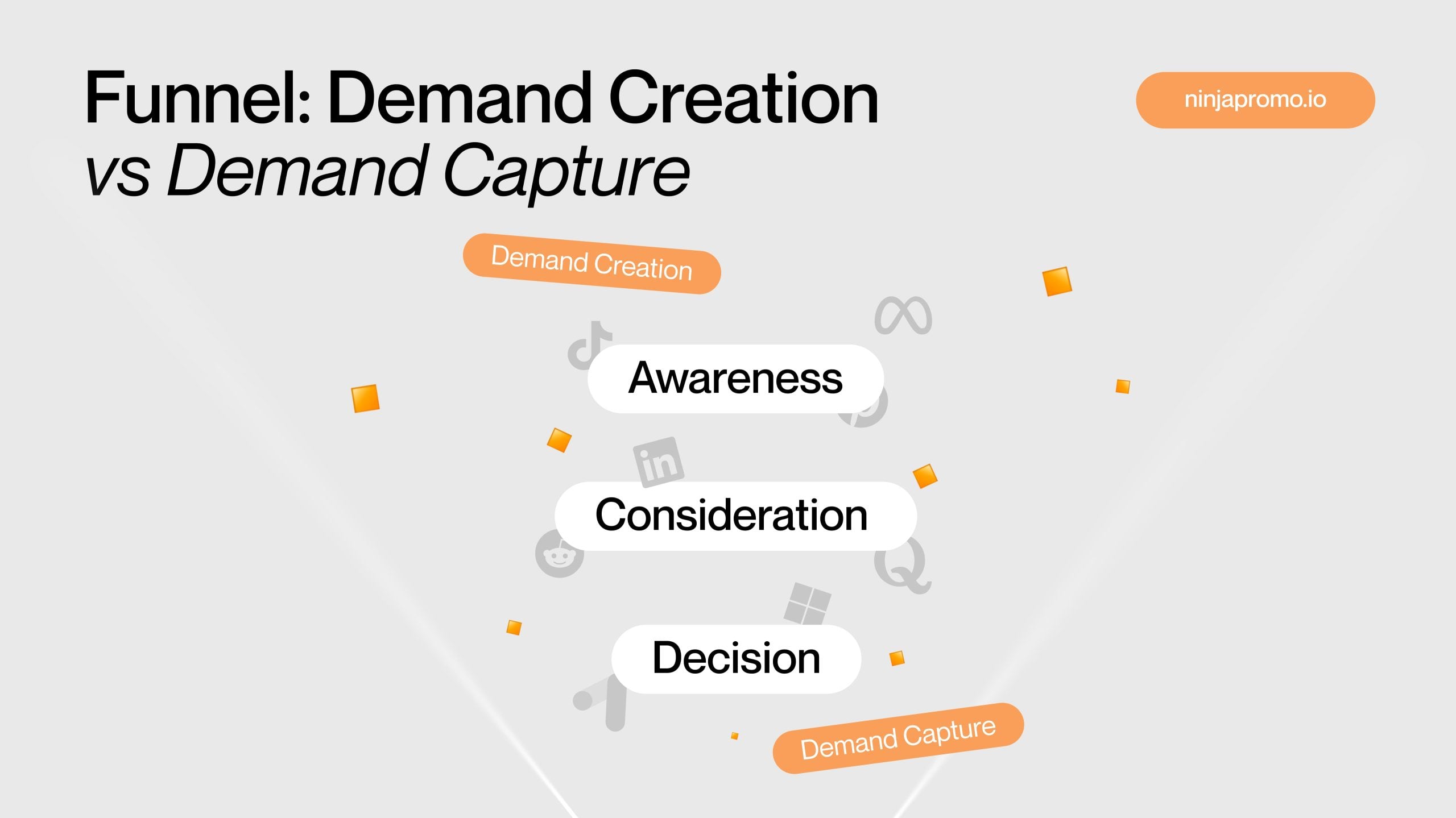
Google Ads is one of the strongest high-intent traffic channels available. It reaches users who are already searching, comparing options, and are close to a decision.
Many users, however, do not start with a search. They explore first. They read, scroll, and ask questions. These are research-stage intent audiences.
Other platforms are built for this stage. Social feeds, forums, and content-driven environments support upper-funnel demand generation, where awareness and interest are still forming.
The distinction matters:
- Google captures demand
- Other platforms help create it
If you rely only on search, you are entering the journey late, often after several earlier interactions have already shaped the decision (Think with Google). When you include additional channels, you influence that demand earlier.
How to Choose the Right Alternative to Google Ads
Choosing the right channel comes down to what role it plays in your overall growth mix. Not every platform does the same job. Some capture existing demand; others help build it earlier.
Running paid campaigns outside the Google ecosystem usually means adjusting expectations. What works in search doesn’t always translate elsewhere.
Before moving the budget around, look at what’s already working — and what isn’t. A PPC audit can tell you pretty quickly whether it’s a channel issue or just the setup.
Quite often, fixing what’s already there gets you further than switching platforms too early.
If you’re exploring other platforms, focus on fit. Where does your audience actually spend time? And how do they behave there — are they searching, browsing, comparing, or just discovering?
Finding the answer to these questions tends to tell you more than the platform itself.
Start with Audience Fit
Before anything else, look at where your audience spends time.
Some platforms look good on paper but don’t translate in practice. If your users aren’t there — or they’re there for a completely different reason — performance won’t follow.
This shows up a lot in B2B. LinkedIn and Quora tend to work because they line up with how people research and weigh options, not just because they offer better targeting.
In practice, strong performance usually comes from alignment between:
- Platform behavior
- Audience expectations
- Buying journey
Compare Intent, Cost, and Conversion Potential
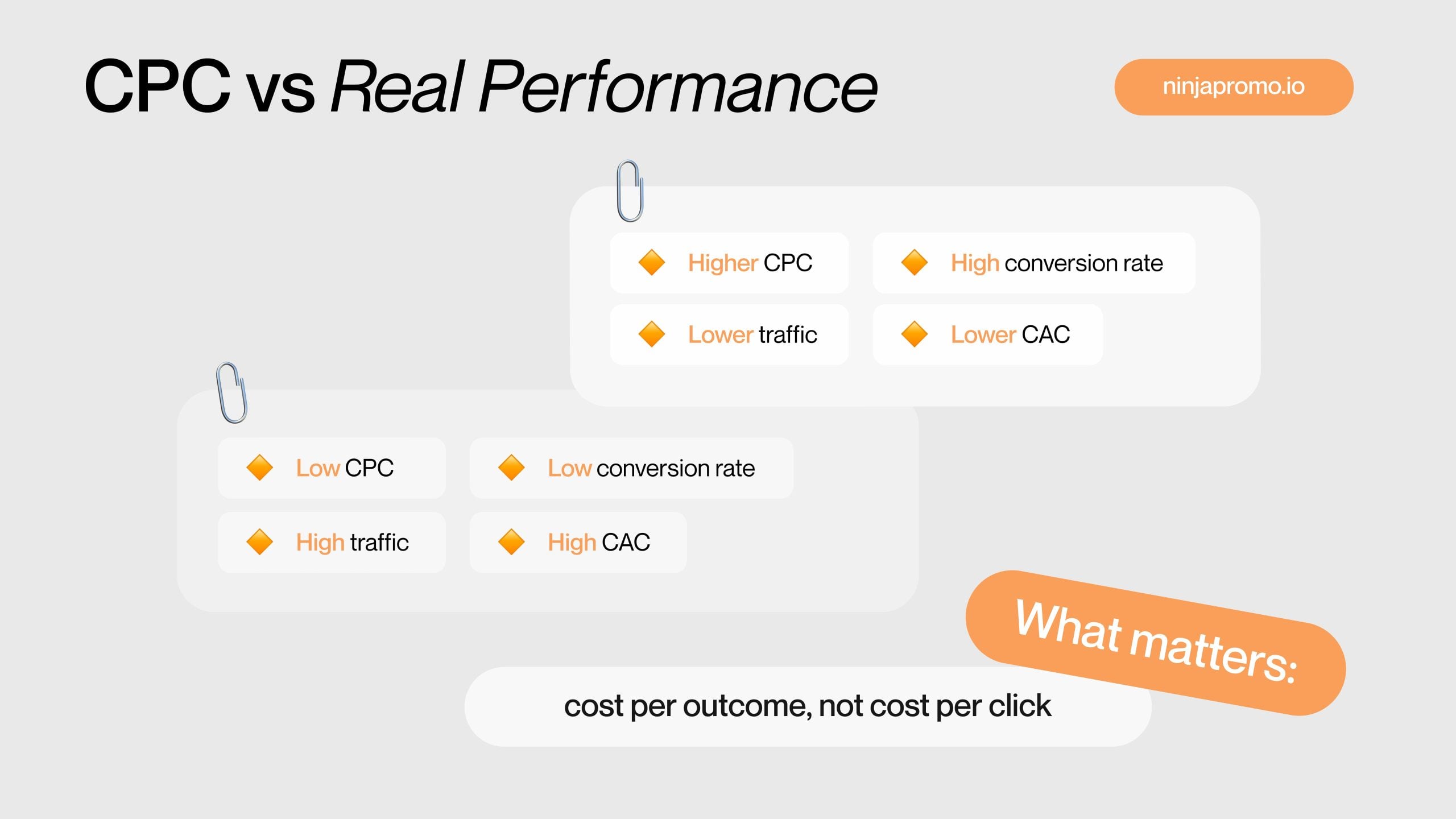
Cost alone is rarely a reliable decision factor. Lower CPCs can be appealing, but they often come with trade-offs in intent and conversion quality.
“CPC is one of the least useful metrics on its own. You can have cheaper clicks and still end up with worse outcomes. What matters is what happens after — lead quality, conversion rates, and whether it actually turns into revenue.”
Dennis F, PPC Team Lead at Ninja Promo
Key factors to compare:
- Customer acquisition cost, not just CPC
- Conversion quality, including actual purchase or lead intent
- Scalability, or how much volume the channel can realistically support
Before reallocating budget, check whether your current campaigns still have room to improve. In many cases, refining the setup delivers more than switching channels too early.
Related articles: Before moving the budget around, it’s worth checking what can still be improved — this overview of Google Ads optimization covers the basics.
Adapt Creative and Landing Pages to the Platform
One thing that trips people up is expecting the same creative to work everywhere.
Each platform, however, has its own context, and people interact with it differently. What performs well in search often falls flat in social or discovery environments.
For example:
- On Meta, remarketing relies on repeated exposure and familiarity
- On Pinterest, discovery is visual — people browse, save ideas, and come back later
This means creative and landing pages need to be adapted accordingly. Without adjustment, performance issues are often misattributed to the platform when the real issue is execution.

Quick Comparison: The Best Google Ads Alternatives at a Glance
The most effective and high-performing alternatives for Google Ads differ in how they capture or create demand.
| Platform | Best for | Intent type | Main advantage | Main limitation |
| Microsoft Advertising | Search campaigns | High intent | Lower competition, similar structure to Google | Smaller reach than Google |
| Meta Ads (Facebook & Instagram) | Audience targeting, remarketing | Mixed (mid to low intent) | Advanced targeting and scale | Lower immediate conversion intent |
| LinkedIn Ads | B2B lead generation | Mid intent | Precise professional targeting | High CPC |
| Amazon Ads | E-commerce sales | High intent | Purchase-ready audience | Limited outside the Amazon ecosystem |
| TikTok Ads | Brand awareness, discovery | Low intent | Strong reach and engagement | Requires strong creative |
| Reddit Ads | Niche communities | Mid intent | Access to engaged, topic-based audiences | Sensitive to poor messaging fit |
| Quora Ads | Research-driven traffic | Mid intent | Captures users during the consideration phase | Lower scale |
| Apple Search Ads | App installs | High intent | Targets users searching in the App Store | Limited to mobile apps |
“What tends to work better is giving each channel a specific role. Search might capture demand, social might create it. The issues usually come when teams expect one platform to do everything.”
Dennis F, PPC Team Lead at Ninja Promo
Top Google Ads Alternatives Compared
The most effective alternative paid media channels don’t replace search. They complement it — some capture intent in a similar way, others reach people earlier, before they ever type a query.
Microsoft Advertising
If you’re used to Google Ads, Microsoft Advertising feels familiar almost immediately. It runs on the same basic idea — reaching users who are actively searching, based on keyword targeting.
The difference tends to show up in competition. It’s often lower, which can make performance easier to sustain in certain niches. It’s usually the first place teams expand to when they want more from high-intent traffic channels without rebuilding everything.
Meta Ads
Meta Ads work very differently. There’s no search intent to rely on — people aren’t looking for anything in particular. They’re scrolling, with targeting increasingly shaped by privacy-safe cookieless targeting methods.
That’s precisely why it works. With the right setup, especially in Meta remarketing campaigns, you can stay visible long after someone has left your site. It also plays a big role in upper-funnel demand generation, where the goal is less about immediate conversion and more about getting in front of the right audience early.
LinkedIn Ads
LinkedIn is less about volume and more about precision. You’re not casting a wide net — you’re narrowing in on specific roles, industries, or company types.
That’s why it shows up so often in B2B lead generation channels. The intent isn’t as direct as search, but the relevance can be much higher. When the targeting is right, the trade-off in cost usually makes sense.
Amazon Ads
Amazon Ads sit inside a buying environment, which changes everything. Users are already browsing products, often with purchase intent.
That makes it one of the most direct options for E-commerce sales acceleration. At the same time, it’s part of a much larger shift toward retail media networks integration, where brands compete within marketplaces rather than just driving traffic to their own sites.
TikTok Ads
TikTok is driven almost entirely by content. There’s no search behavior to target, and very little predictability in what performs.
But when something works, it spreads quickly. That makes it a strong option for upper-funnel demand generation, especially for brands that can produce creative that feels native to the platform.
Reddit Ads
Reddit works differently again. It’s built around communities, not feeds or search queries.
Each subreddit has its own tone and expectations. That’s what makes Reddit community targeting effective — and also what makes it easy to get wrong. Ads that don’t fit the conversation tend to be ignored or pushed back on quickly.
Quora Ads
Quora sits somewhere between search and content. People come with questions, not necessarily with the intention to buy.
That makes it useful for reaching research-stage intent audiences. The intent is there, but it’s earlier. It works best when your product needs explanation, comparison, or context — especially when targeting Quora niche audiences that are hard to reach elsewhere.
Apple Search Ads
Apple Search Ads are focused entirely on the App Store. Users are searching for apps directly, which means intent is usually strong.
It’s a narrower channel, but for Apple app install campaigns, it tends to be one of the most efficient. The limitation is obvious — it only applies within that ecosystem.
Which Google Ads Alternative Is Best for Your Business?
The best Google Ads alternatives depend on how your customers discover, evaluate, and decide. There is not a single replacement that works across all cases. Some platforms capture demand efficiently, while others help generate it earlier.
| Business type / use case | Best platform(s) | Best for | Funnel stage | Why it fits | Main limitation |
| B2B services | LinkedIn, Microsoft, Quora | Qualified leads | Mid to lower | Precise targeting, intent signals | Higher CPC |
| B2B SaaS | LinkedIn, Quora | Pipeline growth | Full funnel | Mix of intent and education | Longer sales cycles |
| DTC E-commerce | Meta, TikTok, Pinterest | Product discovery and sales | Full funnel | Strong creative and targeting | Requires constant testing |
| Marketplace sellers | Amazon Ads | Conversions | Lower | High purchase intent | Limited off-platform reach |
| Mobile apps | Apple Search Ads, Meta | App installs | Lower to mid | Strong intent and targeting | Platform-specific |
| Local businesses | Meta | Leads and visits | Lower | High local intent | Limited scalability |
| Education / courses | Meta, Quora | Lead generation | Mid | Research and targeting | Longer conversion time |
| Finance / high-consideration | LinkedIn, Quora | Qualified leads | Mid to lower | Trust and research behavior | Higher acquisition cost |
| Lifestyle brands | Pinterest, Instagram | Inspiration and sales | Upper to mid | Visual discovery | Slower conversion |
| Awareness-first brands | TikTok, Meta | Reach and engagement | Upper | Scalable discovery | Lower immediate intent |
No single channel covers everything. Results usually improve when you spread effort — search to capture demand, and other platforms to build it earlier.
B2B
For B2B, reach tends to matter less than precision. Platforms like LinkedIn and Microsoft Advertising work because you can narrow in on specific roles or companies. That’s why they show up so often in B2B lead generation channels — fewer clicks, but usually more relevant ones.
E-commerce
With E-commerce, it’s rarely just one channel doing the work. Amazon tends to capture people when they’re already looking at products, which is why it often sits closer to the purchase itself. Meta and TikTok behave differently — it’s more about getting in front of people earlier. Pinterest usually falls somewhere before that, when ideas are still forming rather than decisions.
SaaS and Lead Generation
With SaaS, things usually take longer. People don’t convert straight away — they look around, read a few options, and come back later.
Platforms like Google, LinkedIn, and Quora tend to fit that behaviour. Especially when the goal is to reach research-stage intent audiences, not just people ready to sign up on the spot.
Brand Awareness and Demand Generation
If the goal is reach, search isn’t usually where you start. Platforms like Meta and TikTok are better suited to getting in front of people before they’re actively looking.
That’s where upper-funnel demand generation comes in — showing up early, building familiarity, and creating interest that often turns into search later on.
Common Mistakes When Testing Google Ads Alternatives
Most underperformance comes down to testing, not the platform. Too little spend, not enough time, or expecting search-like results from something that isn’t search.
Treating Every Platform Like Google Ads
A common mistake is applying search logic to every platform. When switching from Google Ads to other advertising networks, expectations often stay the same: immediate intent, direct response, and fast conversions.
That rarely holds. Social and community platforms behave differently. Users are not actively searching, so performance depends more on targeting, timing, and the creative.
Underfunding Tests or Judging Too Early
Testing requires enough data to be meaningful.
Most platforms go through a learning phase. During that time, performance can fluctuate while algorithms optimize delivery. If budgets are too low or tests are stopped too early, results do not reflect real potential.
A useful rule:
- Allow enough time for stable delivery
- Allocate budget that supports consistent impressions
- Evaluate trends, not short-term spikes
Comparing Channels Only by CPC
Lower CPC is often seen as a sign of better performance. In practice, it is only part of the picture.
What matters more is how efficiently traffic converts. A cheaper click can still result in a higher customer acquisition cost if conversion rates are low or lead quality is poor. The same applies to lower-funnel conversion quality.
Comparisons should focus on outcomes:
- Cost per qualified lead or sale
- Conversion rate by channel
- Long-term value of acquired users
“A lot of the time, the issue isn’t the platform — it’s how it’s being used. People expect it to behave like search, but most channels rely much more on creative, audience fit, and timing.”
Dennis F, PPC Team Lead at Ninja Promo
Final Thoughts
Looking for a direct alternative to Google Ads can be misleading. No single platform really covers everything, and trying to force one to usually leads to uneven results.
Search still works well when intent is already there. The limitation is timing — it tends to sit later in the process. Other channels come in earlier, when people are still exploring, comparing, or just getting familiar with options.
In practice, things tend to work better when those pieces are combined. Not every channel needs to do the same job, and when they’re used that way, performance usually becomes more stable over time.