Key Takeaways
- A strong SEO content strategy starts with understanding your audience, their challenges, and the intent behind each search query.
- Content should be mapped to the funnel only when the goal is to support different decision stages and drive conversions, not just attract informational traffic.
- Choosing the right format matters, as different topics and intents perform better as blog posts, guides, videos, infographics, or case studies.
- A structured content plan connects topics, keywords, intent, workflows, and publishing priorities into one cohesive strategy.
- Regular content updates help maintain relevance for both search engines and AI-driven discovery systems.
- Distribution is critical, as even strong content requires promotion through SEO, PR, link building, social media, email, communities, and partnerships.
As AI-powered search continues to evolve, the value of a well-developed SEO content strategy has increased significantly. Search engines are relying even more on trusted sources, driving greater attention and visibility to those websites.
It’s your key to attracting organic traffic, establishing brand authority, and maintaining sustainable visibility on search engines. For example, Google has revealed it uses more than 200 ranking factors when evaluating content.
In this guide, we’ll look into the significance of high-quality content and provide a step-by-step plan. It’s important for both single-page SEO promotion and for large websites.
What Is SEO Content?
SEO content is any website material (such as blog posts, product pages, or videos) created to perform well across both traditional search engines and AI-powered discovery systems, attracting consistent organic traffic.
The goal is to write content that directly addresses what readers are looking for, not through keyword stuffing but through understanding their needs.
Great SEO content doesn’t just tick technical boxes. It’s a balance between being readable and being optimized for search engines. Even if you use AI for SEO content, you need to edit the text and make it more human.
Why High-Quality Content Is Critically Important for SEO?
For most users, the first page of search results is as far as they go—75% never look further. So, if your content isn’t hitting that level, it might not reach your audience at all.
To break through, you need a top-quality SEO and content strategy to boost your chances of ranking on that crucial first page.
Engaging and informative SEO content helps build authority in your niche. When users find your content helpful, they trust your brand. This trust encourages them to spend more time on your site and explore your offer. It’s a basic SEO principle. Longer user engagement signals to search engines that your site provides real value. And how does Google evaluate it?
Google uses E-E-A-T to evaluate content quality & credibility, and it stands for:
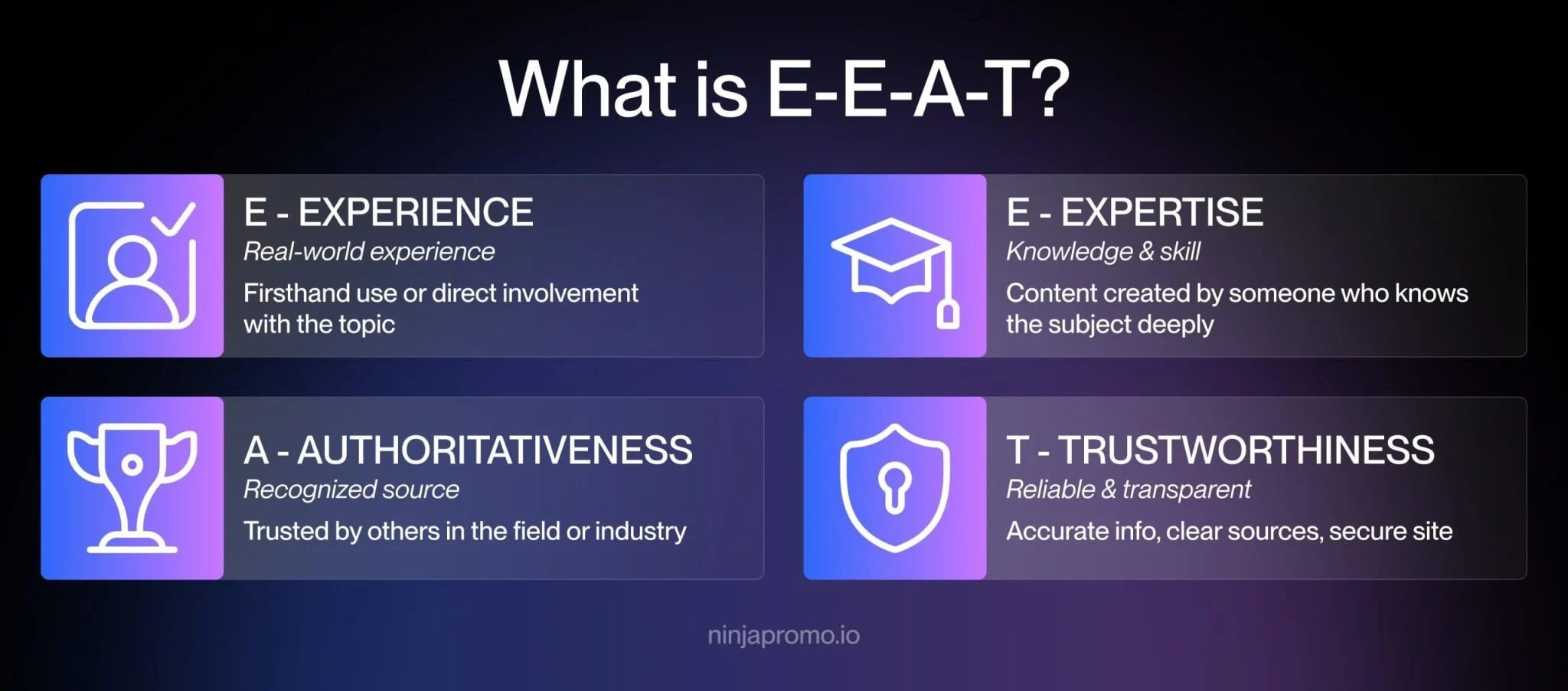
When you meet these standards, your SEO content is classified as high-quality.
When readers find your SEO content valuable, they’re also more likely to return. They might bookmark your page, share it, or subscribe to stay updated. These repeat visits strengthen your site’s metrics and positively impact SEO.
And here’s a key point: Quality content reaches beyond keyword optimization; it’s about thoroughly and accurately answering questions. Providing useful, actionable insights helps you satisfy readers and rise above the competition.
Step-by-Step Process for Creating an Effective SEO Content Strategy
A solid SEO content strategy is all about following a clear process. Each step is designed to tackle a specific part of content creation, from defining goals to keeping content optimized over time.
1. Define Your Goals and Objectives
Clear goals help you stay focused and make informed decisions. Think of them as the milestones that guide your SEO and content strategy journey. Your goals can include:
- Building brand awareness
- Generating regular traffic
- Supporting brand authority through informative SEO content
- Lead generation
- Converting search traffic directly into sales
- Simply educating audiences
- Ranking in video search
- Attracting backlinks
Your SEO goals need to match your overall business objectives. If you’re going for thought leadership, focus on guides, case studies, or how-to content. If backlinks are the aim, try listicles, roundups, or checklists. Having clear goals makes progress so much easier to track.
2. Identify Your Target Audience and Their Challenges
Before creating any SEO content, you need a clear understanding of who you’re trying to reach and what problems they’re facing. Defining your target audience helps you focus on the right topics, use the right language, and match search intent more accurately.
Here’s how to clearly define your target audience:
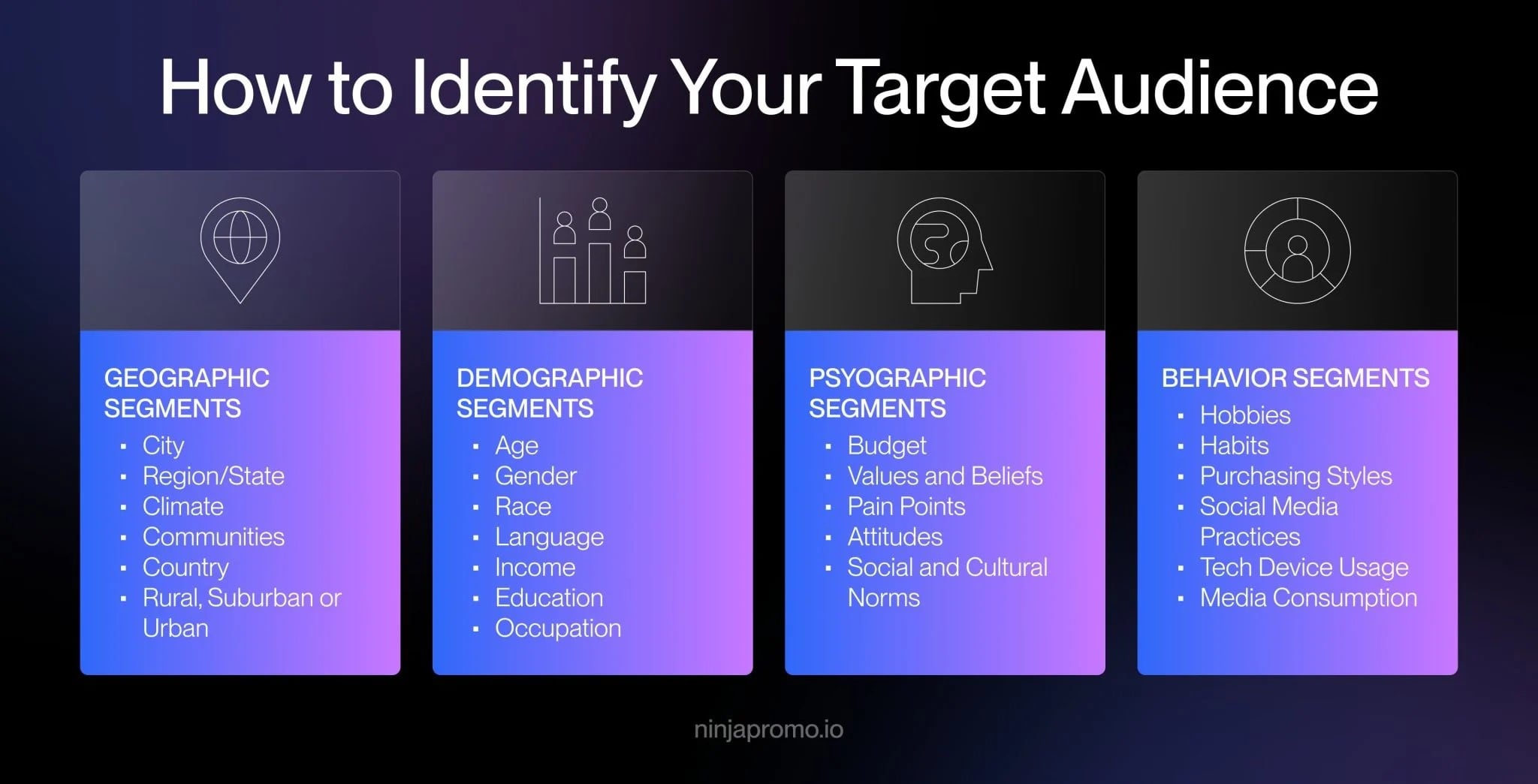
Start with basic audience characteristics:
- Age range and gender: Identify general patterns without over-segmentation.
- Location: Where your audience is based and how this affects their needs or behavior.
- Occupation and expertise level: Are they beginners, experienced users, or professionals?
Next, understand their goals and intent:
- What are they trying to achieve when searching? (e.g., solve a problem, compare options, learn something new)
- What outcomes do they expect from your content?
Then, analyze their behavior and preferences:
- Content formats: Do they prefer quick answers, in-depth guides, or visual content?
- Platforms: Where do they spend time and discover content?
- Search patterns: What kind of queries do they use and how specific are they?
Identify their key challenges:
- What problems are they trying to solve?
- What frustrates them in existing solutions or content?
Finally, define what drives engagement:
- What makes them click, stay, and convert?
- What type of messaging or value resonates most with them?
After gaining insights into their challenges and desires, customize your SEO content accordingly. Practice using simple, relatable language and focus on providing solutions that help.
3. Map Content to the Funnel
Mapping content to the funnel means aligning each piece of content with a specific stage of the buyer journey, from awareness to consideration and decision. It helps you create content that matches search intent more precisely and supports conversions, not just traffic.
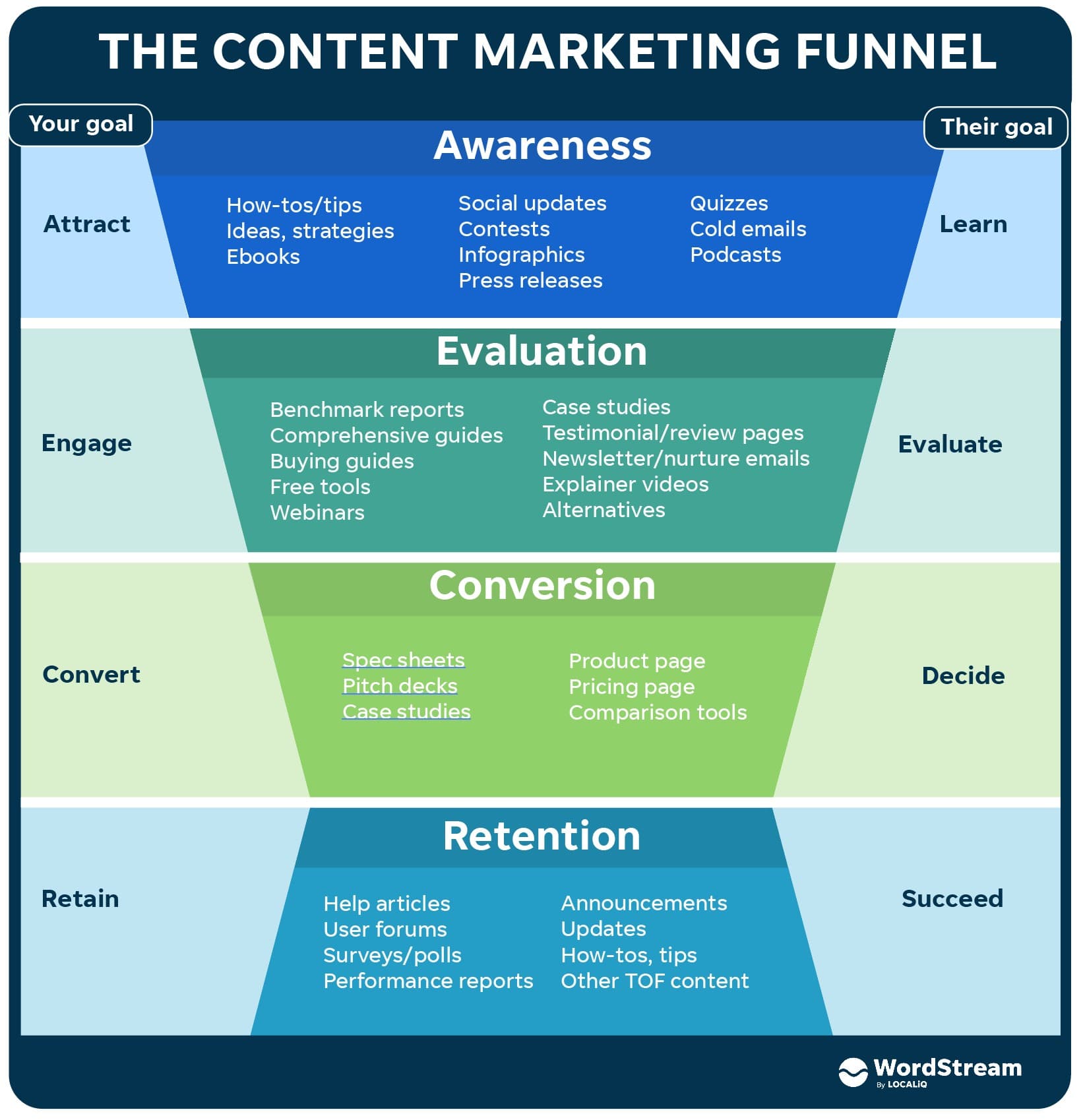
This step is especially useful when your SEO strategy is built to generate leads, guide users through a longer decision process, or support different content types for different levels of intent. It works well for B2B, SaaS, Ecommerce, and any niche where users usually need more than one touchpoint before converting.
You do not always need a separate funnel mapping step if your content strategy is simple or mainly focused on informational traffic. In that case, it is often enough to build funnel thinking into keyword research, content planning, and internal linking instead of making it a standalone stage.
4. Conduct Сomprehensive Keyword Research
Keyword research is the foundation that helps you create optimized content. Once you’ve figured out your goals and audience, this should be your next move.
With keyword research, you will know what your audience is searching for—their go-to keywords on Google.
And you can find those keywords using SEO tools like SEMRush, Ahrefs, and even in Google.
Let’s say you are in the SaaS niche selling project management tools.
You can head over to SEMRush or a similar tool and analyze the main keyword related to your product. In this case, it can be “task management software” or “project management tool,”
Then, you will typically see the following information for your main keyword:
- Search Volume: Local and global, shows how many people are searching.
- Keyword Difficulty: Measures ranking difficulty of a keyword.
- Search Intent: The motivation behind the search.
- Keyword Ideas: Related terms to build your content strategy for SEO
- SERP Results: Displays top-ranking pages for the keyword.

Keep your list organized by exporting it or setting up a quick spreadsheet. Include columns for search volume, competition level, and relevance to your business. With the keyword’s popularity and difficulty in front of you, you’ll know whether it’s a good target.
Next, you can start grouping similar keywords into clusters that target the same topic or theme. Assign each cluster to a dedicated page or section on your website. You do this to get more content out of the keyword clusters.

Clustering keeps your SEO content structured and thorough, making it easier for search engines to rank your pages.
So, what kind of pages should you create with your keyword list? The answer lies in identifying the search intent behind those keywords.
Search intent tells you why someone is searching and what they want to find. Understanding intent ensures your SEO content aligns with their needs.
Types of Search Intent:
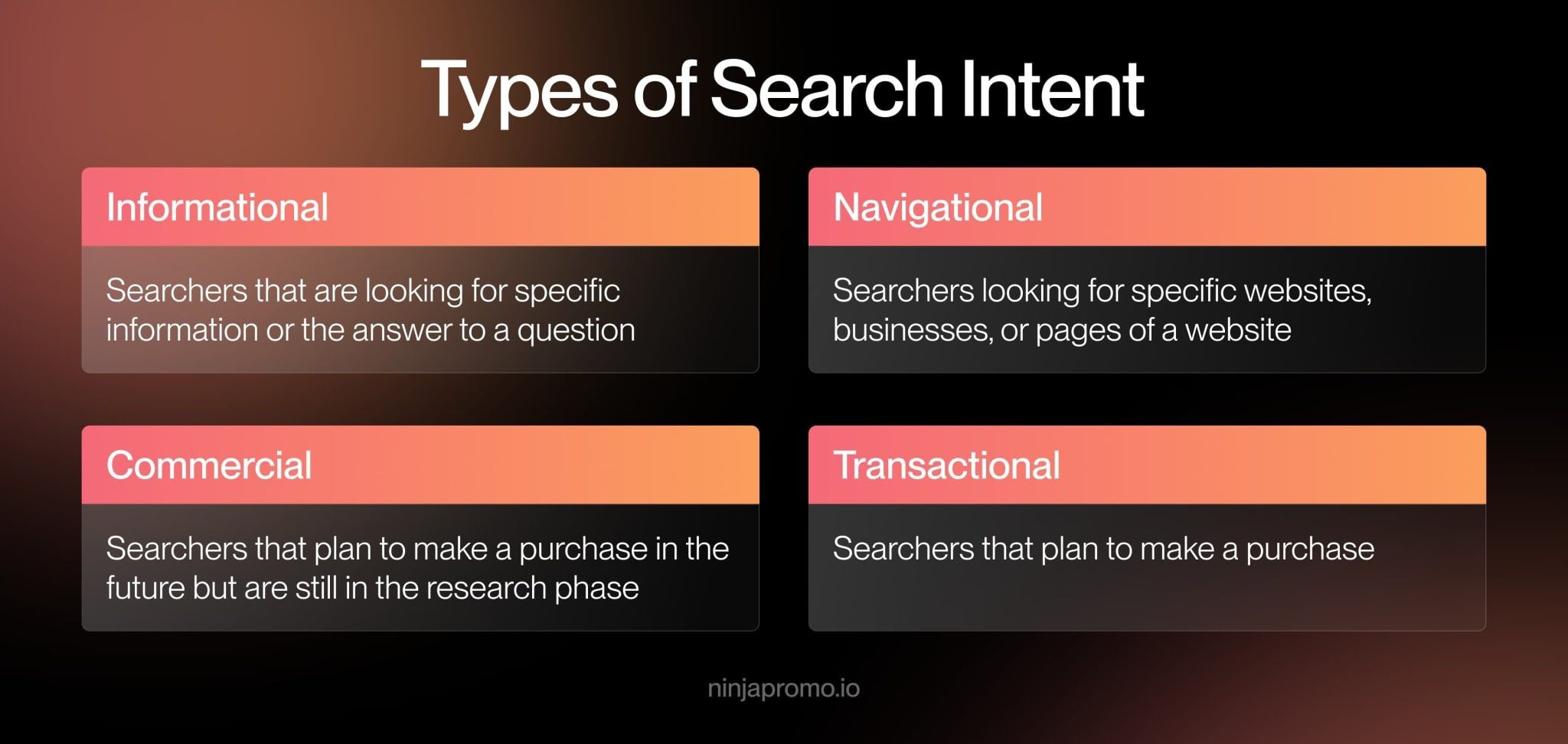
Check the top-ranking pages for your keywords to figure out the search intent. Match your content to it: use guides for informational queries and highlight products for transactional ones.
In keyword research, there are short-tail keywords that are broad (think “project management”) and pretty hard to rank for, & long-tail keywords (more than 3 words) that are more specific (e.g., “best project management tool for remote teams”) and way easier to target.
If you are just starting out, you can go for long tail keywords as they have less competition and higher conversion rates and make up most of all search queries on Google.
Use tools like AnswerThePublic or Ubersuggest to dig up great SEO content ideas and add them naturally into your SEO content to hit those niche search queries.
SEO tools can be expensive, so you can use Google as a keyword research tool. Here’s how:
1. Type your keyword in Google and let Google suggest the keywords.

2. You can also hop over to the “People Also Ask Section” to get related keywords.

- Check the “People Also Search For” section at the bottom of the page for more related terms.

Google’s free, so you can check out these keyword ideas whenever you need! Just make sure you’re keeping your keyword list fresh to keep your SEO content competitive.
Related Content: SEO vs SEA: What Sets Them Apart and When to Use Each Method
5. Analyze Competitors
Look at your competitors’ SEO content to find what’s missing. You can do this manually and using SEO tools.
Manually, you’ll need to visit their site and analyze each page individually. However, this method won’t give you insights into the keywords they’re ranking for.
With an SEO tool, you can add your website name and find out who your competitors are.

Then, add the competitors’ websites and look for high-ranking keywords that you can also target, including the intention behind them, total traffic, and more.
Like the example here:

During competitor analysis, check which pages rank for specific keywords to understand their topics, content format, structure, tone, and length. Study your competitors’ tone and structure, then adapt it to fit your brand while keeping your SEO content thorough and engaging.
You can also see their backlinks and referring sites, allowing you to reach out to similar ones after creating better SEO content.
Spot gaps and areas where you can provide better or different value.
For example, your competitors rank for a certain keyword but not high on SERP, and the content doesn’t cover everything readers need to know; now, that’s your opportunity.
Create better content that outperforms competitors by addressing the audience’s needs, providing comprehensive answers, and offering unique insights they can’t find elsewhere.

6. Determine Content Formats
Choosing the right content format is just as important as choosing the right topic. No matter if you’re doing SEO for a new website or an existing one, it’s important to constantly experiment. Different formats serve different purposes and align with various types of user intent:
| Content format | When to use | Why it works |
| Blog posts | For quick answers and basic topics | Easy to consume and good for SEO |
| In-depth guides | For complex topics | Builds authority and ranks long term |
| Videos | For visual explanations | High engagement and retention |
| Infographics | For simplified data | Easy to share and understand |
| Short-form content | For fast consumption | Captures attention quickly |
| Case studies | For proof and credibility | Builds trust and drives conversions |
The format you choose depends on your message and the audience’s intention. So, choose your SEO content formats thoughtfully. Match them to your audience’s intent and the type of information you want to share.
7. Develop a Content Plan
A content plan is a structured roadmap that outlines what content you will create, why you’re creating it, and how it supports your SEO goals. It helps you stay consistent, prioritize high-impact topics, and ensure every piece of content serves a clear purpose.
Typically, a content plan is created by SEO specialists, content marketers, or digital marketing teams. In smaller teams, it can be handled by a single marketer combining SEO research and content strategy.
Related Content: SEO Marketing: The Complete Roadmap to Organic Search Growth
To build an effective SEO content plan, start by identifying topics that align with both your business goals and your audience’s search intent. Focus on high-impact topics that can drive traffic, engagement, and conversions.
Use keyword research to map real search queries to content ideas, and define how each piece of content will perform in your strategy.
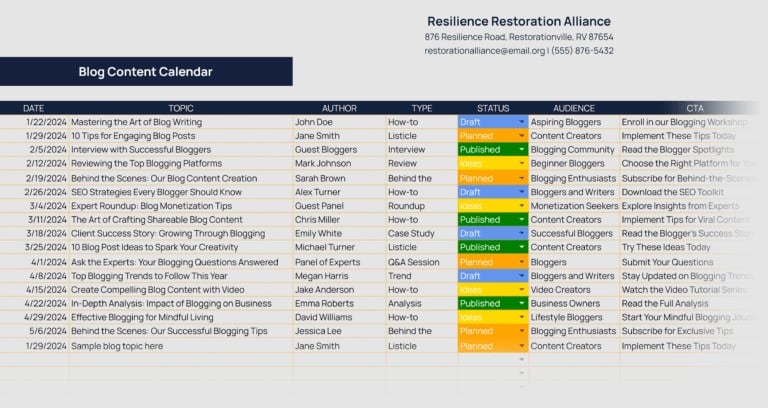
Your content plan should include:
- Target keywords for each piece of content
- Content format such as blog post, guide, video, or infographic
- Search intent and goal of the content
- Content creation and approval workflow
- Distribution channels and promotion strategy
- Clear publication timeline
Here’s a simple example of what a content plan might look like:
8. Optimize Content for Organic and AI Search and Regularly Update It
Ahrefs reveals that 96.55% of pages receive no traffic from Google, mainly because of poor-quality content. The solution? Create content that balances SEO with audience value.
We’ve prepared a complete checklist:
Content updates
✅ Refresh the publish date only when the content has been meaningfully updated.
✅ Rewrite the introduction so it is more specific and relevant.
✅ Add recent statistics or updated data to keep the content fresh.
✅ Cut fluff paragraphs, weak intros, and repetitive conclusions.
SEO improvements
✅ Include the main keyword naturally in the title and subheadings.
✅ Add 3 to 5 internal links to strengthen context and crawlability.
✅ Improve H2 and H3 headings so they are clear and keyword aligned.
✅ Add synonyms and related variations to improve semantic relevance.
✅ Remove broken external links to keep the page reliable.
✅ Improve the meta description so it is benefit driven and CTR friendly.
✅ Use schema markup such as FAQ or Article to improve rich result eligibility.
✅ Reduce keyword stuffing and keep the main term natural.
✅ Add location information if the content targets local queries.
✅ Reassign the content to a better category if it improves site structure.
✅ Make the content easy to scan with short paragraphs and bullet points.
✅ Add a table of contents to improve usability and scroll depth.
✅ Embed a chart or visual when it helps explain the topic better.
✅ Add a case study or example to make the content more practical.
✅ Replace stock images with real screenshots when possible.
✅ Compress or replace large images to improve page speed.
✅ Add content blocks for skimmers such as bullets, pull quotes, icons, and bold text.
AI search and trust
✅ Add an FAQ section to improve visibility in featured snippets and AI search.
✅ Add an author bio and expertise signals to strengthen trust and E-E-A-T.
✅ Prioritize pages that are losing traffic first.
✅ Add a new CTA that matches the current offer or funnel stage.
Even high-quality content can lose visibility over time if it becomes outdated, unclear, or poorly aligned with search intent. Regular updates help keep your pages relevant, improve rankings, and make your content easier for both users and AI systems to understand.
9. Distribute Content Across the Right Channels
Creating great content is only half the job. To get real value from it, you need to distribute it through the channels where your audience already spends time and where it can earn visibility, traffic, links, and mentions.
A strong distribution plan should combine SEO, PR, link building, social media, email, communities, and partner channels. The goal is to make one piece of content work harder by turning it into multiple exposure opportunities.
| Channel | How to use it | Why it matters |
| Organic search | Optimize the content for relevant keywords and search intent | Brings long term traffic from users actively looking for information |
| Link building | Share the content with relevant sites and outreach targets to earn backlinks | Improves authority, rankings, and discoverability |
| Digital PR | Pitch the content to journalists, editors, and media outlets | Helps earn mentions, citations, and high quality backlinks |
| Social media | Repurpose the content into short posts, carousels, and snippets | Increases reach and drives secondary traffic |
| Email newsletter | Send the content to subscribers who already know your brand | Re-engages existing audiences and supports repeat traffic |
| Communities | Share useful content in relevant groups, forums, and niche communities | Builds trust and drives targeted clicks |
| Partner channels | Collaborate with clients, vendors, or industry partners | Expands reach through borrowed audiences |
| Internal linking | Connect the new content with related pages on your site | Helps users discover more content and supports SEO |
A good distribution process usually starts with your own channels, then expands into external ones like PR and outreach. This way, the content gets immediate visibility first and then gains longer term SEO value through links, mentions, and engagement.
10. Measuring and Analyzing SEO Content Performance
Tracking your content’s performance helps you determine whether your SEO efforts are driving the desired results.
Clearly outline which metrics are most important for your SEO goals like:
- Organic Traffic: Website visits from unpaid search results. It shows how well your SEO works.
- Bounce Rate: Percentage of visitors leaving after one page; high rates mean content might not match expectations.
- Time on Page: How long visitors stay on a page; longer means engaging content.
- Conversions: Visitors taking desired actions; shows how well content achieves goals.
For this, you don’t need fancy SEO tools. Just use Google Analytics.
1) Login to Google Analytics and go to “Reports,” located at the left column
2) Click on the “Business Objective” from the left column and choose “Traffic.”

3) From here, you can see all the important metrics of your specific content that you can keep an eye on:

Schedule routine checks of your performance metrics to stay informed. They help:
- Find your top-performing content and create similar pieces to build on their success.
- Update pages with high bounce rates or low conversions by improving readability, updating info, or adding better CTAs.
- Review data to adjust your SEO content strategy based on changing user behaviors and trends.
Final Thoughts
A strong SEO content strategy goes beyond simply publishing more content. It requires a deep understanding of your audience, selecting the right formats, building a clear plan, and continuously updating and distributing content to keep it relevant and valuable. When these elements work together, your content is far more likely to deliver meaningful business results.