
Digital marketing campaigns work best when they are built around a clear goal, the right channel mix, and a measurable execution plan. Without that structure, even a strong creative or budget can underperform.
This guide explains how to build a digital marketing campaign step by step, choose the right channels, set meaningful KPIs, and improve performance over time.
What Is a Digital Marketing Campaign?
A digital marketing campaign is a coordinated set of online marketing activities designed to achieve a specific business goal, such as generating leads, increasing sales, increasing website traffic, or building brand awareness.
Unlike isolated tactics, a campaign usually brings together multiple channels, messages, and assets within a defined timeframe. Depending on the objective, it can include both paid and organic activity.
A digital marketing campaign can be narrow in scope and focused on one or two channels, or broader and more integrated across multiple touchpoints. The right mix depends on the campaign goal, audience, budget, and timeline.
Common components of a digital marketing campaign include:
- Search engine optimization (SEO)
- Content marketing
- Social media marketing
- Email marketing
- Pay-per-click advertising (PPC)
- Influencer marketing
- Public relations (PR) and media outreach
- Conversion rate optimization (CRO)
- Web analytics and performance tracking
- Digital design and creative production
- AI-supported marketing workflows
- Partnership or affiliate activity
Compared with traditional campaigns, digital marketing campaigns are easier to measure, adjust, and target more precisely.
Main Goals of a Digital Marketing Campaign
Setting clear, measurable goals is crucial for any marketing campaign. After all, how are you going to determine if your campaign was successful or not?
Aside from ensuring that your marketing activity aligns with the objective of your company, having well-defined goals also makes it easier to optimize your strategies. This way, you have a chance to realize mid-campaign if it’s going off course and apply changes to help you reach (and possibly exceed) your initial goals.
Examples of common goals for campaigns include to:
- Generate leads
- Improve your organic reach
- Boost your website traffic
- Rank higher in the search results
- Increase your conversion rate
- Build brand awareness
- Grow your number of social media followers
- Establish your brand as a thought leader in its niche
- Increase your sales/revenue
Types of Digital Marketing Campaigns
There are various different types of digital marketing campaigns that you can create. Here are examples of the campaigns most commonly used, along with their unique features and typical purpose:
| Campaign Type | What It Involves | Typical Purpose / Best Use Case | Key Strengths |
| Social Media Marketing | Involves using social media platforms like Facebook, Instagram, LinkedIn, X, and TikTok to reach and engage with your audience. | Best suited for brands that want to connect with their audience more directly, build visibility, and encourage ongoing engagement. | It offers advanced targeting, real-time interaction, and the potential for high-quality content to go viral. |
| Email Marketing | Involves sending targeted email messages to a list of subscribers to promote your product and nurture leads. | A strong option for campaigns focused on nurturing leads, staying connected with customers, and building long-term relationships. | It’s cost-effective and allows for a high level of personalization through tailored messaging. |
| Content Marketing | Involves creating and sharing valuable, relevant content like blog posts, videos, infographics, and social media updates to attract and engage your target audience. | Often used when the goal is to educate audiences, build trust, and strengthen brand authority over time. | Its versatility is one of its standout features, as content can be repurposed across multiple platforms. |
| Influencer Marketing | Involves collaborating with individuals who have an engaged following on social media to promote your offering to their audience. | Particularly useful for campaigns that need stronger credibility, wider reach, or more visible social proof. | It feels more authentic than many other strategies, which can help campaigns generate a deeper level of trust. |
| SEO | Involves optimizing your website using keyword research so that it ranks higher in the search engine results pages (SERPs). There are various types of SEO. For example, with an international marketing strategy, you’ll focus on international SEO over local SEO. | A strong fit for brands looking to build long-term visibility and a more sustainable online presence. | It can take time to build, but it supports long-term results and stronger search presence over time. |
| PPC | Involves placing paid ads on search engines and/or social media platforms. Unlike many other strategies, you pay only when someone clicks on your ad. | Works especially well for campaigns that need results faster, such as product launches, limited-time offers, or seasonal promotions. | It gives you better control over your budget and can deliver results more quickly than many other channels. |
| Public Relations (PR) | Involves building brand visibility through media coverage, press outreach, interviews, and brand storytelling across relevant publications and platforms. | Particularly useful for campaigns focused on credibility, authority, reputation building, and broader market awareness. | It can strengthen trust, increase visibility, and support brand positioning beyond paid channels. |
| Conversion Rate Optimization (CRO) | Involves improving landing pages, user journeys, offers, and on-site experiences to increase the percentage of visitors who take action. | Best suited for campaigns where traffic is already being generated and the goal is to improve efficiency and conversion performance. | It helps turn more existing traffic into measurable results without relying only on additional acquisition. |
Depending on the campaign scope and goals, digital marketing campaigns may also include analytics and performance tracking, digital design and creative production, affiliate activity, and AI-supported workflows.
What Do You Need to Consider Before Launching a Campaign?
Launching a digital marketing campaign without adequate preparation can result in missed opportunities and wasted resources. Before you launch a campaign, consider the following essential factors:
- Business objectives
- Your message
- Target audience
- The competitive landscape
- Available platforms
- Costs of digital marketing platforms and tools, content creation, content distribution etc.
- Available budget
- Timeline
Knowing what you’re aiming to achieve and whom you’re trying to reach are crucial. Then, identifying your resources and potential challenges beforehand helps ensure your efforts will be strategic and targeted leading to better results and a stronger return on investment.

Key Steps For Creating a Digital Marketing Campaign
Many of these above-mentioned essential factors will mark a step in the process of bringing your campaign to life. You’ll see that it takes more than thinking briefly about your goals, market, and budget. Each of these will need to be tackled in-depth, often with the help of a full-service digital marketing company.
Define Your Goals
As mentioned earlier, setting goals is fundamental to the success of any campaign. It provides direction and a way to measure success. It’s so important that it deserves to be mentioned again.
Basically, ask yourself what you’re hoping to achieve by spending resources on a campaign. And, no, it doesn’t necessarily need to be to generate more sales.
Setting goals like increasing website traffic, enhancing brand awareness, generating leads, or improving customer engagement are equally important. Paying attention to these areas too will also have an impact on your bottom line at the end.
When defining your goals, they should be:
- Specific (e.g. listing what needs to be completed and by whom)
- Measurable (e.g. including a quantifiable element like the number of app downloads you want to generate)
- Achievable (e.g. increasing the app downloads by 10% instead of 1,000%)
- Relevant (e.g. focus on increasing app downloads instead of social media followers to launch your new loyalty app)
- Time-bound (e.g. increase app downloads by 10% in three months)
Identify Your Target Audience
A great benefit of digital campaigns is its targeting. To leverage this unique feature to its full potential, you need to know exactly who your target audience is.
Three of the methods you can use to research your audience – analytics tools, surveys, and social media analytics.
Once you have more insight into the different audience members, you can create buyer personas based on common traits. Your buyer persona should include basic information as well as personal characteristics and behavioral insights like:
- Age
- Gender
- Location
- Educational level
- Income range
- Job title and industry
- Goals
- Pain points
- Values
- Preferred communication channels
- Factors that influence purchasing choices
To tie all these details together, create a short narrative. Here’s an example of how to do that:
Daniel is a 38-year-old marketing manager at a mid-sized tech company. He is keen to explore artificial intelligence (AI) and is always on the lookout for tools that can streamline his workflow. He prefers reading written content like blog posts and whitepapers over watching videos and listening to podcasts. Social proof plays a key role in his purchasing decisions and he finds detailed product reviews and testimonials more helpful than free trials or product demos.
You can use these personas for audience segmentation allowing you to create highly personalized marketing messages.
Conduct Market Research
When it’s time for market research, focus specifically on market trends and customer behavior.
Market trends matter because they’ll help you to stay ahead of the competition and identify opportunities for innovation. By staying informed about market trends, you can anticipate shifts and adapt your strategies accordingly.
Let’s take the skincare industry. Sustainability is currently one of the key market trends. Consumers are growing more interested in environmentally friendly options.
Armed with this information, you can create a marketing campaign to announce a refill program, for example. This will resonate with your audience and help to show that you’re in tune with trends.
Then, understanding how your customers interact with your brand allows you to optimize their experience at every touch point. Customers expect personalized experiences tailored to their behavior. For example, if they prefer email newsletters over white papers, you can prioritize your content marketing campaigns accordingly.
Market research techniques and tools that you can use include:
- Competitor analysis
- SWOT analysis
- Google Trends
- Semrush
Develop a Content Strategy
While content marketing is regarded as a digital strategy in its own right, all digital marketing campaigns rely on content. As such you’ll need a content strategy, whether you’re busy with SEO or social media.
A well-planned content strategy ensures consistency and effectiveness.
Use your target audience and campaign goals to decide which content types will be right for your campaign. Examples of types of content that you can incorporate include:
- Blog posts
- Videos (short-form as well as long-form)
- Infographics
- Podcasts
- Social media posts
While some content types are more visual than others, all content should incorporate visuals.
Another way to create engaging content is to use storytelling and ensure that your specific target audience will find it informative and valuable.
Use AI Tools to Support Campaign Planning and Execution
AI tools can help improve both the speed and quality of digital marketing work when used strategically. They are especially useful for research, content ideation, campaign planning, personalization, and ongoing optimization. Salesforce reports that 63% of marketers already use generative AI, which supports adding this topic as a practical step in the workflow.
For example, AI can help with:
- audience research and insight clustering
- keyword research and content ideation
- ad copy and email draft generation
- creative variation testing
- campaign automation and optimization
- performance analysis and reporting support
Examples of AI tools marketers use include:
- ChatGPT, Claude, or Gemini for brainstorming, outlines, first drafts, and summarizing research
- Google Ads AI tools such as Performance Max for automation and campaign scaling
- Meta Advantage+ for AI-supported ad delivery and creative optimization
- AI features in analytics and CRM platforms for spotting patterns, surfacing insights, and supporting faster reporting
Google says Performance Max uses Google AI to optimize bids and placements, and Meta describes Advantage+ as a suite of products that uses AI to optimize campaigns in real time and match ads to the people most likely to take action.
Used well, these tools can save time, reduce repetitive work, and help marketers move faster from planning to execution. However, AI should support decision-making, not replace it. Human review is still essential for quality, accuracy, brand consistency, and strategic judgment.
Choose Your Digital Channels
Another reason why target audience research should come first is that it shows you where your potential customers actually discover and research brands.
For younger audiences, social media and search are often stronger starting points than email. According to recent research by DataReportal, search engines remain the leading source of brand discovery overall, while social media ads rank as the top driver of brand awareness among internet users aged 16 to 34.
This does not mean email is less valuable. Rather, email usually plays a stronger role once a brand has already captured attention and permission to communicate directly.
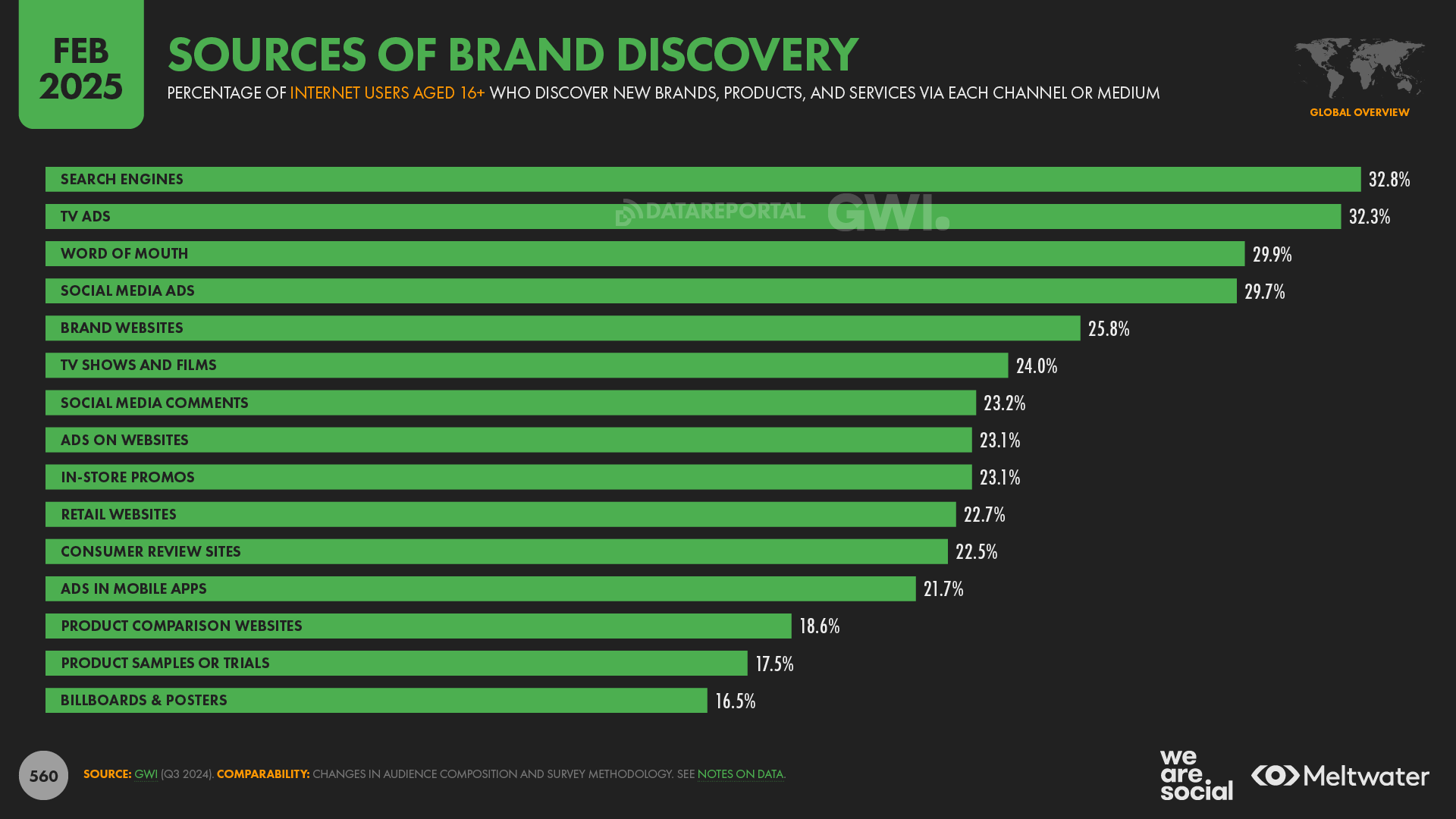
Also, consider your campaign goals, timeline, budget, and internal resources. The right channel mix depends not only on where your audience spends time, but also on what you want the campaign to achieve and how quickly you need results.
✅ Before choosing your channels, ask:
- 👥 Where does your target audience discover and research brands?
- 🎯 What is the main goal of the campaign: awareness, website traffic, lead generation, conversions, or retention?
- ⏱️ How quickly do you need results?
- 🧩 What type of content can your team realistically create and maintain?
- 💰 Which channels fit your available budget and resources?
- 📊 Which channels have already performed well for your business in the past?
In general, channels like PPC and paid social can help generate faster results, while SEO, content marketing, and email usually take longer to build but can deliver stronger long-term value. The best approach is usually to choose a mix of channels that matches both your audience and your campaign objective.
📌 For example:
- If your goal is brand awareness, social media, influencer marketing, and paid social may be strong priorities.
- If your goal is website traffic, SEO, content marketing, and PPC may be more effective.
- If your goal is lead generation or conversions, PPC, landing pages, email marketing, and retargeting often play a bigger role.
- If your goal is retention, email marketing, CRM flows, and remarketing are usually more important.
All in all, the best approach is to use a mix of channels. This way, you can reach a broader audience, reinforce your campaign message, and limit the impact that algorithmic changes can have on your visibility.
Set Your Budget and Allocate Resources
Setting a budget is a key part of planning any digital marketing campaign. It helps you control costs, prioritize activities, and make sure your resources are aligned with the results you want to achieve.
When setting your budget, consider:
- 🎯 your campaign KPIs
- ⏳ the duration of the campaign
- 🛠️ the resources currently available to you
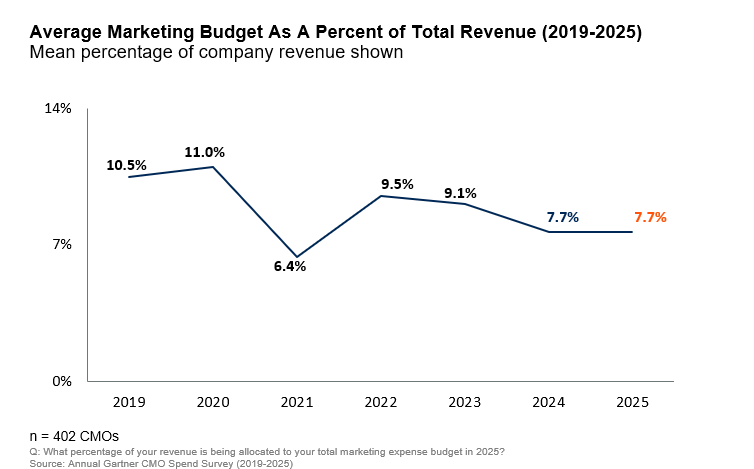
According to Gartner’s 2025 CMO Spend Survey, marketing budgets remained at 7.7% of company revenue, while digital channels accounted for 61.1% of total marketing spend. This shows why budget planning is not only about setting a number, but also about allocating resources to the channels and activities most likely to support your campaign goals.
For example, if your goal is to increase organic website traffic, a larger share of your budget may need to go toward:
- SEO
- content creation
- related tools
It’s also important to think beyond spending time alone. Resource allocation should include:
- paid media
- content production
- design
- software and tools
- reporting
- ongoing optimization
In general:
- Short-term campaigns often require more immediate investment in faster channels like PPC or paid social.
- Longer-term campaigns may allow you to invest more heavily in SEO, content marketing, and email, which usually take more time to build but can deliver stronger results over time.
The best approach is usually to prioritize the channels and activities most closely aligned with your campaign goals, while keeping enough flexibility in your budget to test, optimize, and adjust as the campaign progresses.
Measuring Campaign Outcomes
The success of a marketing campaign depends on more than just creativity and reach. It also depends on measurable outcomes.
Tracking these outcomes helps you understand what worked, what didn’t, and where adjustments are needed. It also makes it easier to improve future campaigns based on data instead of assumptions.
📊 Common KPIs to track
To do this, you’ll need to decide which key performance indicators (KPIs) to track. Common metrics used to evaluate campaign performance include:
- Conversion rates
- Click-through rates (CTRs)
- User engagement
- ROI
- Bounce rate
- Cost per click (CPC)
- Cost per acquisition (CPA)
- Customer lifetime value (CLV)
🔍 What data to analyze
Data is at the core of effective analysis. This can include:
- web analytics
- social media insights
For example, a tool like Google Analytics can help you understand how users interact with your website and which traffic sources contribute most to campaign performance.
When reviewing your data, look for patterns. If email marketing played an important role in your campaign, you may notice that certain days or send times generated better CTRs than others. You can combine this with data on best times to send an email to find the sweet spot.
⚙️ Keep monitoring and optimizing
Measuring campaign outcomes is not just a final step. Continuous monitoring is essential. Regularly reviewing your KPIs helps keep your campaign on track and gives you time to make adjustments when needed.
You should also focus more budget and attention on what performs best. For example, if Facebook drives more conversions than Instagram, it may make sense to allocate more budget to that platform.
A/B testing can also help improve results. Testing different versions of ads, landing pages, or emails makes it easier to identify which elements perform better. Even something as simple as changing an email subject line can make a measurable difference.
Examples of Successful Digital Marketing Campaigns
For examples of what a successful campaign looks like, you can check out results that we’ve generated for Urban Mavericks, Intellectsoft, and Nestlé.
For example, for Urban Mavericks, our campaign strategy relied heavily on content creation. The goal was to create visually-appealing, educational content that their audience of environmentally-conscious consumers would want to share. We used a mix of email marketing, social media marketing, influencer marketing, and paid ads (specifically on Instagram).
We shared infographics via email as well as social media, showing how content can be repurposed to help stretch your marketing dollars. The result of this digital marketing campaign was that customer acquisition cost (CAC) decreased by $10 while conversion rate, the number of new leads and revenue growth all increased.
Our work for Intellectsoft also focused heavily on social media. Their goal was to boost online visibility, brand awareness as well as digital engagement.
Content marketing was also a key element to earn online engagement to help us reach this goal. Like in the case of Urban Mavericks, our content marketing strategy also focused on infographics, but in this case we felt that blog posts and videos were needed too. Over 200 content pieces were created!
For Nestlé, we had to target quite a different crowd, evidence of how we can flex and flow. The product marketing strategy for their Nestlé Cini Minis targeted energetic consumers between the ages of 13 and 27. Needless to say, much of our energy was spent on social media. Combining paid social with social media management, we could increase their engagement rate by 7 times.
Conclusion
If there’s one thing that stands out when it comes to creating a marketing campaign, it’s the importance of research. Know your target audience and where they spend their time.
Find out what works for your competitors. And, if it’s not your first campaign, look back at your own results to see what has worked for you.
At the end of the day, the best approach is to use a combination of channels and strategies, irrespective of your goal. Whichever route you take, content will be foundational. So, when you budget, be sure that content creation gets enough resources.