
A crypto advertising strategy is a plan to promote exchanges, wallets, DeFi protocols, NFTs, and Web3 platforms through paid and organic channels while staying compliant with industry-specific regulations.
What makes it different from regular digital advertising is the added layer: platform restrictions, shifting regulations, and an audience that needs to trust you before it does anything.
With over 560 million crypto owners worldwide (Fibo, 2026), the audience is there, but reaching it efficiently requires a very different approach than standard digital advertising. In this article, we will explain to you how to do it properly.
Why Advertising Matters in the Cryptocurrency Industry
Crypto brands face advertising challenges that most industries simply don’t deal with. Google, Meta, and LinkedIn all require special certification or prior approval before you can even run crypto-related ads, and the rules can change without notice. An ad that’s approved today could be pulled tomorrow.
On top of that, the market is crowded. Thousands of blockchain-based products are competing for the same pool of cryptocurrency users. And because of high-profile failures like FTX and Terra/Luna, many people approach new crypto projects with real skepticism. You can’t just buy attention, you have to earn trust at the same time.
“In crypto, trust comes from clarity, transparency, and consistency, not hype. The fastest way to lose credibility is to market a product like a “get-rich-quick” scheme. Users are already skeptical, and aggressive promises make that worse.
Avoid overpromising. No guaranteed profits, unrealistic ROI claims, or vague hype. The ad, landing page, onboarding, and product experience should all communicate the same message. Consistency across the user journey is what builds trust.”
Dennis F., PPC Team Lead at NinjaPromo
That’s exactly why having a proper cryptocurrency advertising strategy matters. Smart crypto audience targeting makes sure your budget reaches people who are already interested and not random browsers. Compliant ad creative keeps your accounts from getting banned. And using multiple channels protects you when one platform suddenly changes its crypto policy.

Brands that consistently convert treat advertising as a system, not a one-off campaign. That means building a proper crypto marketing foundation: audience segmentation, funnel-stage messaging, compliance workflows, and optimization cycles.
How to Develop an Effective Crypto Ads Strategy
A good strategy for cryptocurrency advertising is a sequence of decisions: goals first, then funnel, compliance, audiences, channels, and optimization. Get the order right, and each step makes the next one easier.
These are the steps you should follow:
Define Clear Crypto Advertising Goals Around User Acquisition
Not all conversions are equal in crypto. A wallet download, an exchange signup, a staking deposit, and a token purchase each are very different. If you optimize for the wrong one, you end up with numbers that look good but don’t reflect real business outcomes.
Before writing a single ad, set your conversion goals in advertising: what action proves this person is a real user, not just a curious visitor?
Meaningful acquisition goals for crypto projects:
- Verified account creation with KYC completion (exchanges, regulated platforms)
- First funded deposit above a minimum threshold
- Wallet connection to a dApp or protocol
- Token purchase or liquidity pool participation
- Community join + active engagement within 7 days
Your goal also shapes your funnel. A funded-deposit goal needs awareness, education, and trust-building before a direct-response ad makes sense. A simpler goal, like app downloads, may only need two steps.
Map the Complete Crypto User Journey Across Every Funnel Stage
The biggest difference between crypto and regular e-commerce funnels is how long it takes to build trust. Someone who sees a DeFi protocol for the first time doesn’t know what it does, whether it’s safe, or why they should trust it with their money. Showing them a “sign up now” ad at that point is just wasted spend.
“Most crypto projects neglect the middle of the funnel. That middle stage should explain how the product works, why it’s credible, what the risks are, and why it’s different. Without it, campaigns may drive traffic, but users hesitate and leave. In crypto, that hesitation is expensive. Weak middle-funnel education hurts conversion quality, deposit rates, retention, and long-term LTV.”
Dennis F., PPC Team Lead at NinjaPromo
Think of the journey in four stages, each with different messaging:
📢 Awareness
- User mindset: “I’ve heard of crypto but don’t know this brand”
- Goal: Reach & brand recall
- Focus: Education, problem awareness, brand differentiation
📊 Consideration
- User mindset: “I’m evaluating options. What makes this different?”
- Goal: Traffic & engagement
- Focus: Features, security signals, third-party validation
🛡️ Trust / Intent
- User mindset: “I’m interested but not ready to commit funds”
- Goal: Lead capture & micro-conversions
- Focus: Testimonials, compliance credentials, audit reports, demo access
✅ Conversion
- User mindset: “I’m ready to sign up / deposit / connect wallet”
- Goal: Direct response
- Focus: Clear CTA, friction reduction, limited-time incentives
Users in the trust stage respond well to concrete proof, such as published smart contract audits, proof-of-reserves, or regulatory licensing. These small signals remove the hesitation that causes most people to abandon a signup.
Compliance is a hard constraint that shapes everything. If you launch without understanding what each platform allows, you’ll face disapproval, suspended accounts, and wasted budget. In some markets, the risks go beyond ads and into legal territory.
“For crypto exchanges, messaging focuses on trust, security, fees, liquidity, and ease of use. The user wants to know if they can safely buy, sell, and manage crypto.
DeFi platforms require more education. Users need to understand the protocol, risks, audits, liquidity, and wallet interactions before they trust it enough to participate.
NFT projects rely more on emotion and community. The value is often tied to identity, exclusivity, creator credibility, and belonging rather than pure functionality.”
Dennis F., PPC Team Lead at NinjaPromo
Here’s how the major platforms currently handle cryptocurrency ads:
| Platform | Crypto Ad Policy Status | Key Requirements | Common Rejection Triggers |
| Google Ads | Restricted, certification required | Google Ads certification, licensed exchange only, geo-specific | Unregistered exchanges, ICO promotions, DeFi yield claims |
| Meta (Facebook/Instagram) | Restricted, written permission required | Prior written approval, no ROI guarantees, no unregistered products | “Earn X% per day” claims, unverified wallets, NFT speculation |
| Twitter/X | More permissive, verification-based | Advertiser verification, no misleading claims | Unlicensed financial services, scam token patterns |
| Restricted for most crypto | B2B fintech/SaaS framing works better than token promotion | Direct token price promotion, yield advertising | |
| YouTube | Restricted, Google certification applies | Same as Google Ads, influencer content governed by FTC rules | Get-rich-quick framing, undisclosed paid promotions |
Regional regulation challenges that add another layer:
- The EU’s MiCA regulation requires specific disclosures in crypto ads targeting European users.
- In the U.S., anything that sounds like investment advice or yield promises carries legal risk under the SEC’s current stance.
- In the UK, the FCA requires all crypto promotions targeting UK consumers to be approved by an authorized firm.
Never promise returns, guarantee outcomes, or compare crypto products to regulated investments in ad copy. These are the fastest ways to get ads rejected and accounts flagged.
Add a compliance check to your creative process before anything goes live, not as a reaction to disapprovals after the fact.

Use First-Party Data and Behavioral Signals
Ad platforms are giving marketers less and less targeting data as third-party cookies disappear. That makes first-party data, information collected directly from your own users, the most reliable for both targeting new people and re-engaging existing ones.
“I rely heavily on first-party data in crypto. Platform data helps with reach, but it is often too broad or unreliable for high-intent targeting. Behavioral signals like wallet connections, pricing page visits, repeat sessions, or completed verification give a much clearer picture of intent. The strongest campaigns combine platform data for discovery and first-party data for precision, retargeting, and optimization.”
Dennis F., PPC Team Lead at NinjaPromo
Practical first-party data sources for crypto projects:
- Email lists from newsletter subscribers, waitlists, or registered users
- On-site behavioral data: pages visited, tool usage, assets viewed
- CRM data segmented by product tier, trading volume, or deposit history
- Community engagement data from Discord and Telegram
Crypto also has something most industries don’t: on-chain data. Wallet activity is public. Tools like Dune Analytics and Nansen let you find wallets that have interacted with competitor protocols, held specific tokens, or voted in governance decisions. That is data that powers crypto community-driven growth strategies targeting specific holder segments.
If you’re working with a crypto marketing agency, look for one that combines on-chain signals with standard ad platform data, as it makes audience building much faster.
Diversify Channels Beyond Traditional Ad Platforms
Putting all your budget into Google or Meta is risky in crypto. Both platforms have changed their policies multiple times, and even advertisers doing everything right can get caught in automated enforcement sweeps. Mainstream audiences also tend to be lower intent than people you’d reach through crypto-specific channels.
Spreading across multiple channels protects you from disruption and reaches cryptocurrency users at different moments in their decision process:
| Channel | Primary Goal | Advantages | Challenges | Best Use Case |
| Crypto-specific ad networks (Coinzilla, Bitmedia) | Awareness / Traffic | No crypto restrictions, niche audience | Lower scale vs. Google/Meta | Exchanges, wallets, and DeFi platforms targeting active traders |
| Twitter/X Ads | Community growth / Brand awareness | Crypto-native audience, relaxed crypto policy | Requires advertiser verification, high CPM | Token launches, NFT drops, Web3 projects building brand voice |
| Reddit Ads | Community engagement / Education | Targeted subreddits (r/CryptoCurrency, r/ethereum), high intent | Ad policy varies, hostile to overt promotion | Products that benefit from peer validation and technical audiences |
| Programmatic / DSP (DV360, The Trade Desk) | Scale / Retargeting | Wide reach, flexible audience layering | Crypto vertical restrictions vary by publisher | Retargeting site visitors, look-alike campaigns for established projects |
| Crypto Influencers (YouTube, Twitter/X) | Trust-building / Conversion | High credibility with crypto audiences, SEO-friendly video content | Expensive top-tier, FTC disclosure requirements | Product reviews, tutorial walkthroughs, and token explainers |
| Email / Newsletter Sponsorships (Milk Road, The Block) | Qualified crypto lead generation | Engaged subscribers, no platform ad restrictions | Limited scale, harder to measure direct conversions | B2B crypto tools, institutional products, high-ticket offerings |
| Telegram & Discord (organic + paid) | Community growth / Retention | Direct access to crypto communities, near-zero ad cost | No formal ad product, requires manual community work | DeFi protocols, GameFi projects, and token communities requiring ongoing engagement |
Understanding the full range of crypto advertising services, from programmatic to crypto-native networks and influencer campaigns, helps you match each channel to the right funnel stage before you commit a budget.
A reasonable starting split for most projects:
- 40-50% to crypto-specific channels and community growth
- 30-40% to paid social and programmatic
- 10-20% to certified crypto PPC where your product qualifies
Crypto-specific ad networks like Coinzilla and Bitmedia offer CPMs comparable to premium inventory, without the certification requirements associated with platforms such as Facebook crypto Ads, Google Ads, and so on. For projects that don’t yet meet these requirements, they’re often the most practical starting point.
Related Content: Crypto Google Ads: How to Run High-Performing Advertising Campaigns
Continuously Test and Optimize Campaign Performance
Crypto ad campaign optimization is an ongoing part of running campaigns. The market moves fast. A setup that works during a bull run can fall flat in a downturn with exactly the same targeting and creative.
“Privacy regulations and tracking limitations have pushed crypto marketing toward stronger first-party data, cleaner analytics, better audience segmentation, and more privacy-compliant tracking. It also changed performance measurement. Instead of relying only on attribution, marketers now look at signals like sign-up quality, deposit rates, retention, and LTV.”
Dennis F., PPC Team Lead at NinjaPromo
These are the elements worth testing on a regular basis:
| Element | What to Test | Why It Matters in Crypto |
| Ad Copy | Trust signals vs. feature benefits vs. yield/reward framing | Crypto audiences respond differently to security vs. upside messaging depending on market conditions |
| Landing Pages | Audit badge placement, social proof format, CTA button text, and position | High-converting crypto landing pages typically reduce friction within 3 seconds of load. Trust signals above the fold are critical. |
| Audience Segments | Cold intent-based audiences vs. warm retargeting vs. first-party lists | CAC varies 3-5x between audience types in crypto, knowing which converts efficiently avoids wasted spend |
| Channel Mix | Crypto-native network vs. programmatic vs. paid social for the same product | Platform algorithms and user intent differ enough that the same creative can produce very different ROAS by channel |
| Bid Strategy | CPC vs. CPM vs. target CPA bidding | Crypto ad cost spikes during market volatility, flexible bidding prevents overspending during peak competition |
Check performance weekly, not monthly. One regulatory update or token price shift can change how users behave overnight. Set alerts for sudden CPA spikes, CTR drops, or conversion rate changes so you can react before a significant budget is gone.
Combining ad data with cryptocurrency SEO insights, especially organic keyword intent, helps you understand which segments are actively searching for what you offer, which sharpens both your bidding and your creative.
Real Crypto Advertising Campaigns That Successfully Drove Growth
UDAO: Building a Token Community from Zero to 300K+

UDAO is a Web3 educational platform that uses blockchain technology for career development and decentralized recruitment. When the project came in April 2023, it had no community at all, and exchanges won’t list a token without proof that real people actually want it.
The task was to build a genuine audience across two very different groups: crypto-native investors and mainstream learners, in under six months, without the inflated follower counts that exchanges have learned to ignore.
The approach mixed paid advertising with multi-platform community building across Twitter/X, Telegram, Discord, and gamified tools like Zealy and QuestN. Localized communities were created for different regions. Influencer partnerships and AMA sessions built credibility. A pre-listing private sale made sure real buyer demand existed before the token went live.
🚀 Results
- 300,000+ total community members across all platforms
- 59,000 Twitter/X followers
- 50,000 active Discord members
- 33,000 Telegram members
- 8,000 Facebook followers
- Successful listing on Gate.io followed by MEXC
- Organic post-listing trading activity, avoiding the price collapse common in weak launches
Affyn: 250% Community Growth in Five Weeks
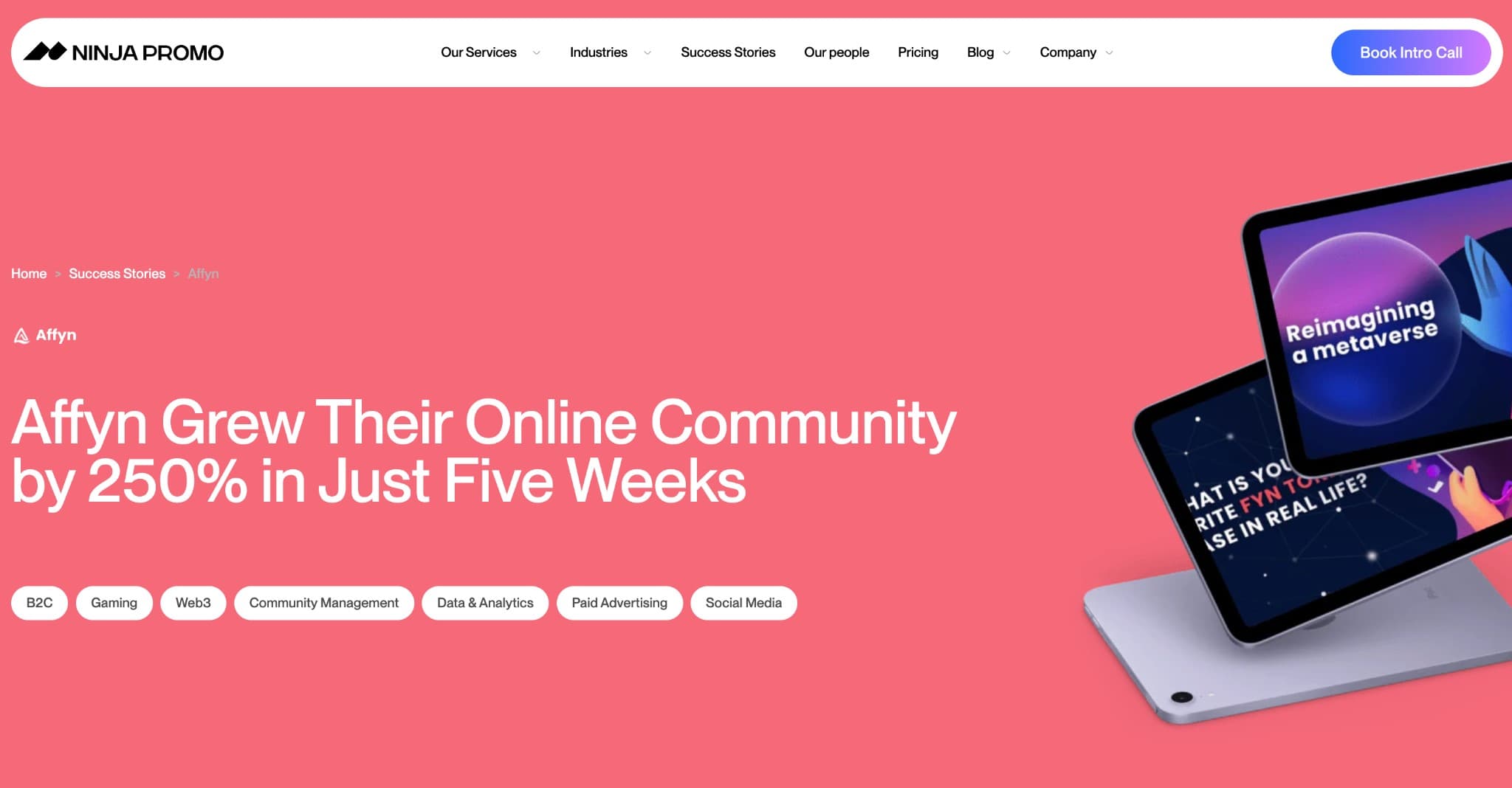
Affyn is a metaverse gaming platform in the Play-to-Earn and NFT space, with its FYN token as the in-game currency. The brand needed an engaged community, not just follower counts, to stand out in a crowded GameFi market where inflated numbers are common and easy to spot.
Discord and Telegram communities were set up with dedicated moderators and a regular schedule of AMAs and live events. Giveaway contests that use FYN token rewards encouraged real participation, such as content creation, bug reports, and active discussion, rather than passive follows.
Paid social then amplified the strongest community content to bring in new audiences without losing authenticity.
🚀 Results within five weeks
- +250% community growth in members and participation
- 4x increase in community engagement rate
- 1,000+ messages per day on active moderation channels
Final Thoughts
An advertising strategy for the crypto market that actually converts comes down to four things: setting up for compliance first, targeting the right audiences, matching your message to where users are in the funnel, and keeping the optimization going.
Leave any of these out and the problems show up fast: disapproved ads, wasted spend, or users who drop off before they ever convert.
What the experience show is that results come from treating paid campaigns, community growth, and content as one connected effort rather than separate workstreams. No single channel wins alone. The platforms will keep changing, but the core principle of earning trust before asking for commitment will not.