In this guide, you’ll learn how to build a comprehensive product marketing strategy for a new product. You’ll see how to define your target audience, shape your positioning, refine your messaging, choose the right channels, and measure performance more effectively.
What Is a Product Marketing Strategy?
A product marketing strategy is the plan used to position, communicate, and bring a product to market successfully. It defines who the product is for, what problem it solves, how it differs from competing alternatives, and how that value should be communicated to the market.
A strong product marketing strategy helps connect the product itself with customer needs, market demand, and business goals. Without that alignment, even a strong product can struggle to gain traction.
Why Is Product Marketing Important?
Product marketing plays a key role in building awareness, shaping perception, and supporting demand. It helps potential customers understand what your product is, why it matters, and why they should choose it over other options.
It also supports stronger launches, clearer positioning, and more effective sales and marketing activity. Without product marketing, even a valuable product can be harder to understand, trust, and adopt.
How to Create a Successful Product Marketing Strategy
A successful product marketing strategy starts with a clear understanding of who your product is for, how it should be positioned, and how its value should be communicated to the market.
Defining the Target Audience
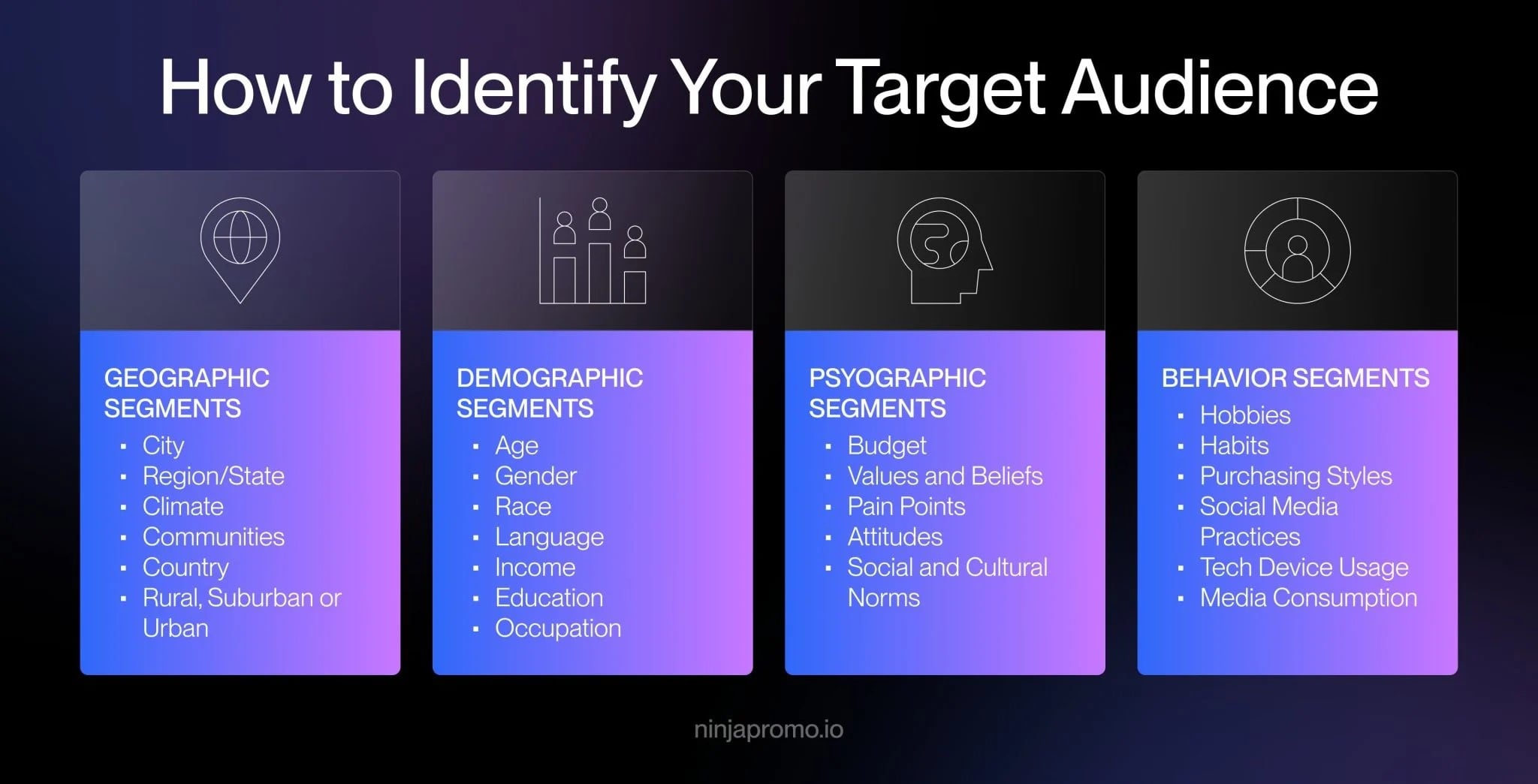
A strong product marketing strategy starts with a clear understanding of your target audience. You need to know who your ideal customers are, what they need, what influences their decisions, and how your product fits into their priorities.
This includes more than basic demographics. It should also cover pain points, goals, buyer behavior, and the channels your audience uses to discover and evaluate products. The more clearly you define your audience, the easier it becomes to shape your positioning, messaging, and go-to-market efforts.
Competitor Analysis
Competitor analysis helps you understand how similar products are positioned, priced, and promoted in the market. It also shows where your product can stand out more clearly.
Look at how competitors communicate their value, which channels they prioritize, how they present pricing, and what differentiators they emphasize. This can help you identify both opportunities to improve and gaps your product marketing strategy can address more effectively.
Paying attention to competitor pricing is especially useful, as it often shapes how a product is positioned in the market and what customers expect from it.
Unique Selling Proposition (USP)
Sometimes, this is also called a unique value proposition (UVP). It answers a simple question: why should someone choose your product over competing alternatives?
A strong USP helps define the value your product offers and what makes it different in the market. Ideally, it should highlight something competitors cannot easily replicate. Even if your product is not entirely unique, a clear USP can still help you position it more effectively and communicate its strengths more clearly.
Market Positioning of the Product
This is your product’s place in the world. A product sold in a store has a specific place on a shelf. It has a specific price point in relation to other products in the same store. Popular, well-promoted products get a better place, or they get locked up in a display unit. Less popular products get pushed out of sight. They also don’t get locked up because people don’t want them. They might get discounted to clear the unwanted inventory.
It is important to know your competitor’s price point. It is a larger decision than you may realize to innovate on a lower price point that may start a “price war” you can’t win.
Price determines your product’s market position. A premium price for a premium product will make your product more desirable. People are willing to pay more for “the best.” Other times, you want to provide the biggest bang for the buck.
Arizona Tea set their prices low a long time ago. They do everything they can to keep their product at the same price. They don’t sacrifice the quality of the tea for that low price. They maintain their place in the market by staying at the same price despite inflation.
Search engine companies like Google determine your product positioning online. If your website is not high on the first page of search results, it may not exist. If you sell on Amazon, its algorithms also determine your product positioning.

Crafting Compelling Messaging
What is your message? We live in a world of clever product marketers and advertising competing for our attention. You want to stand out from the crowd and hold your audience’s attention. To do this, you need to have a compelling message. A message that compels people to act and buy your product or service:
- Transform customers into enthusiasts.
- Convert products into passions.
- Empower employees to be ambassadors.
- Elevate brands to the status of religions.
Don’t copy Apple’s anti-consumer ways. Do copy the way Apple has built a brand that is practically a religion. Customers are obsessed with their branding. They won’t even think of buying a product that doesn’t have that Apple logo.
Don’t copy shady multi-level marketing (MLM) illegitimate practices. Do copy the way that MLM builds a cult of employees. Do that by making employees feel part of something bigger than themselves. Let them feel like they are part of an elite product team who are winners in life. Then, empower them to succeed and reward them when they do.
Don’t copy the anti-consumer and anti-labor ways of triple A game developers. Do copy the products that people love to obsess over. If you do that, you will become a company people love to work for and buy products from.
Whatever practice you are a passionate follower, don’t go alone. Do ask a product marketing agency to help you achieve your goals.
Selecting the Right Marketing Mix
This is where having actionable information from good data analytics is essential. Based on the data you collect, you can play to your strengths and change what is not working.
You might find that hiring someone to write great content works for you, and it becomes an important part of your mix. Whatever you find, you can select the right marketing mix by paying attention to the right data.
Building a Sales Enablement Plan
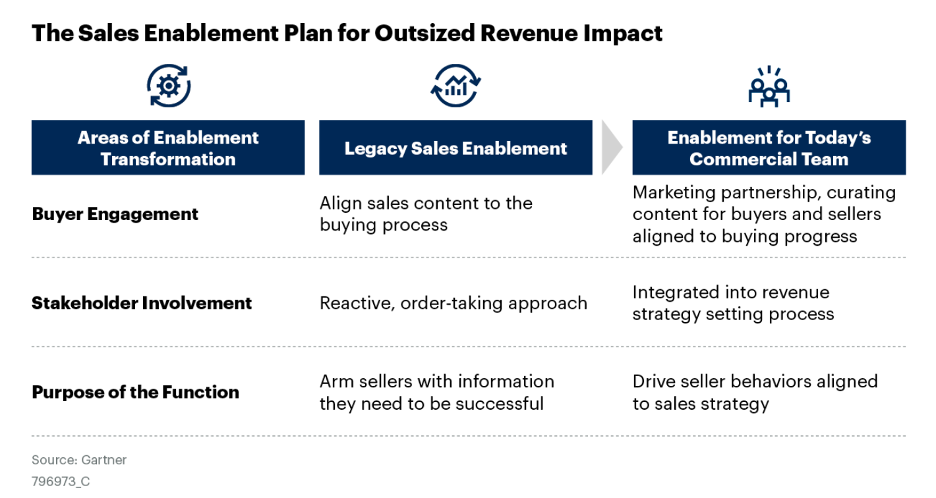
Marketing and sales should work together. A sales enablement plan helps ensure your sales team has the tools, training, and information needed to present the product effectively and support the buying process.
This can include product messaging, sales materials, documented processes, objection-handling guidance, and ongoing training. It is also important to listen to your sales team, as they are often in direct contact with customers and can provide valuable feedback that helps improve your strategy over time.
Implementing Customer Feedback Mechanisms
Responding to negative feedback after it is public is more challenging. By then, it may be too late. They already hurt your product marketing campaign. That’s why you need to build an extra chance. You should give them a way to provide you with actionable information. You need five-star reviews. This increases your credibility and sales online. Less than five stars can damage your reputation permanently. Of course, it is hard to have those reviews at the product launch.
Iterative Optimization of the Strategy
When your product marketing plan meets reality, it is pressure tested. Pressure has a way of changing things and showing you flaws. You will find things you need to change as you use your product marketing strategy.
You can systematically do this. Making new changes and improved iterations over time. The goal is optimization. It is a process of improving your product marketing strategy using science. You can think of it as learning from your mistakes and your successes.
| Step | What to Focus On | Why It Matters |
| Defining the Target Audience | Identify who your product is for, what they need, and what influences their decisions. | Helps shape stronger positioning, messaging, and channel selection. |
| Competitor Analysis | Review how competing products are positioned, priced, and promoted. | Helps identify market gaps and opportunities to differentiate. |
| Unique Selling Proposition (USP) | Define why customers should choose your product over other options. | Gives your product a clearer and more compelling value story. |
| Market Positioning of the Product | Determine how your product should be priced, perceived, and discovered in the market. | Influences customer expectations, visibility, and competitive fit. |
| Crafting Compelling Messaging | Build messaging that clearly communicates product value and motivates action. | Helps attract attention and improve market response. |
| Selecting the Right Marketing Mix | Choose the channels and tactics that best match your audience and goals. | Improves efficiency and helps focus resources where they matter most. |
| Building a Sales Enablement Plan | Equip sales teams with the tools, training, and messaging they need. | Supports stronger sales conversations and more consistent execution. |
| Implementing Customer Feedback Mechanisms | Create ways to gather and use customer feedback throughout the process. | Helps improve the product experience and refine strategy over time. |
| Iterative Optimization of the Strategy | Continuously review performance and adjust the strategy based on results. | Keeps the strategy relevant and improves outcomes over time. |
Stages of Developing a Marketing Strategy
Market Research and Consumer Demand
Market research is a key part of any product marketing strategy. It helps you understand customer needs, market trends, competitor activity, and the factors that influence buying decisions.
It is also important to understand consumer demand. Some demand is already visible in the market, while other opportunities emerge when customer behavior, technology, or expectations change over time. Products like smartphones and home internet, for example, became essential as markets evolved and new needs became more clear.
That is why product marketers should look beyond current demand alone. Research can help identify unmet needs, changing expectations, and underserved segments that may create future opportunities for growth.
Useful sources for this kind of research can include:
- customer interviews
- surveys
- competitor analysis
- search trends
- market reports
- product usage data
A strong product marketing strategy uses these insights to shape positioning, messaging, pricing, and go-to-market decisions more effectively.
Setting Goals and KPIs
Setting goals and identifying Key Performance Indicators (KPIs) is crucial. Using KPIs allows you to make informed decisions. They provide evidence of the impact your product marketing strategy is having on sales.
KPIs offer specific, quantifiable metrics to assess progress. They enable you to define and measure success. That allows you to make timely, achievable product goals. Goals provide a clear direction, while KPIs offer a means to assess performance. This is one way you use your market research.
Choosing Marketing Channels
Online Channels (Social Media, Email, SEO, Content Marketing)
Online channels are the focus of this article. This includes social media, email, search engine optimization (SEO), and content marketing. This article is an example of content marketing and SEO writing. It also includes every other place your customers go online and how you can reach them online.
The online landscape and culture is constantly changing. It often means being at the mercy of tech giants like Google, Amazon, or Facebook. SEO is like the dark arts because Google isn’t sharing how to do it. They change the rules when they please. Content is written for algorithms and not only humans. Appealing to both is a skill and an art that AI can’t yet replicate.
Offline Channels (Print, Events, Partnerships)
Offline channels are still an important part of product marketing. They can help brands build visibility in physical spaces, connect with audiences more directly, and reinforce their presence beyond digital platforms.
Common offline channels include:
- print media such as magazines and newspapers
- billboards and other out-of-home advertising
- direct mail, flyers, and printed catalogs
- broadcast radio and television advertising
- in-store displays and product demos
- product placement in popular media
- trade shows, conventions, and industry events
- partnerships with retailers and other businesses
Events and trade shows can be especially valuable because they allow brands to meet potential customers in person, showcase products, gather feedback, and build awareness in a more direct and engaging way.
Partnerships with retailers and other businesses can strengthen offline visibility even further. When used strategically, offline channels can complement digital efforts and help create a more consistent brand presence across the customer journey.
Integrating Omnichannel Strategies
Omnichannel strategies are for when you feel like you are everywhere at once. You have to have a way to follow and interact seamlessly with your customers. They may journey from one website and channel to another as they convert to a sale. It doesn’t work so well when it is not coordinated and seamless.
First, it needs to be seamless for your customer. Equally important is integrating different channels with each other. Also, you need to unify the data you gather as you follow customer behavior everywhere online. It might seem “creepy,” but it is also effective, and society is getting used to it.
You should also unify your brand messaging across all channels. You should always appear like one hand knows what the other is doing with your brand. For example, the Matrix franchise achieved such historic popularity with a tremendous omnichannel marketing strategy. They did so well that people still use the terminology and metaphors of the Matrix.
Developing a Marketing Budget
You can’t participate in capitalism without accumulating and investing capital. You need to develop a product marketing budget and stick to it. A smaller product marketing budget doesn’t mean you will be ineffective. It means you have to be more creative.
Allocating Budget for Different Channels
Different marketing channels have different costs. You may want to minimize or maximize your product marketing budget. Budget minimizing is when you spend the least on experimenting and where you reach the least people. Instead, maximizing the product marketing budget means spending much on the most expensive channels. Those are the ones that reach the most people.
ROI Analysis and Budget Adjustments
You will need a way to know how your product marketing works and measure your ROI. Then, take action and adjust your budget. One way is to track conversions. How many people saw your product marketing and acted on it? How many clicked through an ad, visited your website, put a product in a cart and bought it? That’s one way to see if the product marketing you bought has a good ROI. Any positive ROI is good, but you want the most for your money. Also, you should reward success and stop doing the same product marketing strategy when it stops working.
Contingency Planning for Unexpected Expenses
Any good product marketing budget has some wiggle room. Some extra money should be set aside for hidden costs and to grow. One way plans can change when they meet reality is when you have unforeseen costs. Another way is when you have an unexpected success or opportunity. Luck is when preparedness meets opportunity. You can make your own luck or buy it with a large budget for contingencies.
Implementation and Execution of the Product Marketing Strategy
Cross-Functional Collaboration
All your employees are valuable and on the same product team. They sometimes have very different roles but have the same goals. They all want to do their jobs, earn a good living, and go home. They all want to succeed. You need to enable that by enabling them to all work together. Your success and theirs are joined together. Your fates depend on each other and sales. Everyone should be a part of your product marketing. Everyone should have a part in hard-earned success.
Aligning with Sales and Customer Support
Sales and Customer Support are two demanding, public-facing roles. The best salespeople also understand the product features and tech support. If they don’t, then they should know best how to work with customer support to find answers and resolve problems. Likewise, the best customer support personnel keep customers. They can use the customer’s contacting them as a product marketing opportunity. This works best when the customer’s original issue is resolved first. That’s key, as you can’t do any more product marketing or upselling until they have what they came for first.
Collaboration with Product Development Teams
Your product development team knows your product features best. They can help keep your product marketing and advertising truthful. They can also help you determine what makes your product different, special, or unique. They can also think about making your product more appealing during product development. After all, a good product sells itself. Anyway, remember you still need good product marketing!
Coordinated Efforts with Marketing and PR Teams
Marketing and Public Relations should present a unified campaign. The two teams share similar goals. The main goal of marketing is to drive revenue and sales for the company. It involves creating demand, attracting customers, generating leads and converting leads into sales.
The main goal of PR is to build and maintain a positive reputation for the company. This includes managing communication during crises, enhancing brand image, and fostering positive relationships with the public. Sometimes, a bad marketing campaign ad or misstep can cause an unintended crisis that your PR team needs to recover from. Coordination between marketing and PR can help prevent that from happening in the first place.
Monitoring and Analytics
The book Lean Analytics by Allistair Croll and Benjamin Yoskovitz offers much information on doing analytics right. They teach how to focus on actionable metrics and avoid vanity metrics. Actionable metrics allow you to make informed business decisions. Vanity metrics are nice to have but not that important.
Real-time Analytics and KPI Tracking
Key Performance Indicator (KPI) tracking is critical. It enables timely, informed decision-making and performance assessment. Of course, it is not always easy to identify your KPIs. Real-time analytics use systems that analyze data as soon as it is in a database. Websites often use it to track customer’s behaviors. Sometimes, the customers and the general public find this “creepy.” Yet it is wildly successful at increasing sales. When the website can also respond to customer’s behavior in real time, it can also manipulate that behavior in real time.
Amazon has proven that this works and can scale to drive sales and revenue into the billions of dollars. Social media companies such as Meta/Facebook use this for running experiments on their users. They’ve proven that this also works to keep users on a website longer.
Real-time Analytics has other security applications, such as blocking illegitimate transactions. Social media also uses this to enforce their terms of service and censor user-generated content. It also enables you to adjust strategies on the fly.
A/B Testing and Iterative Improvements
A/B testing, also known as split testing, is a method of comparing two versions (A and B) of a product to determine which performs better. It is a scientific method used to conduct research experiments. It is also sometimes used by engineers during product development.
Ideally, the experiment also separates two large and randomly selected groups to participate. Group A will see product A, and Group B will see product B. Sometimes, experiments will ask the same group to test both A and B to see which they like better. They won’t get to know what group is A and what one is B until the test is completed. A group could be yours, and B group – some other company’s.
Whichever did better advances. Let’s say product A advances. Next, you set up another experiment with the same A and a new B. You can keep running such experiments and improving your product over time. Each new A and B group is set for each new experiment as an iteration.
The results can make great marketing. Consider the blind taste test: “In a blind taste, test one billion writers who preferred our product Fiction! Cola to brand X! Fiction! Cola has 1000 times the caffeine and 100 percent of the real sugar writers crave!” That would be great marketing, if it weren’t fiction!
Customer Journey Mapping
Your customers go on a journey as they encounter your brand and have product awareness. It continues when they buy it and receive fulfillment. Still, their product marketing journey does not end there. It continues when they use the product and wherever they see it or interact with your brand. Customer journey mapping is a way of tracking their experience end-to-end. It is a way of visualizing the information. That way, you can see their story and change the narrative.
Adapting to Market Changes
The trend is your friend. Not what is “trendy” but the trends you find in data. Follow the trends and adapt to market changes or perish. This is vital in product-oriented marketing.
Agility in Response to Trends
Agility is the ability to correctly identify trends and act quickly in response. Giant companies are not known for their agility. Small companies and start-ups have to be more agile and reactive. Fortunately, their small size allows them to move quickly on new information.
You might be interested in: The Ultimate Guide to Small Business Marketing
Reassessing and Adjusting the Strategy
As things change over time, it is imperative to change with them. You should reassess and adjust your strategy to suit the times you are in.
Crisis Management and Preparedness
It is vital to manage crises. CD Projekt Red had a very bad product launch when they released Cyberpunk 2077. They had great crisis product management, though. Over their time of crisis, they fixed their game with iterative patches. They had great product marketing. The Edge Runners anime success drove sales. By the time the first and only DLC expansion, Phantom Liberty, was released, it had become a story of redemption. They also benefited from the popularity of cyberpunk fiction and culture. They were prepared to weather their crisis, so they succeeded. Now they have a game of the year!
Metrics for Product Marketing Success
Sales and conversions are often the most visible indicators of product marketing performance, but they are not the only ones that matter. A strong measurement framework should also include the KPIs that show how effectively your strategy is driving awareness, engagement, and demand.
Depending on your goals, these metrics may include:
Awareness metrics
- website traffic
- reach and impressions
- branded search volume
Engagement metrics
- customer engagement
- time on page
- click-through rate (CTR)
Conversion metrics
- conversion rate
- lead quality
- customer acquisition cost (CAC)
- sales revenue
Retention and value metrics
- customer retention
- customer lifetime value (CLV)
- return on investment (ROI)
Tracking the right KPIs helps you understand what is working, where improvements are needed, and how to make better decisions over time.
Conclusion
A successful product marketing strategy is built on clear research, strong positioning, effective messaging, and measurable execution. When these elements work together, it becomes easier to launch products more confidently, connect with the right audience, and improve performance over time.