

Key Findings
- SaaS social media performance depends on buyer intent, beyond platform reach alone.
- Product demonstrations help SaaS buyers evaluate workflows before committing to trials or demos.
- Niche SaaS creators can generate qualified sign-ups without large follower audiences.
- Paid social efficiency improves when budgets follow activated users ahead of cheap registrations.
- SaaS social attribution must connect campaign engagement with trials, activation, and customer acquisition.
A social media marketing strategy for SaaS is a planned system for reaching software buyers on public platforms. It ties audience research, messaging, and conversations to trials, demos, and subscriptions. The guide below walks through seven steps that keep SaaS social media marketing tied to acquisition goals.
Software buyers often study products in public threads long before they speak with sales. A structured approach helps a company appear in those threads with useful proof. Random posting rarely produces that path.
Does Social Media Marketing Actually Work for SaaS Companies?
Social media marketing for SaaS companies can support awareness, demand, and retention when buyers evaluate software in public channels. Realistic outcomes include referral visits, demo interest, and trial starts. Platforms help more when posts answer evaluation questions and point to a concrete sign-up action. They help less when procurement stays closed or the product cannot be discussed in public.
Collaborative tools, workflow products, and self-serve plans often gain from visible demonstrations. Buyers can watch a process, compare approaches, and hear from peers before requesting access. Visible demonstrations still need a landing path that can capture this interest.
Results should be judged against the job each channel is asked to do. Brand lift and community health matter in early stages. Later reviews should look at qualified visits, started trials, and assisted pipeline. Social activity can be a weak primary channel in several situations:
- Closed buying paths: Purchases move only through formal requests or partner desks.
- Limited public use: The product cannot be shown or described in open creative.
- Thin audience presence: Target buyers simply do not gather on public networks.
Those limits do not make public posts irrelevant. They do mean social media marketing for SaaS should support other demand programs. Teams can still add social proof to a broader SaaS marketing program already built around search or partnerships. Evaluate social activity through qualified trials, demo requests, and its contribution to the sales pipeline.
How to Choose the Right Social Media Platforms for Your SaaS Business
The right social media channels for SaaS brands are the networks where target buyers already research problems. Start with audience evidence, because a presence on every platform is rarely necessary at the start. One primary network plus a secondary support channel is usually enough until the first is consistent. Compare options by buyer context, native formats, and the job each platform can do:
| Platform | Buyer context | Formats that fit | Practical SaaS use |
| Professional research and peer discussion | Documents, short video, carousels | Reach buying committees with product proof | |
| X | Fast product and industry conversation | Short threads, release notes, replies | Support launches and founder dialogue |
| YouTube | How-to and comparison search | Tutorials, walkthroughs, webinar cuts | Teach workflows and reduce uncertainty |
| Reddit and niche forums | Problem-first community questions | Helpful replies, permitted AMAs | Learn buyer language before any pitch |
| TikTok and Instagram | Visual discovery for lighter-consideration tools | Short vertical clips and demos | Awareness for creator or SMB-leaning products |
| Groups and remarketing for some SMB tools | Community posts, remarketing creative | Useful when buyers already gather in groups |
Look at sales notes, support tickets, and community mentions to see where questions already appear. Search the job titles you serve and record which networks host those discussions. Promoting SaaS products on social platforms is more productive when the chosen channel already contains that conversation. Compare engagement quality across channels before expanding into additional platforms.
The clearest sign you’ve chosen the wrong platform is when it gets attention, but none of it comes from people who could become customers. If your team constantly chases trends just to keep engagement alive, that’s another red flag. The right platform should support your audience, content style, and business goals.
Nadia S., SMM at NinjaPromo
Choose a primary home for depth, then add a second channel only for a distinct job. LinkedIn may carry evaluation content while X handles product news and support. Let audience behavior set the mix for SaaS social media marketing on each network.
Key Steps to Crafting an Effective SaaS Social Media Marketing Strategy
A durable SaaS social media marketing plan follows a repeatable sequence, from audience insight to sign-up conversion. Each step below adds a concrete output the next step can use. Work through them in order so later steps can reuse earlier evidence.
Identify Your SaaS Audience and Their Social Media Habits
A useful audience definition names the buyers you want to reach and the problems they expect software to solve. Start with jobs, industries, and buying roles already present in your CRM or product data. Then observe where those people ask questions, follow specialists, and share workflow advice. Their habits should shape SaaS social media marketing targets and messaging.
Software buyers consult peer discussions and user-generated content when evaluating potential solutions. They watch how professionals use these tools in everyday work. Build a short observation file before writing posts, and use it to collect four kinds of evidence:
- Needs and jobs: Note the tasks people hire a tool to complete.
- Interests and peers: List newsletters, creators, and communities they already follow.
- Behavior: Record when they ask for comparisons, templates, or troubleshooting help.
- Language: Capture the phrases they use for pain, risk, and success.
Search recent tickets and closed-won notes for recurring objections. Run a native people or keyword search for those roles and save ten representative threads. Tag each thread by stage, such as problem discovery or vendor comparison.
Review the file after a significant ICP change. Drop segments that do not appear in real discussions. Turn those remaining segments into topic priorities for the content plan. SaaS audience engagement on social media should prioritize communities with repeated questions and clear product relevance.
Define Your SaaS Brand Voice and Content Positioning
Brand voice is the consistent tone, vocabulary, and point of view that makes a product recognizable across networks. Content positioning identifies the target buyer, the problem solved, and the product’s advantage over relevant alternatives. Document both in a one-page brief that writers can use when choosing topics and evaluating claims. The brief should cover four decisions:
- Tone: Direct, calm, and specific, with a named level of formality.
- Key messages: Three claims the team can support with product proof.
- Personality cues: How the brand handles humor, opinions, and disagreement.
- Expertise topics: Subjects the company can discuss with genuine depth.
Avoid claims the product cannot demonstrate in a short walkthrough or customer story. Test two message angles on the same topic and keep the one that earns relevant comments or qualified clicks. Add approved examples to the positioning brief so future contributors follow the same messaging standards.
Develop a Content Strategy Around Your Software’s Value
A content strategy turns product features and user problems into posts people can use during evaluation. Start with the jobs and questions from the audience file. SaaS content marketing already created for blogs or webinars can be recut into native social formats. Useful formats usually fall into a short set:
- Product demonstrations: One workflow, one outcome, one next step.
- Tutorials and feature highlights: Short lessons that reduce setup uncertainty.
- Customer stories: Specific situations and results, with permission to share.
- Educational posts and commentary: Industry issues the team can explain clearly.
- Lighter formats: Polls or short clips that start a discussion without a hard pitch.
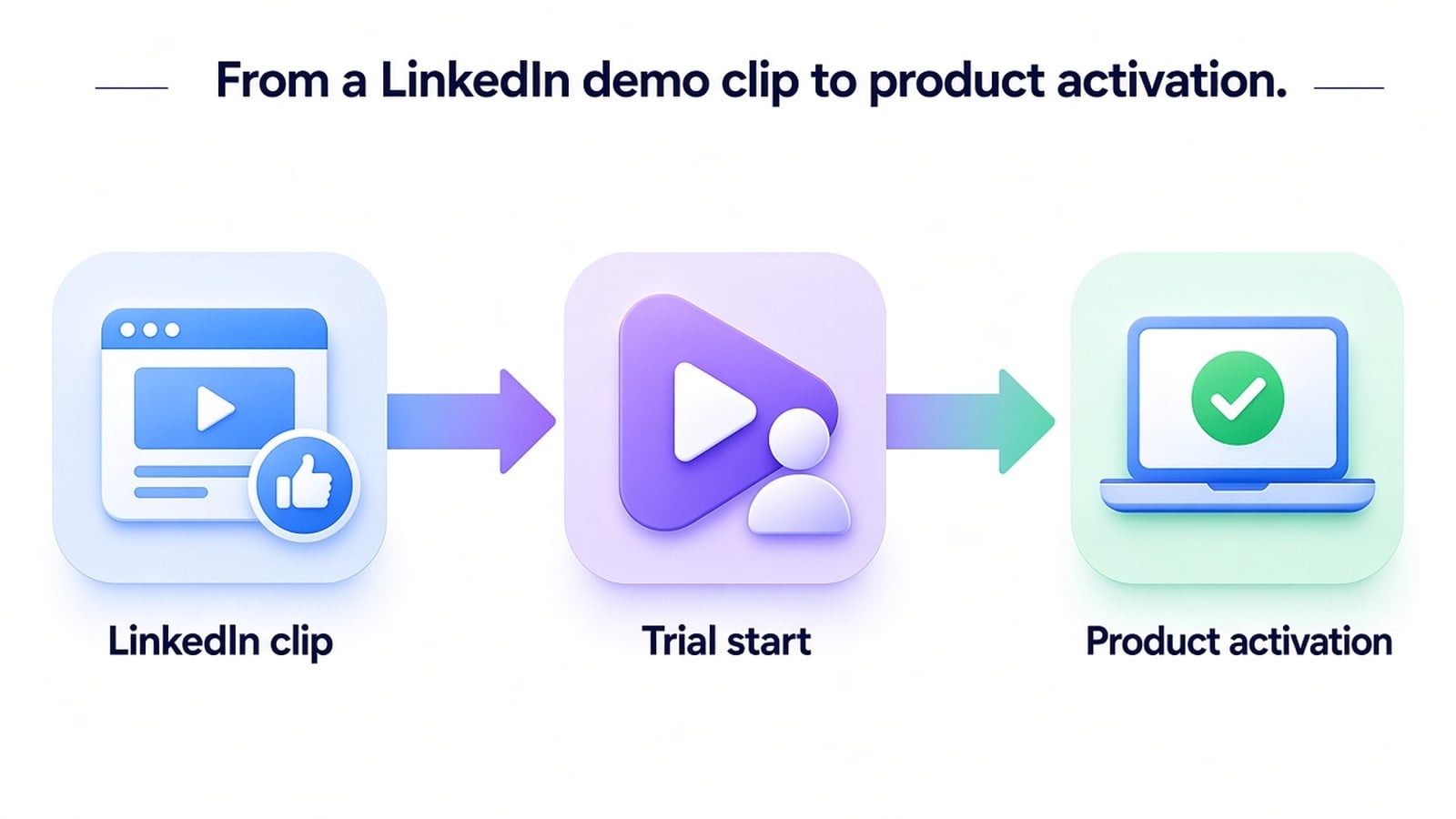
Most posts should educate buyers or demonstrate a specific product benefit. Save direct sign-up asks for moments when the value is already visible. Recast that lesson or proof as a LinkedIn document, an X thread, or a short demo clip. SaaS content distribution across social networks should follow those native patterns.
Product-led demo content is one of the strongest formats for converting SaaS prospects into trial users. A short walkthrough or use-case video lets people see the product solving a real problem before signing up. Show, don’t just tell.
Nadia S., SMM at NinjaPromo
Plan a two-week batch covering discovery, product evaluation, and conversion. Give each post one audience problem and a relevant next step. Measure saves, use-case comments, and visits to the intended destination. Retire themes that attract generic reactions but no qualified visits.
Build Engagement Through SaaS Communities and Conversations
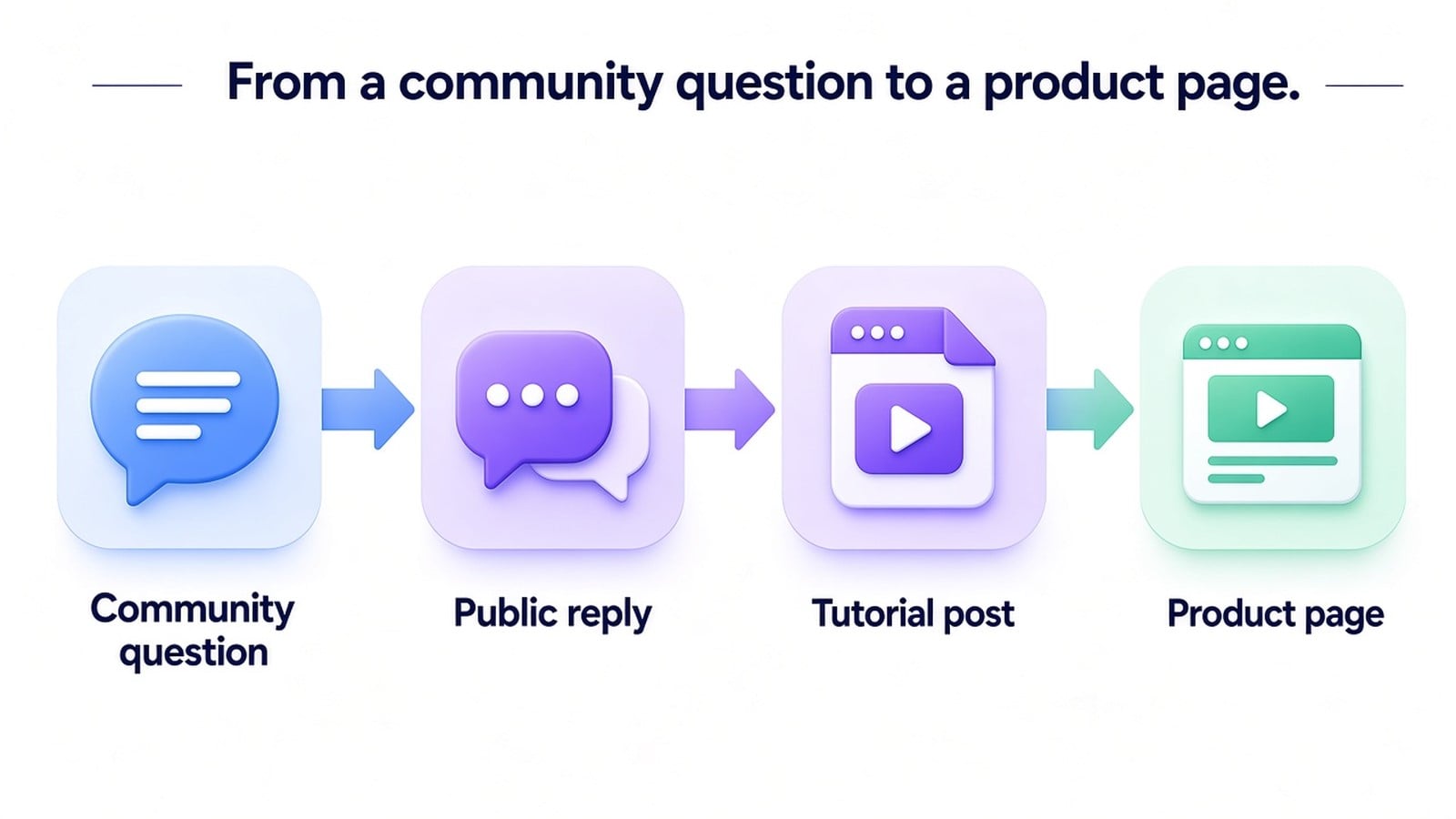
Engagement means joining discussions, offering useful replies, and collecting feedback beyond the publishing calendar. Relationships form when a brand helps with a real problem and stays after the first reply. Relevant forums provide opportunities to answer questions and identify recurring product problems.
Keep that work consistent with a short weekly rhythm:
- Set a daily response window and treat it as core work.
- Answer community questions with a complete method first.
- Mention the product only when it is a natural fit.
- Capture those patterns in a shared weekly note.
Invite happy users to share a workflow clip, and request permission before reposting. Thank critics in public when the issue is fair, then move detailed troubleshooting to a private channel. If internal capacity is limited, outsource social media marketing operations while product specialists approve technical answers and sensitive claims. Social media engagement for subscription-based software is easier to sustain when this reply loop is explicit.
Collaborate With Influencers and SaaS Creators
Creator partnerships can introduce a product to well-matched audiences and add credibility a brand page may lack. The useful filter is niche expertise and audience overlap, more than raw follower counts. SaaS influencer marketing belongs inside the wider content plan so the same proof can be reused.
Review audience fit and comment quality across recent content. Check previous software partnerships and product expertise separately. Share a brief that states the product job, claims that need evidence, and claims that must be avoided.
Match each format to the buyer’s stage:
| Creator format | Buyer stage | Main job |
| Sponsored post | Discovery | Introduce the product |
| Product review | Evaluation | Show the workflow |
| Tutorial | Onboarding | Reduce setup uncertainty |
Use affiliate partnerships when attribution and commercial terms are clear. Leave room for their voice, because scripted praise is easy for buyers to ignore. Compare later results with that assigned job.
Measure contribution with UTMs, trial starts, and qualified conversations, then compare that yield with organic and paid posts. Keep a short retainer for creators who produce usable proof and promising inquiries. Integrate strong clips into later educational posts, with credit and permission.

Use Paid Social Campaigns to Expand Your SaaS Reach
Paid social advertising can extend organic work and introduce software to new audiences. It is a complement when you already know which messages earn attention. Use it for targeting, retargeting, and creative tests that support lead capture or product sign-ups. PPC for SaaS programs should share the same audience definitions and offers so paid and organic stay aligned.
Start with retargeting when enough relevant visitors exist. Otherwise, test narrow audiences against specific product problems and offers. Separate creative, audience, and offer tests so differences stay clear. Lead-gen forms can reduce friction, but the fields must still qualify the buyer.
Judge spend by downstream quality:
- Distinguish cost per lead and cost per trial from activation rate and CAC.
- Compare spending share with the volume of leads that pass qualification.
- Prioritize campaigns whose qualified leads progress toward demos, product activation, or sales opportunities.
SaaS social media marketing should measure acquisition quality beyond initial registrations. Compare those results before raising spend. Keep the same destination and offer on new creative.
A campaign is ready to scale when it consistently brings in quality leads or trials. If CPA stays under control as the budget increases, that’s a strong sign it can handle more spend. Make sure the campaign works before giving it more money.
Nadia S., SMM at NinjaPromo
Turn Social Media Interest Into SaaS Sign-Ups
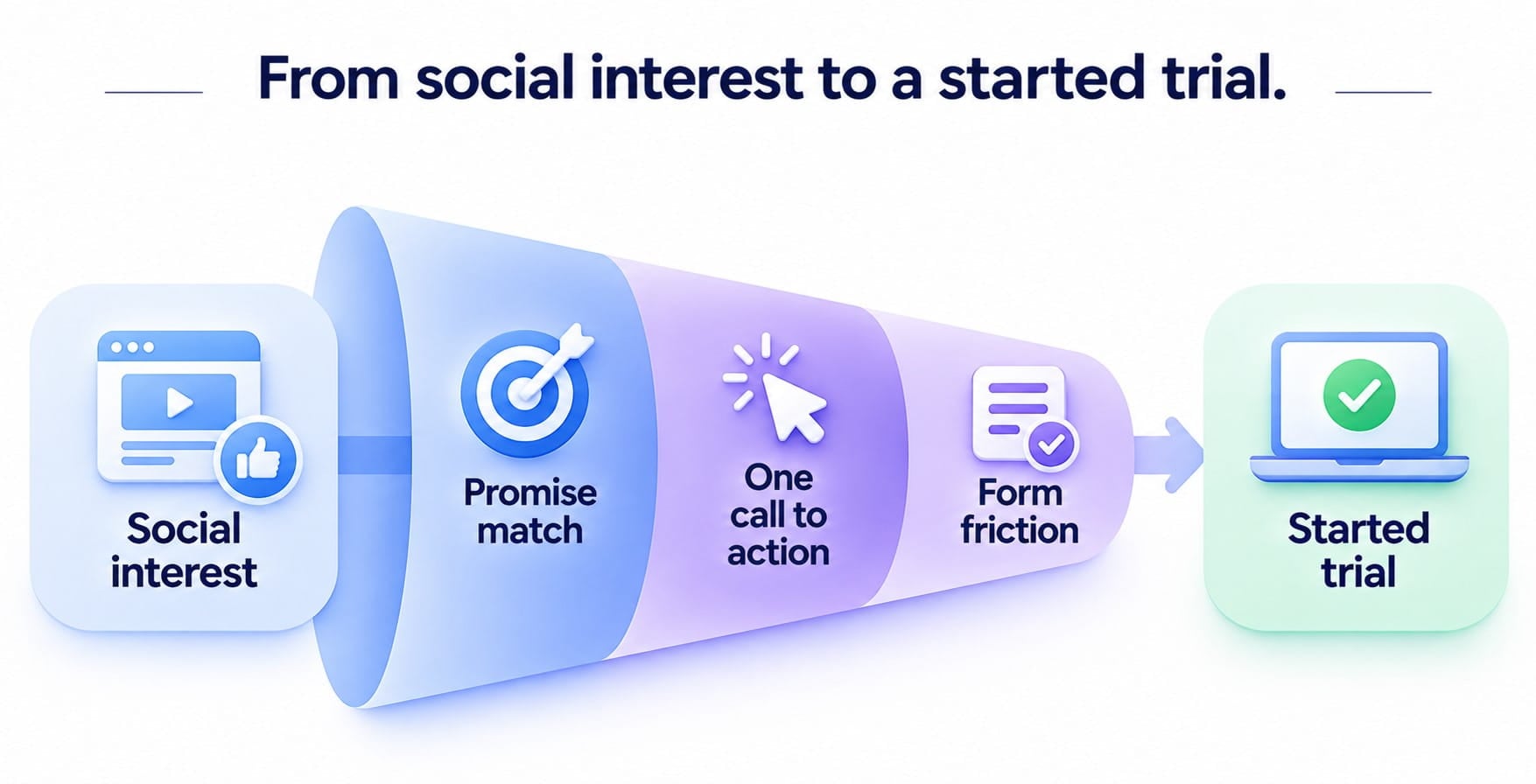
Connecting social activity to acquisition means giving interested people a clear, low-friction next step. Self-service products may prioritize trials, while enterprise software often needs a qualified demo request. Match the action to buyer readiness, and repeat the same promise on the destination page. Social media marketing for software as a service still needs a landing path that can capture this interest.
Place one action in the post and one matching action on the page. Remove extra fields that are not needed to start the trial or conversation. Show a short customer result or a specific workflow outcome near the form. If the offer is a demo, state who it is for and what the session will cover.
Tag major posts and campaigns with unique UTMs. SaaS social media marketing services can help connect campaign tracking with trial registrations and downstream product activity. Teams must also learn how to turn social media followers into SaaS customers through effective onboarding.
Measuring the Success of Your SaaS Social Media Marketing Efforts
Success in SaaS social media marketing is how clearly social work supports qualified demand and started trials. Vanity totals can describe reach, but they cannot decide the budget on their own. Combine platform analytics, UTM tracking, and campaign experiments to see which formats deserve more time. Read the core measures as a connected set:
| Metric | What it shows | How to use it in a SaaS plan |
| Reach and impressions | How far a message traveled | Diagnose distribution issues |
| Engagement | Whether the message earned a response | Favor comments and saves that mention a real job |
| Follower growth | Audience accumulation over time | Watch quality of new followers besides the count |
| Referral traffic | Visits that arrived from social | Compare landing pages and campaigns with UTMs |
| Sign-ups and conversion rate | Registrations or trial starts from those visits | Judge the post and the page together |
| Activation rate | Share of sign-ups reaching first product value | Separate registrations from qualified users |
| Customer acquisition cost | Spend divided by new customers from the channel | Use with lag, because buying cycles can be long |
Connect platform analytics and UTM data with CRM records or product analytics to track downstream outcomes. Social media lead generation for SaaS should be reported through qualified leads and their subsequent conversion rates. Give enterprise cycles a longer observation window than self-serve trials.
The biggest mistake is treating engagement as the end goal. Likes and comments mean little if you’re not connecting them to clicks, qualified traffic, signups, or other business outcomes. Don’t let a good-looking engagement rate fool you.
Nadia S., SMM at NinjaPromo
High click volume with few trials warrants checking audience fit, message consistency, and landing-page friction. Review the report after significant campaign changes so social media marketing for SaaS stays honest. Run small experiments on format, hook, or offer.
How to Stay Ahead of Emerging SaaS Social Media Trends
Teams stay current by testing a few durable shifts in audience behavior on social platforms. Test new platform features alongside emerging formats, but retain only those that improve relevant engagement or acquisition. SaaS social media strategy development becomes more disciplined when new formats must demonstrate measurable value before wider adoption. Treat each candidate as a bounded experiment:
- Short-form video: One workflow or answer per clip, with a clear follow-up page.
- Interactive content: Polls or Q&A used to collect real buyer questions.
- AI-assisted creation: Drafts and variations, with a specialist reviewing claims and tone.
- Employee-generated content: Practitioner posts on real work, with simple legal and approval rules.
- Niche communities: Sustained participation in communities the audience already trusts.
Lasting shifts keep appearing in buyer questions and sales notes. Short-lived viral formats spike, then leave no repeatable path to a trial. Decide with a short test period and a named owner before a trend enters SaaS social media marketing. Keep only formats that still help buyers evaluate the product.
Final Thoughts
Effective social media marketing for SaaS starts with a clear understanding of the target audience. It then chooses platforms, voice, and content that serve a real buying job. Paid reach and conversion pages matter once those foundations exist. Measurement should follow sign-ups and assisted pipeline, so the team can retire weak work quickly.
Mature programs turn audience insights into repeatable decisions about content and acquisition. Use those decisions to keep social activity connected to trials, demos, and lasting customer value. Small, honest tests will teach more than a wide presence with no path to sign-up.