When people search on Google, most never go beyond the first page. That’s why SEO matters: it helps your website become visible to the right audience at the right time.
Strong SEO marketing strategy doesn’t just increase traffic. It improves discoverability, builds trust, and supports long-term growth without relying entirely on paid acquisition. And the stakes are high: 96.55% of pages never get any Google traffic.
In this guide, we’ll break down the key SEO principles that help websites rank better — from keyword research and content quality to internal linking, technical SEO, and authority-building.
10 Key SEO Principles to Rule Google Search
SEO success rarely comes from a single tactic. It’s the result of combining content quality, technical optimization, clear site structure, and a strong user experience.
Below, we’ll cover the core SEO principles that help improve rankings, build authority, and drive sustainable organic growth.
SEO Checklist at a Glance
Before diving into the 10 key SEO principles, use this checklist to quickly review whether your website covers the fundamentals of search visibility.
☐ Match each page to the right search intent
☐ Target one keyword cluster per page
☐ Create helpful, original content
☐ Optimize titles, headings, and meta descriptions
☐ Improve speed, mobile usability, and navigation
☐ Use internal links to connect related pages
☐ Strengthen trust with expert-backed, well-sourced content
☐ Make sure pages are crawlable and indexable
☐ Earn relevant, high-quality backlinks
☐ Structure content clearly for AI-powered search
1. Conduct Comprehensive Keyword Research with a Focus on Search Intent
Keyword research today demands more than picking industry phrases. It’s about understanding user intent—what people truly want when they search. Are they trying to learn, find a brand, compare products, or make a purchase? Every search query comes with a specific goal in mind.
There are 4 types of search intent that you should know:
- Informational Intent: Users seek knowledge or answers for specific topics or questions. Examples include “How to bake sourdough bread” or “Benefits of yoga for beginners,” best addressed with blog posts, guides, or tutorials.

- Navigational Intent: Users want to find a specific website or page. Queries like “Netflix login” or “Apple support” are best served with branded landing pages or direct links to the desired page.

- Transactional Intent: Users are ready to buy or take action. Searches like “Buy noise-canceling headphones” or “Book flight to New York” require product or service pages with clear pricing and easy purchase options.

- Commercial Intent: Users are comparing products or researching options before making a purchase. For instance, searches like “Best smartphones under $500” or “Top-rated coffee machines” are well-suited to comparison guides, product roundups, or detailed reviews and guide readers toward a confident decision.

Here’s how you can identify search intent for every keyword you have:
Examine the SERPs
Look at the pages that rank for your target keyword. What formats dominate the first page—informational articles, e-commerce product listings, brand homepages?
The composition of top results often reveals what search engines believe the user intends to find. Look for featured snippets. If Google displays a featured snippet, it usually indicates an informational search intent.
Analyze Keyword Modifiers
Words like “how,” “best,” “buy,” “review,” “price,” or “vs.” often hint at the user’s intent. For instance, “how” questions are informational, while “best” queries often indicate commercial investigation, and “buy” strongly points to transactional intent.
Use Keyword Research Tools
Tools like SEMrush can directly show you the search intent of a query without you having to research more.

Export the keyword list (with intent categories) to Excel or Google Sheets. Group the keywords based on their intent to create targeted content strategies.
Understanding search intent helps you determine:
- What kind of content will satisfy their needs?
- How to format that content to meet their expectations.
- Which keywords to prioritize to target the right audience?
Once you’ve identified intent, tailor your content accordingly. When people find what they’re looking for faster, they are more likely to trust your site and return to it. In the long run, aligning keywords with search intent sets the foundation for more meaningful traffic, stronger credibility, and sustainable growth.
2. Cluster Keywords by the Rule: One Cluster, One Page
Keep it simple: one keyword cluster, one page. This ensures the page is tightly focused on a specific topic and user intent. It’s an important stage of SEO for new websites, as you need to set the right structure from the beginning and discuss it with a specialist.

With proper clustering, you:
- Avoid Keyword Cannibalization: Assigning each cluster to its own page avoids competition and helps search engines identify the most relevant page for each query.
- Prevent Mixing User Intents: Combining keywords with different intents on a single page can dilute the content’s purpose and frustrate users who don’t find what they want. Keeping each cluster focused on a single intent ensures your content meets users’ needs and engages them.
Neglecting keyword clustering can lead to low rankings as search engines become uncertain about which page is most relevant to a given term.
This reduces visibility and increases user dissatisfaction when visitors encounter irrelevant or incomplete information, reducing the likelihood of conversions and repeat visits.
Each page should target a specific user intent, creating focused, relevant content.
For example:
- Keywords about “benefits of PPC” should educate readers about PPC advantages, grouped with terms like “PPC benefits for small and medium businesses,” “why PPC is important,” and “advantages of pay-per-click advertising” on the same page.
- Keywords like “PPC optimization tips” should guide users on improving campaigns, with related terms such as “how to optimize PPC,” “PPC bid adjustment strategies,” and “PPC performance tips.”
Clear intent alignment improves content relevance, ensuring users find what they need quickly, and helps search engines reward your content with better rankings.
3. Create High-Quality Content Optimized for Keywords And User Intent
Search engines are flooded with poor content, which explains why most pages see minimal visibility—only about 1.94% receive a handful of monthly visits from Google. To stand out and gain more SEO traffic, your content must address user needs and fully solve their problems.
It’s not enough to rely on keywords alone. Follow a proven SEO principle: create content that’s unique, insightful, and directly tackles user queries. Ask yourself:
- Are there actionable takeaways here?
- What’s missing in other articles that I can provide?
- Does this solve the user’s problem?
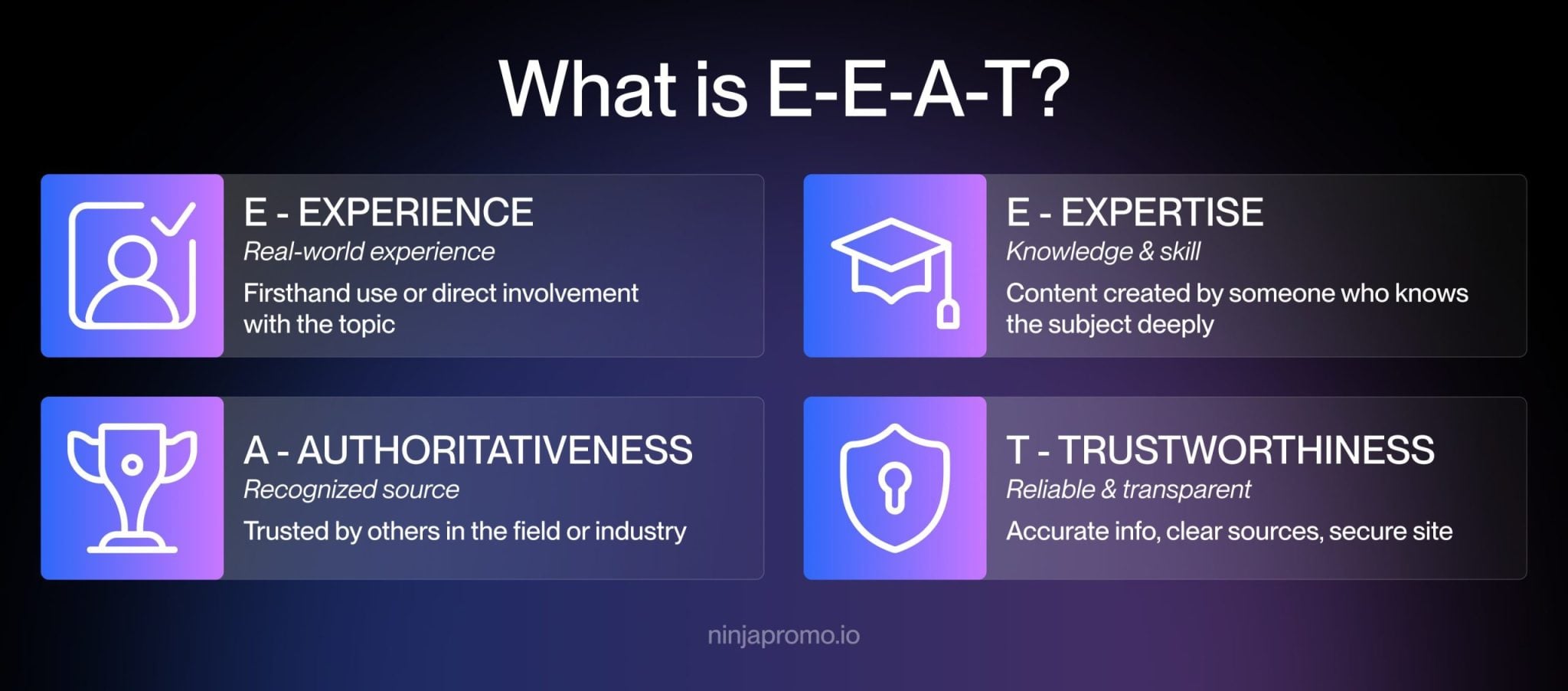
When applying SEO tips, integrate your chosen keywords naturally into titles, headings, body text, URLs, and image alt attributes. Remember to follow E-E-A-T—Experience, Expertise, Authoritativeness, and Trustworthiness—ensuring readers and search engines view your content as credible and valuable.
To establish these qualities:
- Share first-hand knowledge or experiences where applicable.
- Back up your points with credible sources.
- Use an authoritative tone and clear, factual information.
Focus on a well-structured article that meets the user’s needs. Ensure it’s logical, coherent, and covers all sides of their query. Use subheadings, lists, and highlighted points to create an accessible layout, and include useful links where appropriate. If it enriches the explanation, add images or other media.

When relevant, use multimedia elements to illustrate key points. Pairing blog images with text increases post views by 94%.

This balanced approach not only satisfies the user’s query but also sets your article up for greater visibility in search engines.
4. Optimizing H1 and Meta Tags for Keywords
The H1 tag serves as the main heading of your page, enabling search engines to grasp its topic, which directly influences rankings, making it essential for SEO. It should feature your primary keyword while remaining concise and user-friendly.

Meta tags, including titles and descriptions, act as summaries for search engines and users, significantly impacting click-through rates.
Here are actionable SEO tactics for optimizing your H1 and meta tags:
- Keep your H1 within 60 characters and limit meta descriptions to 155 characters to meet search engine standards.
- Highlight your main target keyword prominently in the H1, preferably at the start.
- Avoid SEO mistakes like keyword stuffing in H1 or meta tags to prevent search engine penalties.
- Use a single H1 tag per page to establish a clear structure, aiding Googlebot in understanding the page’s topic.
- Align your H1 with user intent using natural, descriptive language that avoids technical jargon.
- Keep meta descriptions brief, engaging, and keyword-rich, providing a clear snapshot that invites clicks.
- Use a call-to-action or showcase your unique selling point in the meta description to hook readers.
- Regularly track your H1 and meta tag performance and tweak them to improve rankings and user engagement.
Well-optimized H1 and meta tags increase CTR by making your content more appealing and relevant in search results.
5. Focus on Enhancing User Experience
User experience plays an important role in SEO because it affects how easily visitors can access, navigate, and interact with your website. A fast, intuitive, and mobile-friendly site helps users find information more efficiently and supports stronger overall performance.
To elevate UX SEO, focus on the following aspects:
| UX area | What to improve | Why it matters |
| Simplify Site Navigation | Keep menus simple with clear, descriptive labels. Focus on mobile-friendly navigation as Google prioritizes mobile usability. Include breadcrumbs to make navigation paths clear and accessible. Design navigation hierarchies that adapt to individual page contexts. | Good navigation is key to reducing bounce rates and enhancing user satisfaction. |
| Optimize Loading Speed | Users tend to abandon sites if they wait more than three seconds for content to appear. Compress images using formats like JPEG or WebP while maintaining quality. Use lazy loading to delay image loading until it’s necessary. Combine CSS and JavaScript files to reduce HTTP requests. Enable browser caching for quicker repeat visits. Employ CDNs like CloudFlare to deliver content faster by reducing server distance. Minify your code to reduce file sizes and improve efficiency. Analyze your site with tools like Google PageSpeed Insights to measure the website’s speed and its Core Web Vitals. | Faster pages reduce friction and improve the overall user experience. |
| Focus on Mobile-First Optimization | Since Google emphasizes mobile-first indexing, your mobile site must provide an excellent experience. Make sure essential content is immediately visible without requiring clicks or swipes. Ensure navigation, layouts, and key page elements work smoothly across mobile devices. | Strong mobile usability supports both rankings and accessibility across devices. |
A strong user experience isn’t just about SEO—it encourages repeat visits, drives conversions, and builds loyalty. Intuitive design and quick access to information create long-term benefits for users and your website’s SEO performance.
6. Implement Effective Internal Linking
Internal linking is a cornerstone of SEO strategy, helping search engines discover any new pages and rank your site while distributing “link juice” to strengthen page authority. It also improves user experience by guiding visitors to relevant content.

To get the most out of internal links, avoid overused anchor text like “click here,” “read more,” or “learn more,” which lack context and can seem spammy. Instead, focus on clear, descriptive anchor text that matches the linked page’s purpose. For example:
- Linking “How to create an effective SEO content strategy” to a related tutorial provides clarity to readers.
- Learn basic SEO principles to boost rankings,” specifies what users will find.
Different types of internal links help users and search engines navigate your site comprehensively:
- Contextual Links: Naturally integrated into your text, leading users to related articles or resources. Here’s an example of a contextual link:

- Navigational Links: Found in menus, these help visitors explore categories, subcategories, and essential pages. Here’s what navigational links look like:

- Footer Links: Located at the bottom of a page, it’s perfect for linking to important but less-visited pages like Privacy Policies or FAQs, ensuring no page is overlooked by users or search engines. This is an example of a footer link:

Here’s how you can implement effective internal linking:
- Use tools like Screaming Frog or Ahrefs to audit your current links and spot gaps & improvements.
- Structure pages in a hierarchy, from home pages to subcategories.
- Focus on pages with high traffic or conversion potential.
- Develop cornerstone content that ties into other posts.
- Add links near the start of your content for better engagement.
- Stick to 2–5 links per page to maintain focus.
- Update old posts regularly to add fresh, relevant links.
7. Improve Your E-E-A-T Factors
E-E-A-T stands for Experience, Expertise, Authoritativeness, and Trustworthiness. It’s a guideline that Google’s human reviewers use to judge how good content is. This guideline is part of Google’s Search Quality Rater Guidelines (SQRG), which help thousands of reviewers around the world evaluate search results.
E-E-A-T is not a ranking factor that directly affects where a web page appears in search results. Instead, it encourages creating content that is useful and focused on people.
This is especially important for YMYL content, which means “Your Money or Your Life.” YMYL refers to web content that can greatly affect someone’s life. For instance, if someone wants to lower their credit card debt and finds a page with bad or illegal advice, it could lead to serious issues. Because of this, Google carefully reviews YMYL content.
To create credible content, share real-world experiences like personal stories, case studies, or detailed reviews.
For example, a travel writer’s credibility comes from actually traveling—without that, readers wouldn’t trust their insights.

Expertise in a field shows deep knowledge, making the content more valuable and authoritative.
An authoritative website gains search engine recognition through high-quality backlinks, positive reviews, and industry endorsements. Publishing accurate, current information with clear citations fosters trust with users and search engines, leading to improved rankings.
To improve E-E-A-T, take actionable steps like:
- Use Links to Authoritative Sources: Cite credible sources to support claims, especially for data, statistics, or controversial topics. Link to well-known organizations, government websites, academic research, or reputable publications.
- Involve Experts: Collaborate with subject matter experts to create or review content. Include quotes, interviews, or insights from recognized authorities in the field.
- Showcase Author Expertise: Add detailed author bios with professional qualifications, experience, and achievements. Link to the author’s LinkedIn profile, portfolio, or publications.

- Include Transparent Editorial Standards: Publish an editorial policy outlining how content is created, fact-checked, and reviewed. Regularly update content to ensure accuracy and relevancy.

8. Strengthen Your Technical SEO Foundations
Technical SEO helps search engines crawl, understand, and index your website more efficiently. Even high-quality content can underperform if your site has issues with crawlability, indexability, redirects, or page structure.
Learn how Technical SEO Audits help identify hidden site issues that can limit crawling, indexing, and overall search visibility.
To strengthen your technical SEO foundations, focus on the following areas:
| Technical SEO area | What to do | Why it matters |
| Crawlability and Indexability | Make sure important pages are crawlable and indexable. Avoid blocking key URLs in robots.txt, and check that essential pages are not accidentally set to noindex. | Helps search engines access and include the right pages in search results. |
| Site Structure | Use a clear site structure that groups related pages logically and makes important pages easy to discover. | Improves content discovery and supports stronger site architecture. |
| XML Sitemap | Submit an XML sitemap to help search engines find your most important pages more efficiently. | Makes it easier for search engines to find priority pages. |
| Redirects and Broken Pages | Fix broken links, redirect chains, and unnecessary duplicate pages. | Reduces crawl issues and prevents wasted crawl budget. |
| Canonical Tags | Use canonical tags correctly to signal the preferred version of similar or duplicate pages. | Helps prevent duplicate content issues and clarifies which version should rank. |
| Structured Data | Use structured data where relevant to help search engines better understand your content and page elements. | Gives search engines clearer context about the page. |
| HTTPS and Site Security | Make sure your website uses HTTPS and keep plugins, CMS, and themes updated. | Protects user trust and supports technical reliability. |
| Technical Monitoring | Regularly audit your site in tools like Google Search Console to spot indexing issues, crawl errors, and technical warnings early. | Helps detect and fix technical problems before they affect performance. |
A strong technical SEO foundation makes it easier for search engines to access your content and supports better long-term visibility in organic search.
9. Build a Strong Backlink Profile
SEO principles not only cover on-page SEO but also off-page SEO, which includes building a strong backlink profile. Backlinks from authoritative resources enhance search engines’ trust and can also attract relevant traffic.

The most effective way to gain search engine recognition is through natural backlinks earned by creating exceptional content. Trustworthy, well-cited information is more likely to attract these links and support stronger SEO performance.
Creating solid backlinks involves using a range of approaches to gain trustworthy links, including:
| Strategy | How to do it |
| Backlink Outreach | Use tools like Hunter.io or LinkedIn to find the right contact person at target websites. Write a short, personalized email explaining why linking to your content would be valuable to their audience. |
| Publishing Guest Posts | Find top blogs in your niche using tools like Ahrefs or SEMrush, review their guest posting guidelines, and pitch a unique, data-backed article idea. Include a relevant backlink in your submitted draft. |
| Creating Link-Worthy Content | Create original, research-driven content, detailed guides, or visual assets like infographics using tools like Canva. Share these materials on social media and in industry newsletters to earn natural backlinks. |
| Building Partnerships | Connect with relevant brands through Facebook groups, LinkedIn, or industry events, and explore opportunities to co-author or cross-promote content to earn natural backlinks. |
While implementing these strategies, it’s equally important to focus on backlink quality. Acquiring low-quality or paid backlinks can hurt your website’s credibility and rankings.
Google can detect manipulative link-building and may penalize your site by lowering its rankings or removing it from search results.
These penalties can reduce organic traffic and slow long-term growth. To protect your site, regularly monitor your backlink profile and investigate suspicious links when necessary. Use Google’s Disavow Links tool only in cases where it is truly needed.
10. Prepare Your Content for AI-Powered Search
As search evolves, users are increasingly discovering websites through AI-powered search experiences such as AI Overviews and AI Mode. This means your content should be easy not only to rank in traditional search results, but also to understand, summarize, and surface in more complex search journeys. Google’s guidance is clear: AI features still rely on the same core SEO foundations, not on a separate optimization framework.
The good news is that this does not require a separate SEO strategy. The same fundamentals still apply: create helpful, reliable, people-first content, and present information in a clear, understandable way.
Here’s how to make your content more ready for AI-powered search:
- Keep essential information in visible text, not only in videos, images, or embedded elements.
- Use clear headings, concise sections, and direct language to make your content easier to interpret.
- Focus on genuinely helpful content rather than “AI-only” tricks or shortcuts, since Google does not require special AI files or separate markup for AI features.
Ultimately, preparing for AI-powered search is not about optimizing for a separate algorithm. It is about making your content clearer, more useful, and easier for search systems to understand and surface. When your pages are genuinely helpful, clear, and easy to understand, they are better positioned to perform across both traditional and AI-powered search experiences.
Common SEO Myths
SEO is full of outdated advice and half-truths. While best practices continue to evolve, some myths still lead businesses to focus on the wrong things. Here are some of the most common ones to avoid.
| ❌ Myth | ✅ Reality | Why It Matters |
| SEO is just about keywords. | Keywords are only one part of SEO. Strong performance also depends on search intent, content quality, technical health, internal linking, and trust. | Focusing only on keywords can lead to shallow pages that rank poorly and fail to satisfy users. |
| Publishing more content always leads to better rankings. | More content only helps when it is useful, original, and relevant. Large volumes of repetitive or low-value pages can weaken overall quality. | SEO growth comes from publishing the right content, not simply publishing more of it. |
| Changing the publish date is enough to improve rankings. | A fresh date alone does not improve performance. Real gains usually come from meaningful updates, better structure, stronger sources, and more useful insights. | Content should be updated to add value, not just to appear new. |
| SEO is a one-time setup. | SEO requires ongoing review and improvement. Rankings change as competitors update content, search behavior evolves, and technical issues appear. | Consistent optimization is what protects and grows organic visibility over time. |
| AI-generated content is automatically bad for SEO. | AI content is not inherently harmful. What matters is whether it is accurate, original, human-reviewed, and genuinely useful to readers. | AI can support content production, but quality and usefulness still determine long-term SEO value. |
Final Thoughts
SEO success doesn’t come from shortcuts or a single tactic. It comes from combining helpful content, strong technical foundations, clear site structure, and long-term trust.
When these principles work together, your website is more likely to rank well, attract the right audience, and build sustainable organic growth over time.