
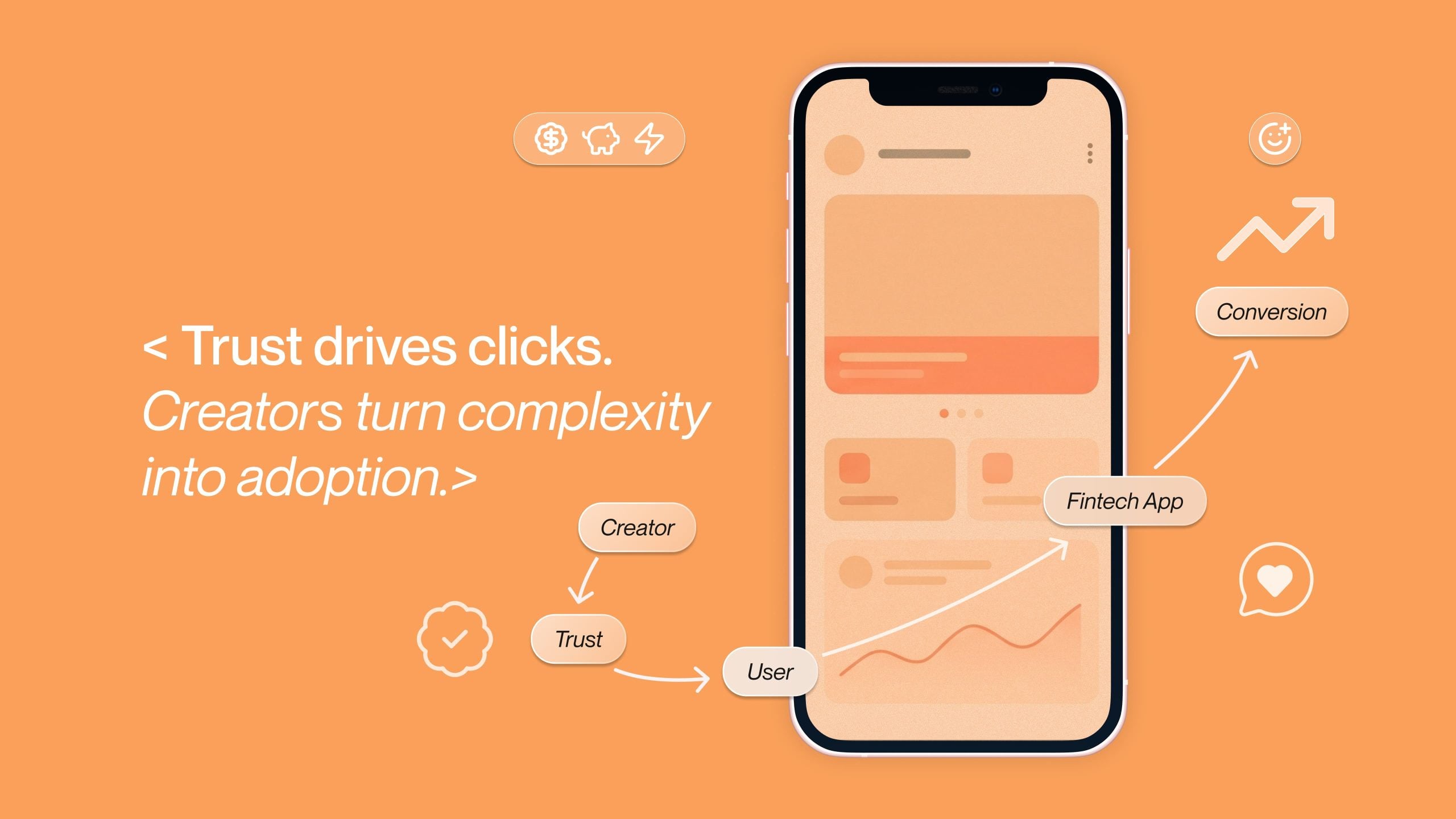
Fintech influencer marketing is the use of creators to introduce, explain, or discuss financial products with their audience. The approach is common across investing platforms, payment apps, budgeting tools, and other products where people often want more information before signing up.
Downloading a food delivery app doesn’t require much thought. Moving money, opening an investment account, or linking a bank account is a different issue altogether. Most people pause when a financial product asks for personal information or access to their money, even if the platform is well established.
Questions tend to appear long before someone becomes a customer. How difficult is the setup process? Are there hidden fees? What happens after the first deposit? Product pages answer some of those questions. Watching another person go through the experience often answers different ones.
For many younger consumers, social platforms have become part of the research process when learning about money. Budgeting tips, investing explanations, and product reviews now reach people long before they visit a bank website or compare products directly.
Who Promotes Fintech Products? Key Influencer Categories Explained
A creator who successfully promotes a budgeting app may be completely ineffective for a crypto exchange.
The reason isn’t reach. It’s context.
An investing platform and a payments app may both fall under fintech, but they are rarely judged the same way. One audience may spend weeks comparing options before signing up. The other may decide in a few minutes. The questions change, so the type of creator that resonates often changes as well.
| Influencer Type | Typical Audience | Best Fit | What They Usually Help With |
| Personal Finance Creators | Savers, budget-conscious consumers | Budgeting and savings apps | Financial education and everyday money habits |
| Investing Influencers | Retail investors | Investing platforms and robo-advisors | Product comparisons, investing concepts, platform walkthroughs |
| Crypto Influencers | Web3 and digital asset communities | Exchanges, wallets, blockchain products | Adoption within highly engaged niche communities |
| Business Creators | Founders, operators, SMEs | B2B fintech products | Demonstrating operational and financial use cases |
| Lifestyle Influencers | Mainstream consumers | Banking and payment apps | Showing how products fit into daily routines |
| Industry Experts | Professional and specialist audiences | Complex financial products | Building credibility where trust is a major barrier |
In many areas of the fintech sector, expertise carries more weight than visibility. A respected investing educator with 20,000 followers can outperform a creator with ten times that audience if followers already trust their judgement on financial topics.
The most effective fintech influencers are not always the largest ones. They are often the creators whose audience already resembles the customer a company wants to acquire. A lending platform, for example, may care far more about reaching self-employed business owners than reaching half a million people who have no interest in financial products at all.
For fintech businesses, creator selection becomes much easier once the campaign goal is clear. Building awareness, generating app installs, driving funded accounts, and educating potential customers may all require different types of creators.
Fintech Influencer Marketing Best Practices That Drive Trust
Trust is not built at a single point in the buying process, particularly in the fintech industry. A customer considering a new payment app may download it the same day. Someone evaluating an investment platform might spend weeks comparing options before making a first deposit. The amount of perceived risk tends to influence how much information people seek before they commit.
That behaviour is one reason why fintech influencer marketing works differently from many consumer campaigns. Understanding how trust develops tends to matter far more.
Build Influencer Funnels Instead of Single-Promotion Campaigns
In fintech influencer marketing, the first question someone asks about a financial product is usually not the last.
A new investing platform might catch a person’s attention through a creator they already follow. A few days later, they may be looking for:
- Fee comparisons
- Platform walkthroughs
- Reviews from existing users
- Opinions from people with more investing experience
The information people look for tends to change as they become more familiar with a product. Someone who is discovering a platform for the first time is often looking for something very different from someone deciding whether to deposit money or create an account.
“Reach, CPM, likes, and comments can be useful when you’re evaluating creators, but they don’t tell you much about business impact. Once a campaign is live, we pay far more attention to cost per lead, cost per registration, conversion rates, and acquisition efficiency. Those numbers show whether the campaign is actually generating customers rather than just attention.”
Michael M, Head of Influencer Marketing at NinjaPromo
Choose Influencers Based on Audience Quality
Effective influencer vetting often involves looking beyond follower counts and engagement rates.
A creator may attract hundreds of thousands of views and still generate little interest in the product itself. Someone who follows stock market commentary may have little interest in a cross-border payments app, while a small-business owner researching payment solutions is unlikely to care about cryptocurrency trading content.
That distinction is particularly important in influencer marketing for fintech, where products often appeal to very specific audiences.
A creator’s audience can be difficult to judge from headline numbers alone. Two accounts might generate similar engagement, yet the comments tell a completely different story, particularly when audience trust is weak.
For more on this topic, see our guide on how to find the right influencers.
Match Influencer Tiers to Your Budget and Goals
The biggest difference between influencer tiers is not reach — it’s risk.
Relying on a single creator can be difficult to evaluate. One successful campaign does not always tell you much on its own. Without another audience to compare against, it can be difficult to separate a good creator fit from a lucky result.
| Influencer Tier | Typical Audience Size | Main Advantage | Best Use Case |
| Nano | Up to 10K followers | High trust and community engagement | Niche financial audiences and early testing |
| Micro | 10K–100K followers | Strong engagement at a scalable cost | Customer acquisition and product education |
| Mid-Tier | 100K–500K followers | Balance between reach and credibility | Growth campaigns and broader market expansion |
| Macro | 500K+ followers | Large-scale visibility | Brand awareness and major product launches |
Many fintech brands end up relying heavily on micro creators. They are often large enough to generate meaningful reach but still close enough to their audience to maintain credibility. In categories such as investing, payments, and personal finance, that combination can be more valuable than sheer scale.
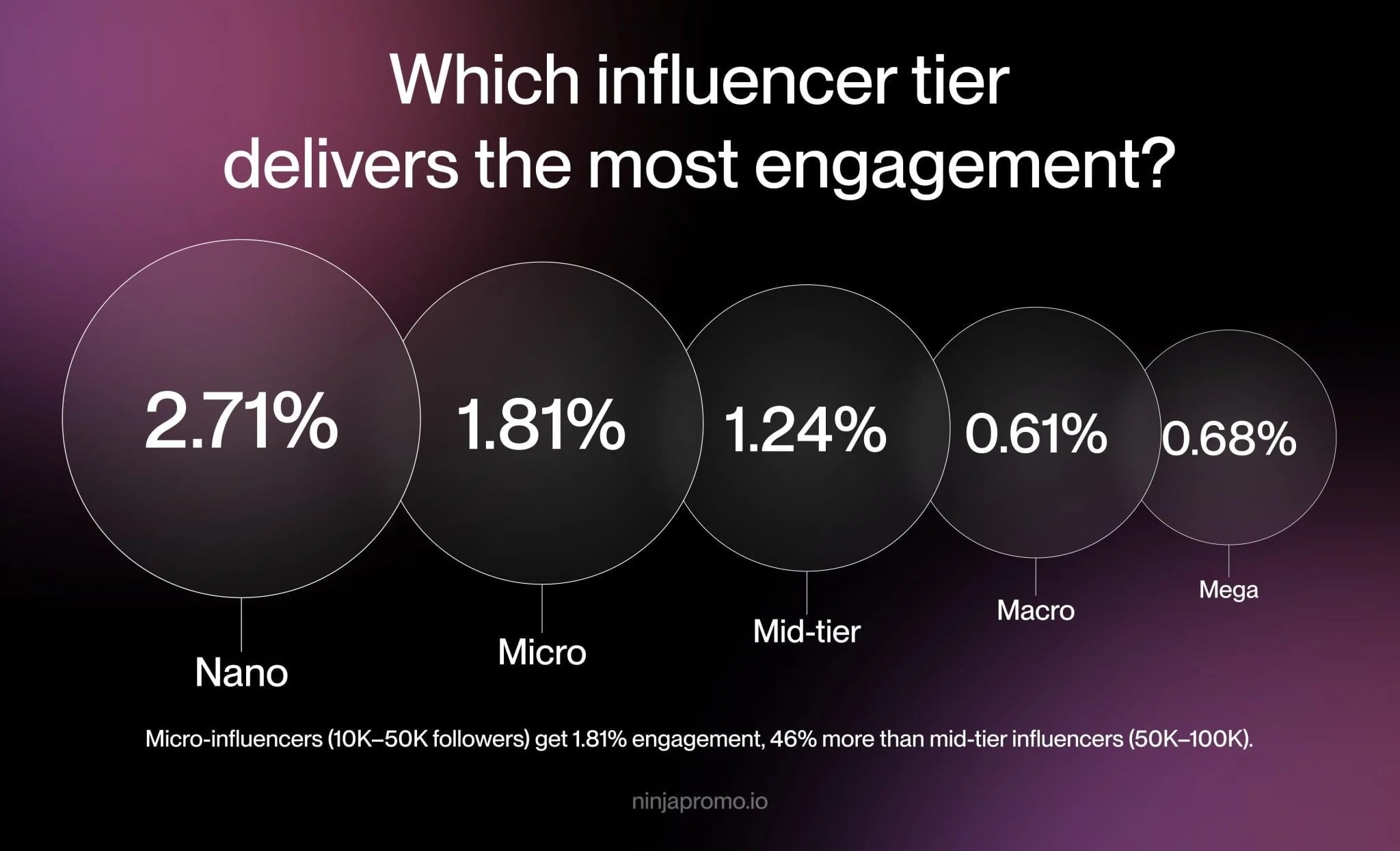
For a deeper comparison of creator categories, see our guide on micro vs macro influencers.
Use AI to Detect Fake Followers and Verify Audience Quality
One creator’s comment section is full of questions and discussion. Another has similar follower numbers, yet most comments are short, repetitive, or unrelated to the post itself. The difference is not always obvious from headline metrics alone.
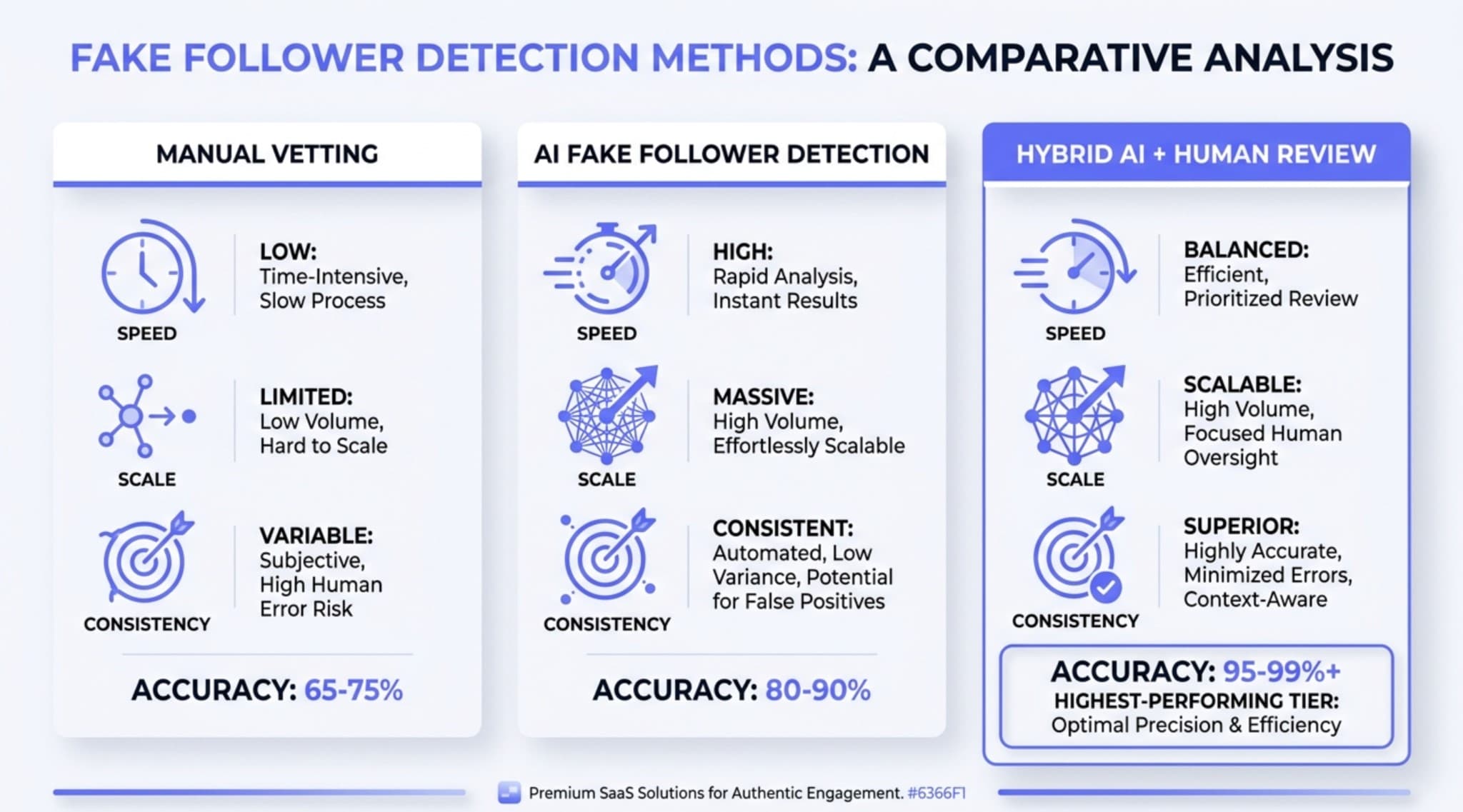
Much of the manual work involved in influencer outreach now happens far more quickly than it did a few years ago.
“AI has made the early stages of influencer selection much faster. We can review view consistency, spot unusual audience patterns, estimate bot activity, and build outreach lists in a fraction of the time it used to take. The technology is useful for filtering, but the final decision still comes down to human judgement.”
Michael M, Head of Influencer Marketing at NinjaPromo
Things AI tools commonly flag include:
- Unusual audience growth
- Suspicious engagement patterns
- Potential bot activity
- Inconsistent view performance
Read more on how brands are using AI in influencer marketing.
Prioritize Long-Term Ambassador Programs
A product that appears once is easy to forget.
Six months later, the same creator mentions it again. Then it shows up in a completely different piece of content. By that point, audiences have seen more than a sponsored post. They have seen whether the product stuck around.
That is partly why many fintech brands choose to build long-term partnerships with creators. Financial products often need more context than a single promotion can provide. A longer relationship gives people time to make up their own minds, which can help build fintech credibility through influencer partnerships. In many cases, those relationships eventually grow into wider influencer collaboration programs.
Combine Expert and Lifestyle Influencers
Some people want details. They compare fees, read explanations, and look for someone who can answer technical questions. Others pay more attention to how the product fits into everyday life and whether they can picture themselves using it.
That difference often explains why expert creators and lifestyle creators appear in the same campaign. One audience is looking for information. The other is looking for context. A product can feel difficult to understand without the first, but difficult to relate to without the second.
Many of these ideas extend beyond fintech. See our guide to the benefits of influencer marketing.
Focus on Fintech Educational Content Rather Than Direct Selling
People rarely need to research a takeaway order. Financial products are different. Questions tend to appear early:
- What does the setup process involve?
- How long does verification take?
- Where do the fees show up?
- What happens after the account is opened?
Many creators respond to those questions by showing the process rather than talking about it. Much of the strongest influencer content creation in fintech takes that approach. A walkthrough can reveal things that never make it onto a product page, while a tutorial allows people to see each step for themselves.
Financial content also attracts closer scrutiny than many other topics online. That places greater responsibility on both brands and creators when producing influencer-generated content, particularly in areas affected by fintech regulations.

Repurpose Top-Performing Influencer Content Across Channels
Some creator content keeps answering the same questions long after it was first published.
A walkthrough that explains how a product works or a video that addresses a common concern can remain useful months later. Rather than creating new assets from scratch, many fintech teams reuse those pieces across paid social, landing pages, email campaigns, and organic content.
The value often comes from the audience’s reaction, which is why influencer performance tracking remains important long after a campaign launches. Reusing it elsewhere allows that insight to travel beyond the original post. This approach is particularly common in broader social media collaborations and can complement a wider fintech social media marketing strategy.
Creator partnerships are only one way fintech companies build awareness. See our guide to PR for fintech.
Case Studies: Successful Influencer Marketing in Fintech
An investing platform and a money transfer service solve very different problems. They also attract very different audiences.
These are examples of influencer marketing campaigns for financial technology companies serving very different audiences. One focused on people already interested in financial products. The other centred on communities with a practical need for international money transfers.
Avenix
For Avenix, visibility was only part of the challenge. Reaching people interested in financial products mattered more than generating broad awareness among general audiences. Creator partnerships were used to position fintech products with industry influencers and place the brand in front of relevant financial communities.
“Products with a clear value proposition tend to perform best with creators. When the benefit is easy to understand, creators can explain it quickly and audiences immediately see why it matters. Products that struggle to stand out usually have a harder time generating results, particularly in fintech categories where similar solutions are competing for attention.”
Michael M, Head of Influencer Marketing at NinjaPromo
TapTap Send
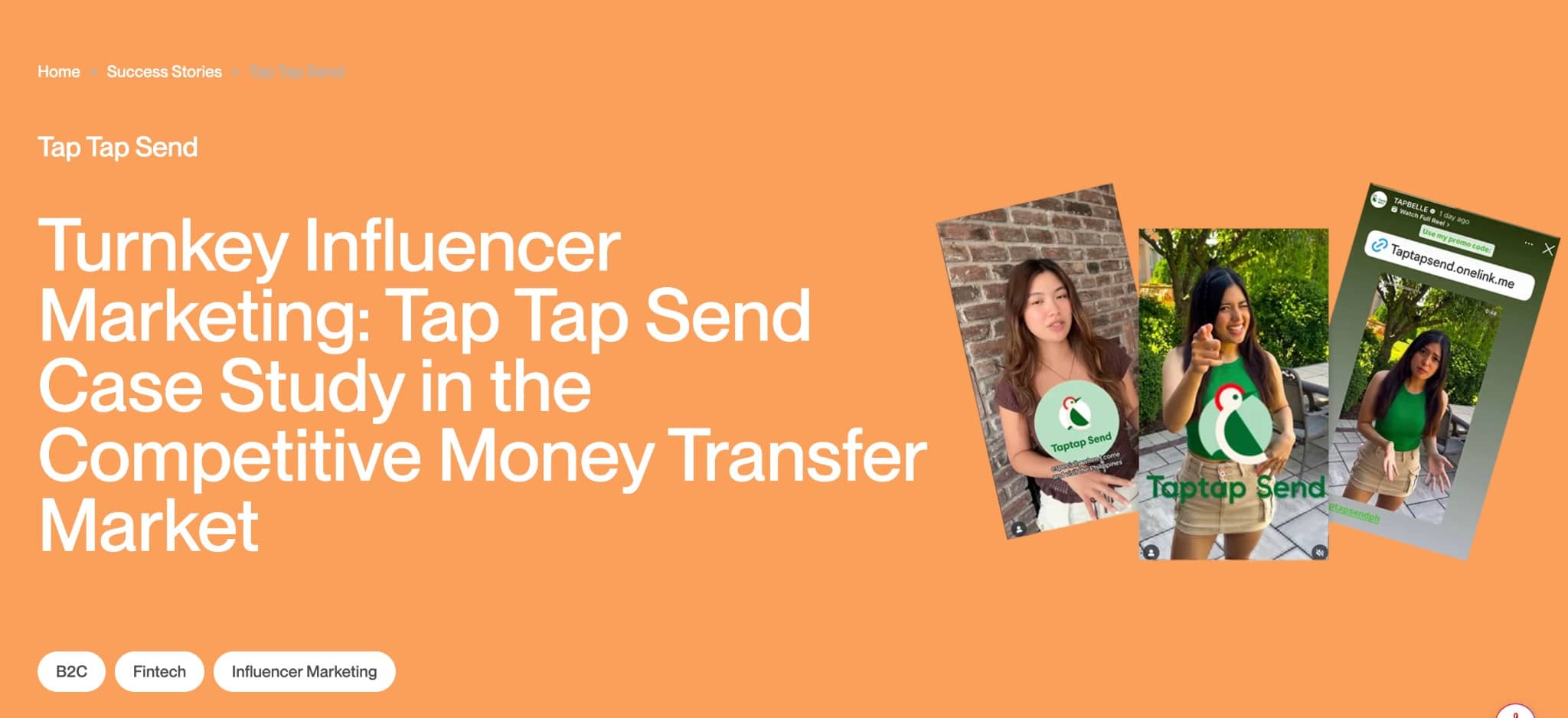
TapTap Send serves people sending money to friends and family overseas, so broad visibility was never the main challenge. The product needed to reach communities where international transfers are already part of everyday life.
Many of the creators already spoke to communities where sending money overseas was a familiar topic. Their audiences did not need an explanation of why international transfers mattered because many had direct experience with them.
The case highlights something easy to overlook in fintech marketing: two audiences of the same size can have very different values. For a product built around cross-border transfers, a smaller community with a direct connection to the problem may be more relevant than a much larger audience with no reason to use the service.
Final Thoughts
Not every product promoted through fintech influencer marketing creates the same questions for potential customers.
A budgeting tool, a trading platform, and a remittance service may all fall under the fintech label, yet they tend to attract very different questions. Someone considering an investment account is usually trying to understand something completely different from someone sending money abroad. Sometimes it is about finding the audience already interested in the question your product answers.